
Last updated November 18, 2026
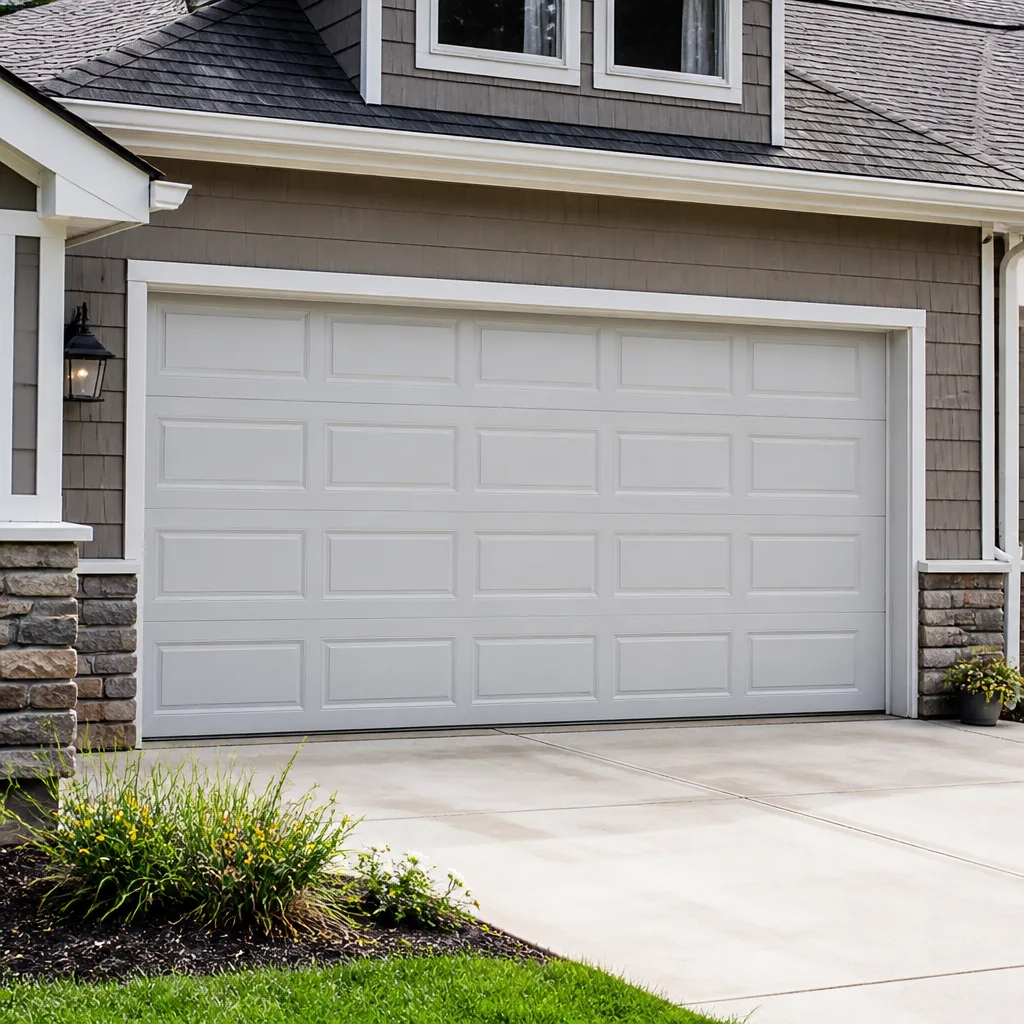 Raised-panel steel
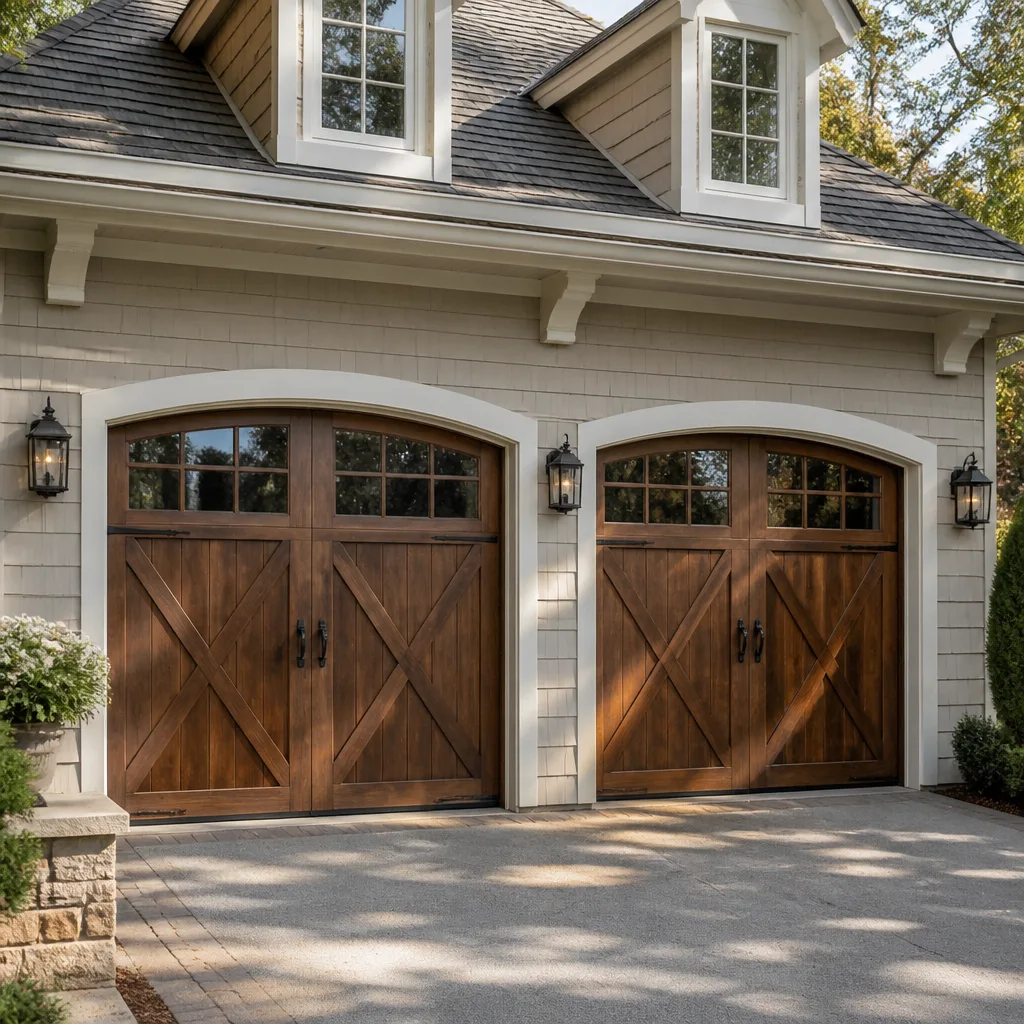 Carriage house
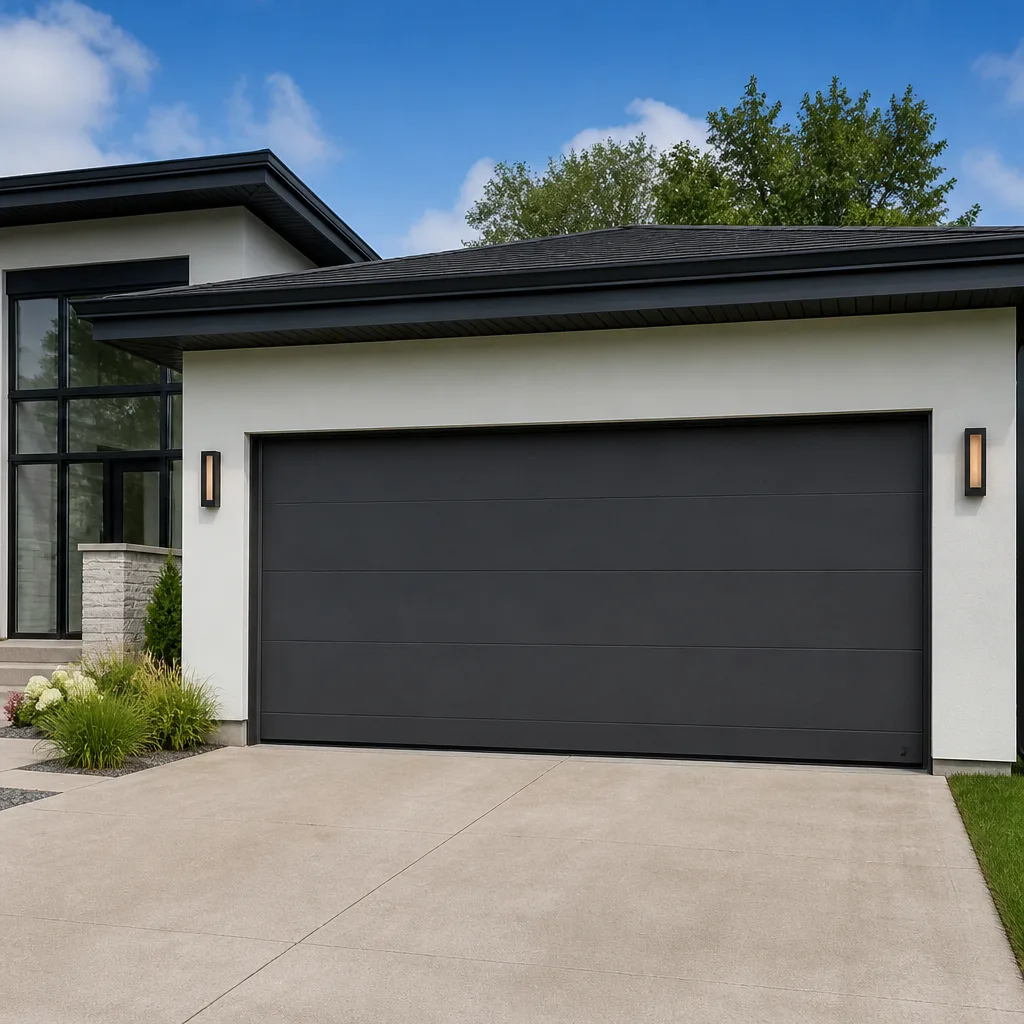 Modern flush
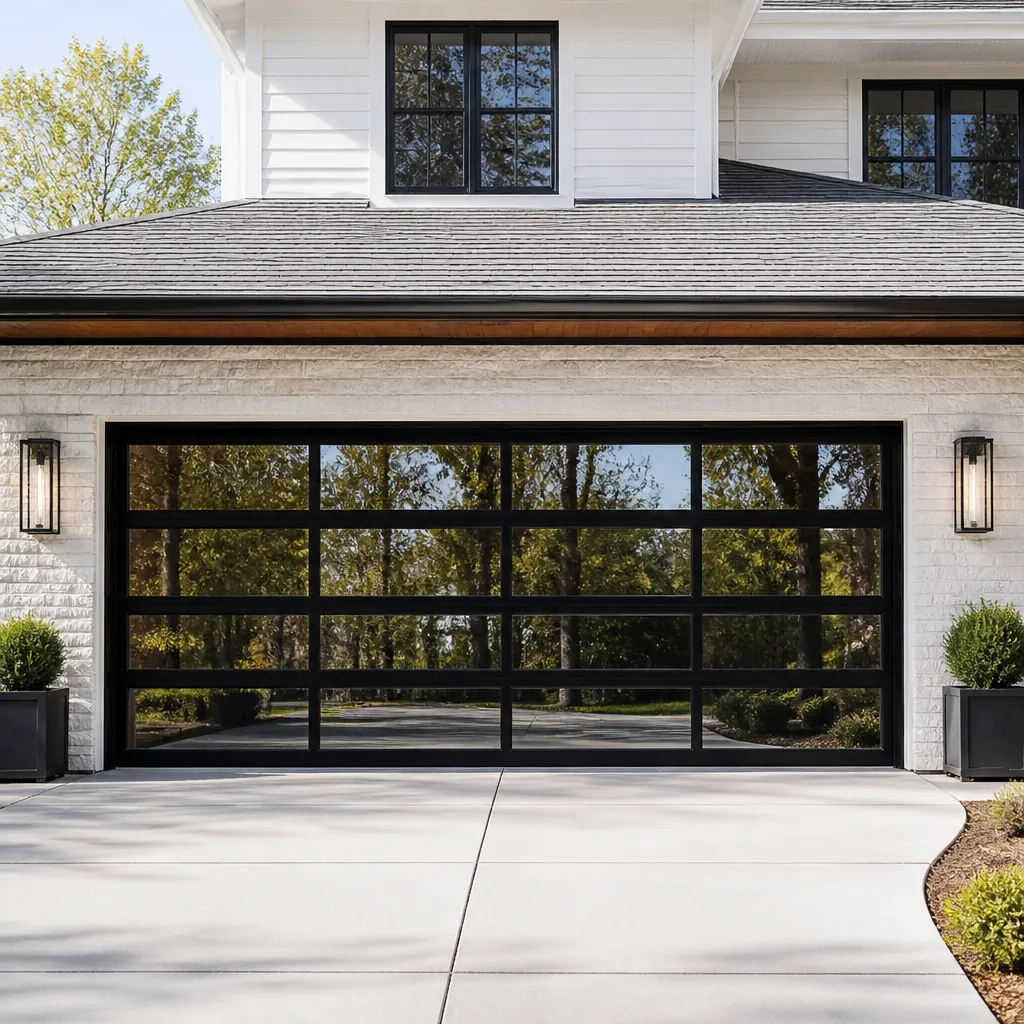 Full-view glass
 LiftMaster openers
 Chamberlain openers
Full 25-point door and opener safety check with every visit - springs, cables, rollers, tracks, and your LiftMaster or Chamberlain opener included
You get a price before we start. It does not change when the pro arrives.
Get your free estimateHow Long Does Emergency Garage Door Take? Timelines and What to Expect
When your spring breaks at 10 PM, you’re not just asking how long the repair takes. You’re asking how long your car is stuck in the garage, and whether the house sits exposed overnight. Those are three different questions with three different answers, and most people who call us in Spring Valley have them all tangled together. The truth is that response time and repair time are separate numbers, and knowing which one you’re waiting on changes how you plan the night. This guide breaks down realistic timelines in Spring Valley, which emergencies are true two-hour fixes, which need a morning follow-up, and how to use the wait without making things worse.
Quick Answer
A genuine emergency garage door call in Spring Valley usually gets a technician to your driveway in 45 minutes to 2 hours, and the actual repair takes another 30 minutes to 2 hours depending on what failed. Spring and cable breaks are typically same-night fixes when the truck is stocked. Broken openers or bent tracks often get an interim stabilization that night with a full repair scheduled the next morning. The response clock and the repair clock are never the same thing.
Styles & brands we work with
- Raised-panel steel
- Carriage house
- Modern flush
- Full-view glass
- LiftMaster openers
- Chamberlain openers
Table of Contents
- Response Time vs. Repair Time: The Two Clocks Nobody Explains
- What Drives Realistic Emergency Response Times in Spring Valley?
- Which Emergency Repairs Are Genuinely Two-Hour Fixes?
- Stocked Truck vs. Assess-and-Order: Why It Changes Everything
- How to Use the Wait Productively (and What Not to Do)
- When the Emergency Surcharge Is Worth It and When It Isn’t
- How to Decide: Wait Until Morning or Call Tonight?
- Common Mistakes to Avoid
Response Time vs. Repair Time: The Two Clocks Nobody Explains
Every emergency call runs on two clocks, and confusing them is the single most common reason people feel misled by a garage door company. The response clock starts when you hang up and stops when a technician pulls into your driveway. The repair clock starts at the driveway and stops when the door is working and you’ve been handed the invoice.
Here in Spring Valley, the response clock is shorter than most homeowners expect because we’re local. A shop that answers its own phone and lives in the same county can be at your door fast. A national call center has to route your job to whatever subcontractor is available, and that routing alone can eat an hour before anyone even starts driving.
The repair clock is where the real variance lives, and it depends almost entirely on three things:
- What actually broke. A snapped torsion spring is a known quantity. A door that jumped its track after a car backed into it is a diagnosis problem, not a parts problem.
- Whether the technician carries the part. A stocked truck turns a two-day wait into a two-hour fix. An assess-and-order visit turns it into two visits.
- The brand and age of your door. Standard hardware on a Clopay or Amarr residential door is predictable. An older Wayne Dalton with a discontinued opener may need a workaround or a scheduled replacement.
So when someone asks us how long emergency garage door service takes, the honest answer is: it depends which clock you’re asking about, and a good company will tell you both numbers before they hang up.
What Drives Realistic Emergency Response Times in Spring Valley?
Response time in Spring Valley is not a fixed number. It moves with the hour, the day, and who you called. Here’s what actually shifts the clock, based on what we see on the road.
Time of day
A call at 2 PM on a Tuesday is a short run. Streets are clear, the technician is already out on a route, and you’re typically looking at under an hour. A call at 11 PM is a different job: someone has to get out of bed, load a truck, and drive to you. Late-night calls usually run closer to the 1 to 2 hour mark, and that’s normal, not a red flag.
Day of week
Weekends and holiday evenings are busier, and when the temperature swings hard in the desert, breakage clusters. On a cold January morning after a frost, half the county’s springs seem to go at once. Expect the response to stretch when everyone calls within the same few hours.
Local versus dispatch
This is the biggest lever, and most homeowners don’t realize it until it’s too late. A local, owner-operated outfit answers the phone, quotes the job on that call, and holds the price when they arrive. A dispatch center takes your information, promises a window, and then starts hunting for a subcontractor who may not exist in your area tonight. In our experience, the dispatch route adds hours and often adds cost.
Weather and road conditions
Spring Valley doesn’t get much snow, but summer monsoon storms and the occasional dust event slow everyone down. If it’s actively raining or the roads are slick, add buffer time to whatever estimate you’re given.
Whether your neighborhood is on a tight street
Tighter residential blocks and gated communities can add a few minutes for a technician to find the right address and get a service vehicle positioned. It’s small, but it’s real.
Which Emergency Repairs Are Genuinely Two-Hour Fixes?
Not every emergency is the same size. Some are true two-hour jobs from arrival to finished. Others only need a safe stabilization that night, with the full repair scheduled for morning. Knowing the difference helps you decide whether to stay up waiting or go to bed once the door is secured.
Here’s how we categorize them when we pick up the phone.
Genuine same-night fixes:
- Broken torsion spring. The classic 10 PM call. If the technician carries the right spring for your door, this is typically a 45-to-90-minute repair once they arrive.
- Off-track door after minor impact. Straightening and re-seating the door on its track is usually a same-night job, provided panels aren’t destroyed.
- Door stuck partially open or closed with damaged rollers. Roller swaps are quick and can often restore safe operation the same night.
- Broken cable with the door in the down position. Cables are replaceable on the spot when the door is resting safely closed.
Stabilize tonight, schedule the real fix for morning:
- Broken opener with no manual release. The door can usually be made safe and operable by hand so you can get the car out, with the opener diagnosed or replaced on a scheduled visit.
- Bent or crushed track. A temporary re-seat may get the door moving, but a bent track typically needs replacement, and that’s a measured, ordered part.
- Damaged or cracked bottom panel. Safety comes first; a same-night secure against the weather, a proper panel or section on the next scheduled visit.
- Door stuck above head at an angle. If the door is off balance and can’t be brought down safely, the technician secures it in place, and the full correction happens in daylight when it’s safer to test.
When you call, we tell you which category your call falls into before we hang up. That way you know whether to expect a finished repair or an interim fix. If you’d like a repair visit scheduled, see Garage Door Repair in Spring Valley.
Stocked Truck vs. Assess-and-Order: Why It Changes Everything
Here’s the part of the timeline that homeowners almost never think to ask about, and it’s the single biggest factor in how many days an emergency turns into.
A technician who arrives with a stocked truck can finish most standard repairs the same visit. That means common springs, cables, rollers, brackets, and standard opener parts are already on board. The truck pulls up, the problem is identified, the part comes off the shelf, and you’re done.
A technician who arrives to assess and then order parts is running a completely different script. They look at the door, take measurements, quote the repair, and then order the part. That job is now two visits, not one, and the gap between them can be days depending on what’s needed and whether it’s in stock anywhere nearby.
So when you’re calling around, ask one direct question: “Does the technician carry the part I need, or will this be a second visit?” You’ll be surprised how many companies can’t answer that on the phone. For us, it’s the first thing we try to nail down in the conversation. We’d rather tell you “you’ll be down for two days” honestly than promise a same-night fix we can’t deliver.
One caveat worth knowing: no truck can carry every part for every door ever made. An older Wayne Dalton with a discontinued opener, or a specialty panel on a door from a builder that no longer exists, may legitimately need ordering. The point isn’t that every job is finished the same night. The point is that a stocked truck finishes far more of them than an assess-and-order visit does. You want the company that carries as much as possible and tells you honestly when it can’t.
How to Use the Wait Productively (and What Not to Do)
The average emergency call includes 30 to 90 minutes of waiting while the technician drives to you. That time is not wasted if you use it right. And it’s genuinely dangerous if you use it wrong.
What to gather while you wait
- The make and model of your door and opener if you can find it. Look at the opener unit on the ceiling or in the manual. Knowing it’s a Genie or a LiftMaster helps the technician arrive prepared.
- The age of the door if you know it. Age affects which parts are compatible and whether a repair or replacement makes more sense.
- The exact symptoms. Did you hear a bang, or a snap, or a pop? Did the door come down hard, or drift slowly? Was the opener straining before the failure? These details speed up diagnosis.
- Whether the car is inside the garage. If your vehicle is trapped and you need it in the morning, say so on the call. It changes the plan.
- Photos of the damage. A quick photo of the broken spring, snapped cable, or bent track helps the technician know what to bring.
What to do to prepare
- Clear the garage floor. Moves boxes, bikes, and shelving away from the door so the technician can work safely and quickly.
- Create a path to the electrical panel and the opener. The technician will want to cut power to the opener while working.
- Secure pets. Garage doors are loud and moving parts are dangerous. A dog in the garage during a repair is an accident waiting to happen.
- Have payment and contact info ready. The sooner the paperwork is done, the sooner the door is fixed.
What NOT to do while you wait
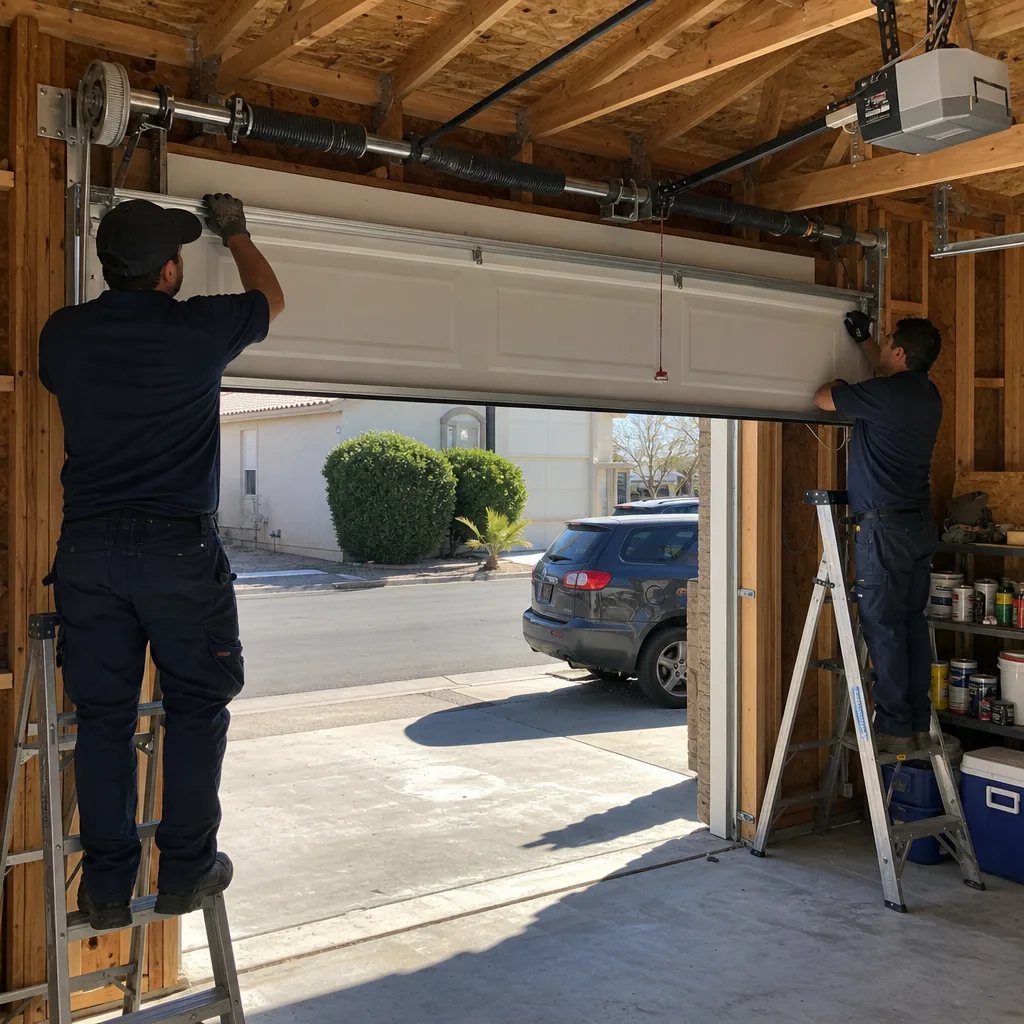
We say this plainly because we’ve seen the consequences: do not try to fix a broken garage door spring or cable yourself. A residential garage door is roughly 200 pounds riding on two torsion springs under extreme tension. Those springs and cables can cause serious injury in a fraction of a second if you don’t have the right tools and training. The same goes for trying to force a jammed door by hand, or reaching into the mechanism while it’s under load. Wait for the technician. There’s nothing in your garage worth an emergency room visit.
When the Emergency Surcharge Is Worth It and When It Isn’t
Emergency service usually costs more than a scheduled repair, and that’s fair. Someone got out of bed and drove to your house at night. The question is whether paying that surcharge tonight actually protects something important, or whether waiting until 7 AM makes more sense.
Pay the surcharge when:
- Your vehicle is trapped and you need it in the morning. A car sealed inside a garage is the most common reason to call at night. If you have a work commute, a doctor’s appointment, or a school run, tonight’s surcharge beats a missed morning.
- The door is stuck open and the house is exposed. A wide-open garage is a security problem, not just an inconvenience. If the door can’t be secured manually, that’s an emergency.
- The door is hanging unsafe or partially off track. An unbalanced door can drop without warning. If it’s in a dangerous position, secure it tonight.
- You have a medical or accessibility need. If someone in the household depends on the garage door for access, this is not a job to defer.
Wait until morning when:
- The door is fully closed, locked, and not moving. If it’s down and secure, nobody is exposed and nobody is trapped. The morning visit costs less and the repair is the same.
- The car is parked outside and the door isn’t needed until tomorrow. If you have an alternate way to get where you’re going, there’s no reason to pay the night rate.
- The problem is cosmetic or minor. A noisy roller, a slow opener, or a small dent in a panel can wait for a scheduled visit without any real risk.
If you’re not sure which side you’re on, call and ask. A good local company will tell you honestly whether you need service tonight or whether you’re safe to wait until morning. For a scheduled, non-emergency visit, see Garage Door Opener Repair & Installation in Spring Valley.
How to Decide: Wait Until Morning or Call Tonight?
Here’s a simple decision path you can run in your head at 11 PM when you’re standing in your robe staring at a broken door.
- Is the door secure (fully closed and locked, or fully open and stable)? If it’s not secure, call now.
- Is a vehicle trapped that you need before 7 AM? If yes, call now.
- Is anyone in the household stuck or at risk? If yes, call now.
- If the door is secured and no vehicle is needed, is the repair likely to be the same price tomorrow? Yes, it usually is. Schedule it for the morning.
Run that ladder and it’ll tell you what to do. The point isn’t to scare you into a night call. It’s to help you make a clear-eyed decision based on what’s actually at stake. If you want a same-night repair, or a scheduled visit, you can reach a live person at (888) 318-1978 and we’ll quote the job on the call and hold the number when we arrive. Free estimates on scheduled visits, and our 90-Day Done Right Promise in writing on every job.
Common Mistakes to Avoid
We’ve been answering these calls in Spring Valley for years, and the same handful of mistakes show up over and over. Here’s the short list.
- Calling a national dispatch center and assuming it’s local. The nice voice on the phone isn’t the person who will show up. Ask if the company is owner-operated and whether the same number quotes the job and sends the technician.
- Assuming every “emergency” call results in a finished repair the same night. Some jobs are two-hour fixes. Others are stabilizations with a scheduled follow-up. A good company tells you which is which before they arrive.
- Trying to force the door by hand while waiting. A door under tension can snap back and cause serious injury. Leave it alone.
- Not asking whether the technician carries the parts. This one question separates a same-night fix from a two-visit job.
- Forgetting that a spring break is often a pair break. When one torsion spring snaps on a two-spring door, the second one is usually not far behind. Expect the repair to address both, and ask why.
- Not getting a written quote before work starts. Any honest company will quote before touching the door and hold that number at the end. If they can’t tell you the price upfront, that’s a red flag.
- Skipping the second opinion. If you have a written estimate from another company and something about it feels off, a free second opinion from a local shop will often reveal the difference between a fair repair and an inflated one.
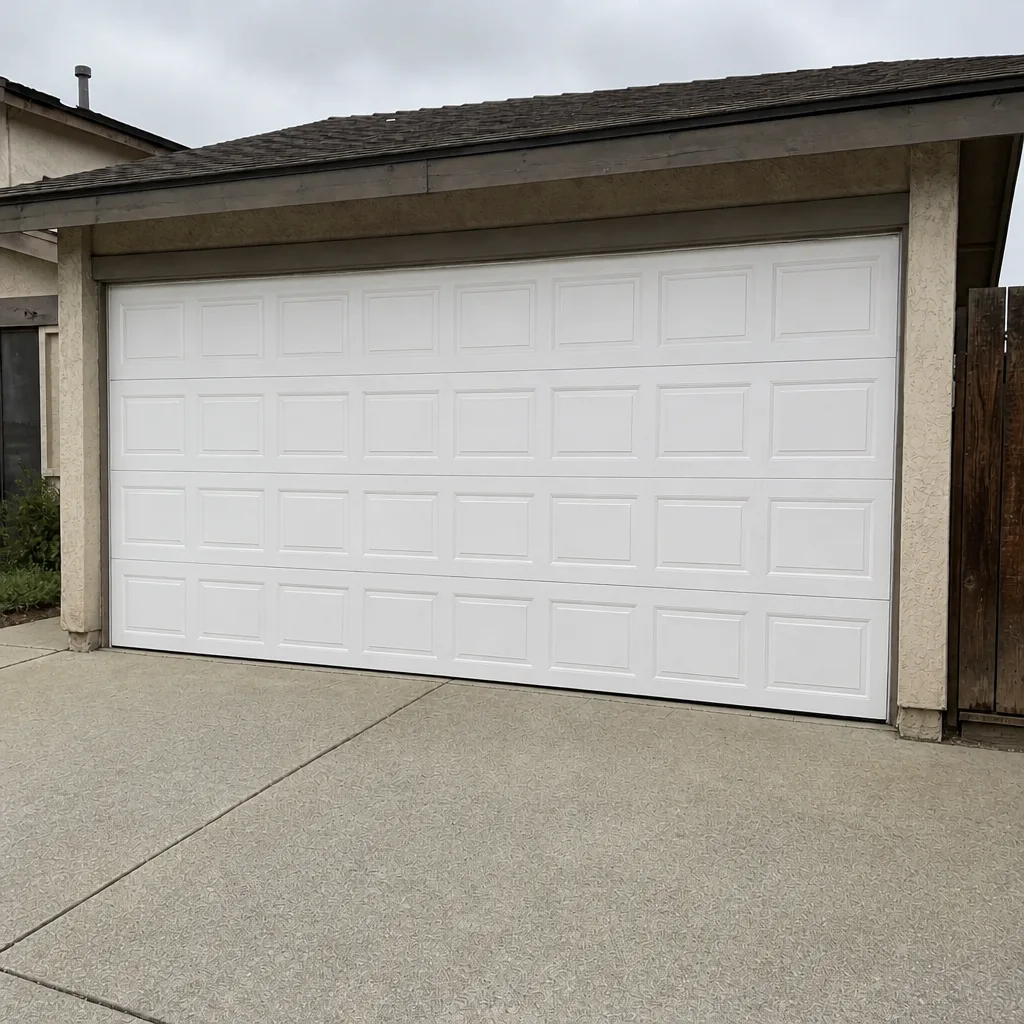
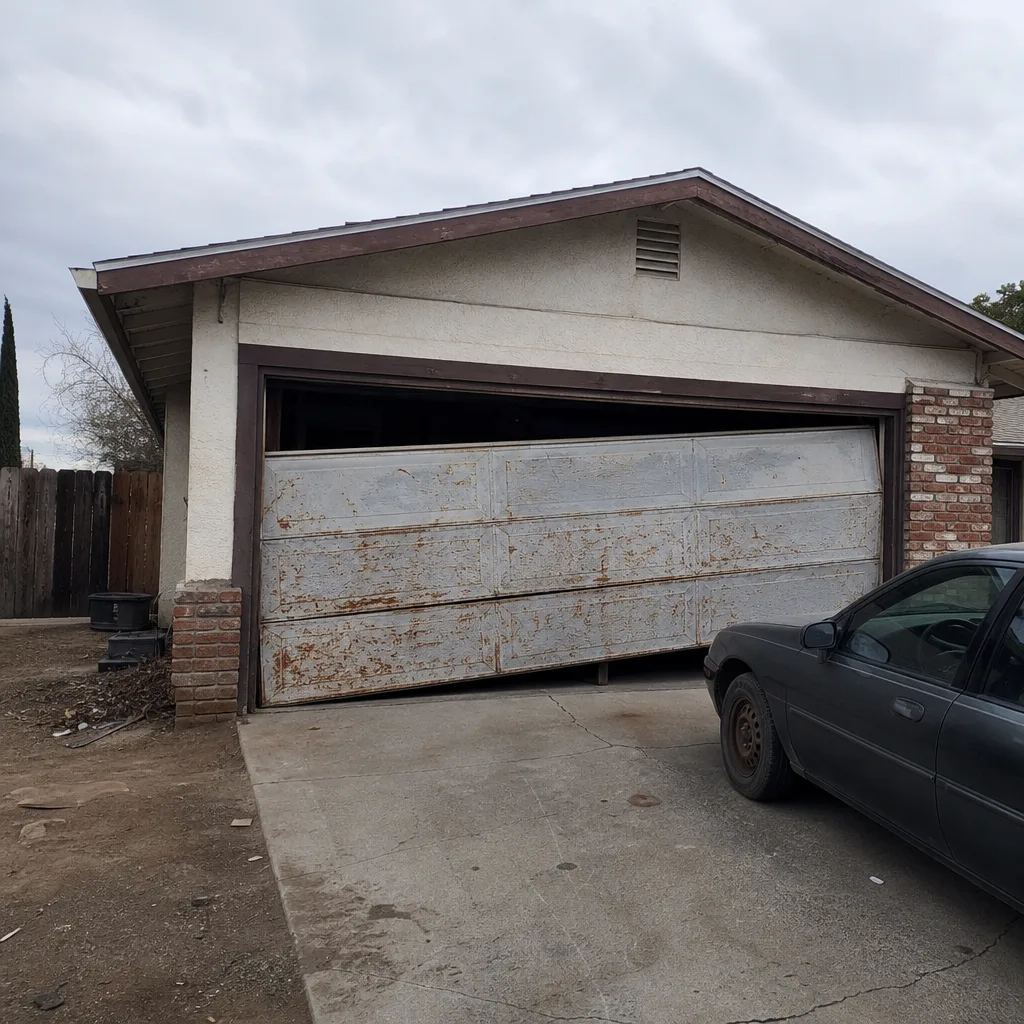
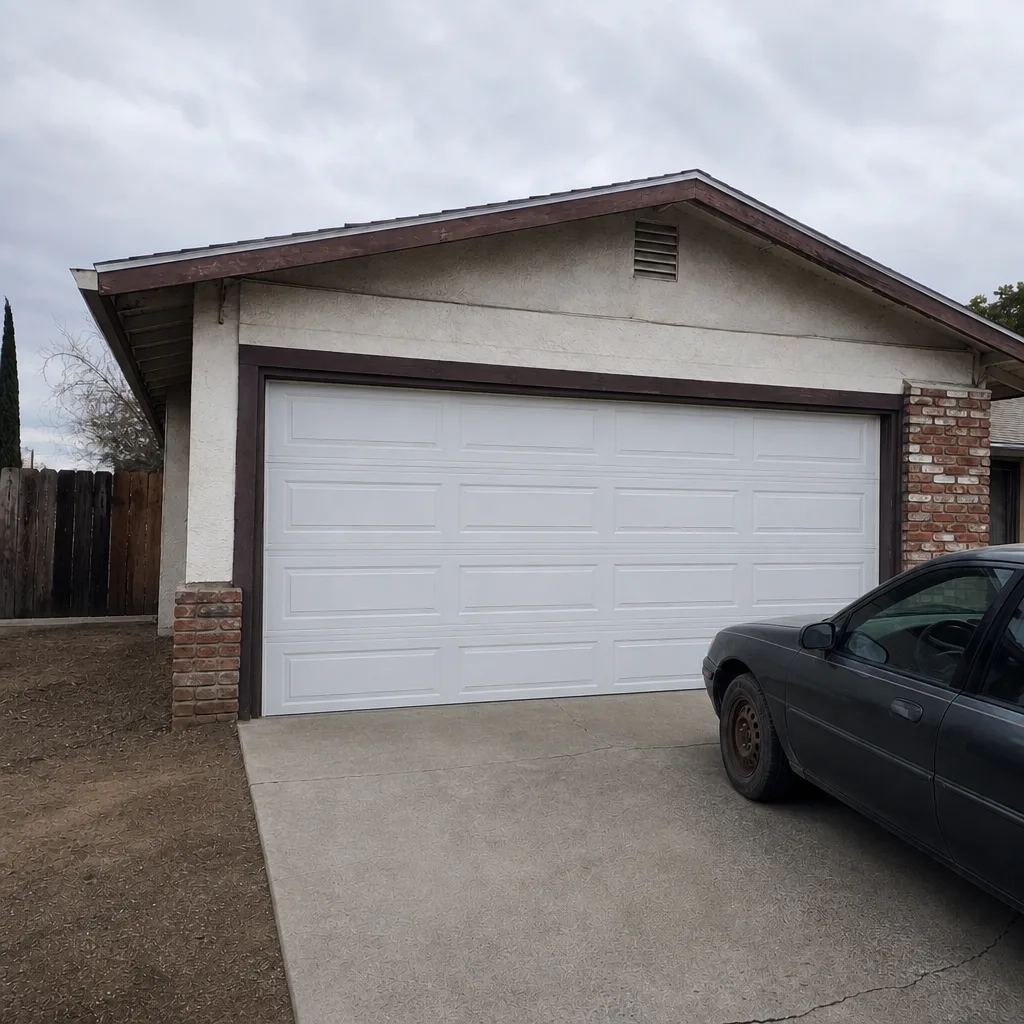
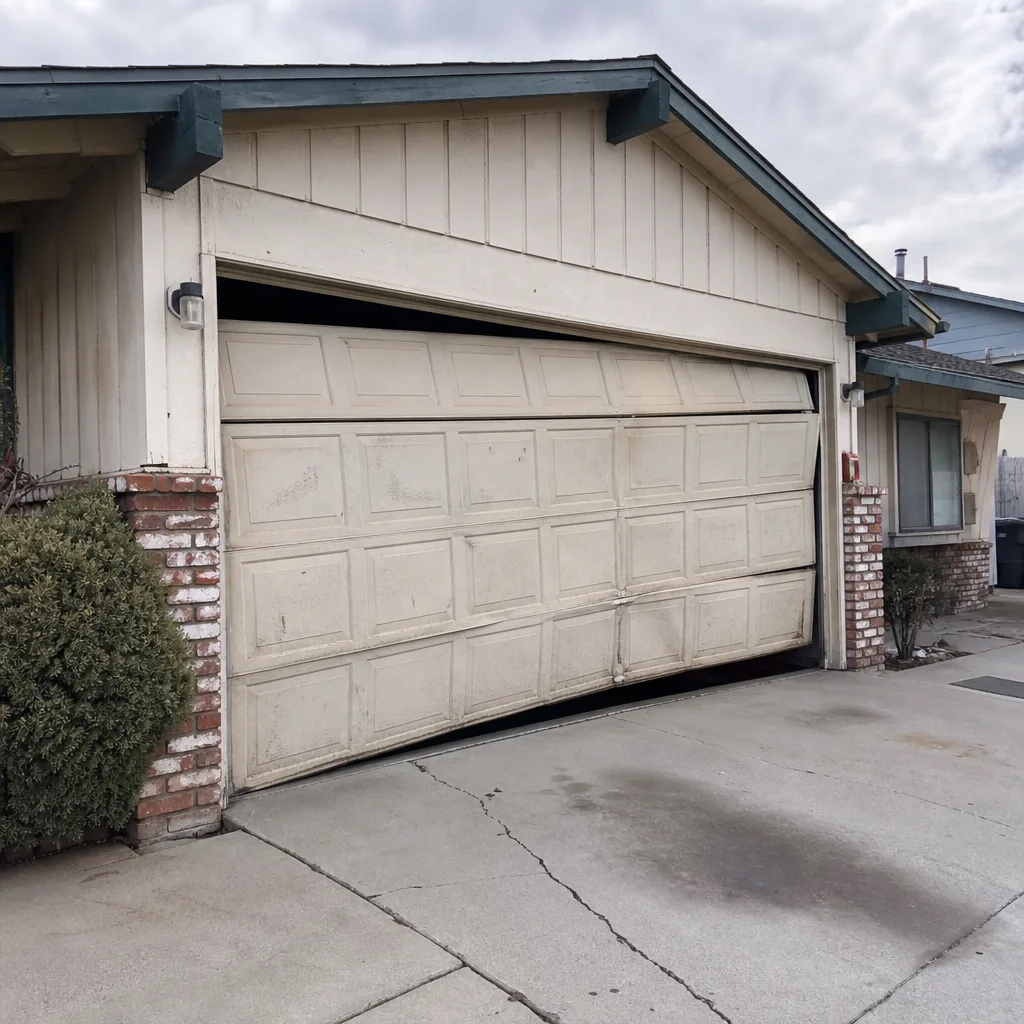
See the difference
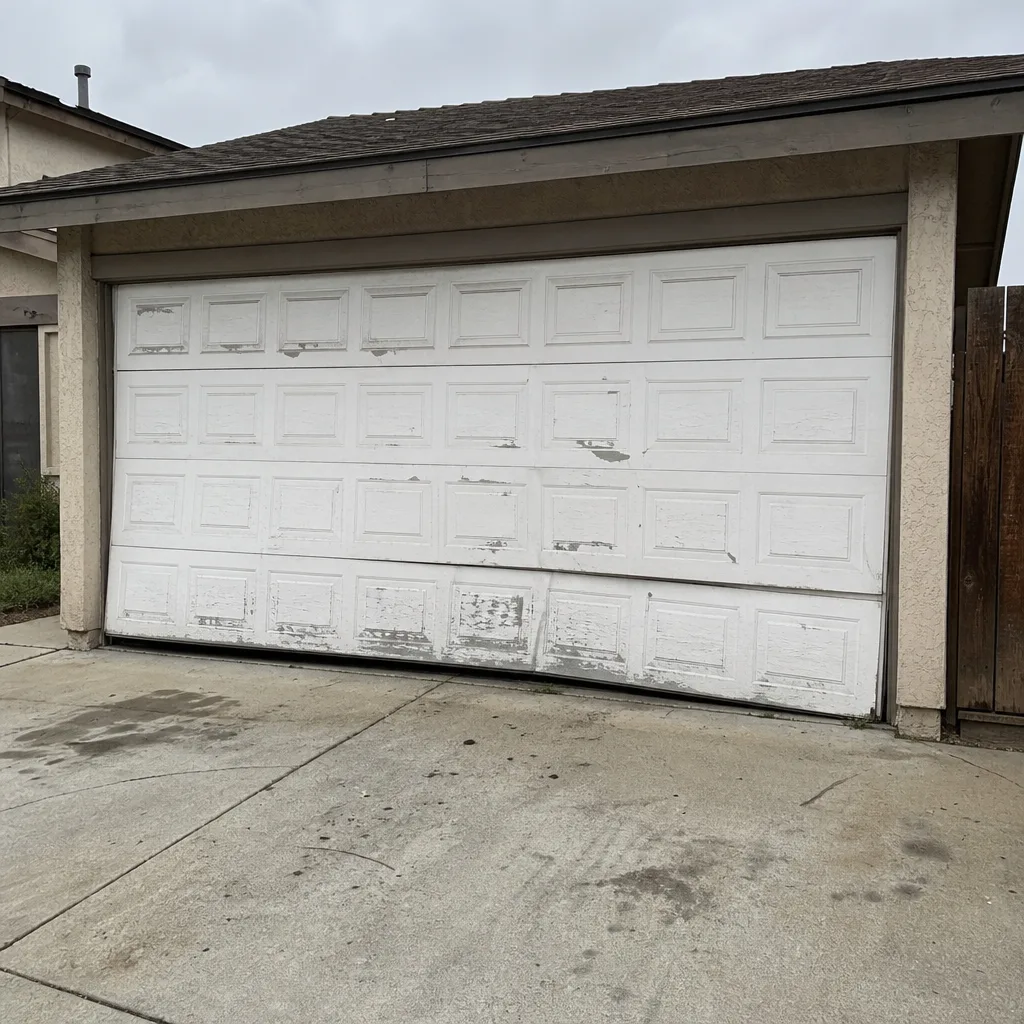 Before
 After
 Before
 After
 Before
 After
When to Call a Professional
Call a professional whenever the answer to “can I fix this myself?” involves a torsion spring, a torsion cable, the opener’s electrical components, or a door that’s hanging off track. Those situations carry real injury risk and the trade tools aren’t things most homeowners own. For spring and cable work especially, the correct call is: secure the car if you can, clear the area, and phone someone who does this every day.
Call us when the door won’t move, when a vehicle is trapped, when the door is stuck open overnight, or when the opener is straining and you’re not sure why. If the door is closed and secure and nobody’s stuck, it can wait until morning. If you’re not sure which side you’re on, call and ask. Otto’s Garage Door Spring Valley offers free estimates in Spring Valley – call (888) 318-1978 and we’ll give you an honest answer about whether to schedule tonight or tomorrow. You can also start with our Otto’s Garage Door Spring Valley home page to see what else we cover.
Frequently Asked Questions
Plan on 45 minutes to 2 hours for a technician to arrive, plus 30 minutes to 2 hours for the actual repair depending on what broke. Spring and cable breaks with the right parts on the truck typically finish the same night. Opener and track damage sometimes needs an interim safety fix with a full repair scheduled for the next morning. Call (888) 318-1978 for an exact quote on your call.
In most cases, yes. A local, owner-operated shop can usually get a technician to your door faster than a dispatch center because there’s no routing step. We’ll give you a realistic window on the phone and quote the job before we drive out. Call (888) 318-1978 and we’ll tell you what we can do today.
No. The number we quote on the phone is the number we hold at the door. That’s the whole reason we quote on the call instead of showing up to “take a look.” What you’re quoted is what you pay, and the 90-Day Done Right Promise is written on every invoice. Call (888) 318-1978 for a free estimate.
Yes. Every technician is background-checked and trained across the major brands, including Genie, Clopay, Amarr, and Wayne Dalton. Our technicians have up to 22 years of experience, and the license number is published, so you can verify it before anyone arrives. Call (888) 318-1978 to book a visit.
A door stuck open is a security problem, not just an inconvenience, so it’s worth a night call if you can’t get it closed safely. If the door can be brought down and locked manually, do that and schedule for morning. If it can’t, call (888) 318-1978 and we’ll come secure it.
Yes, emergency calls outside regular hours usually carry a surcharge, which is standard. Whether it’s worth it depends on whether your car is trapped or your house is exposed, not on the price of the repair itself. Call (888) 318-1978 and we’ll tell you honestly whether you need tonight or whether morning will do. For scheduled work like new doors, see Garage Door Installation in Spring Valley.
The Bottom Line
Emergency garage door service in Spring Valley runs on two clocks: how fast a technician gets to you, and how long the repair itself takes. Response is usually 45 minutes to 2 hours. Repair is usually 30 minutes to 2 hours for a stocked-truck fix, or a same-night stabilization with a scheduled follow-up for track and opener problems. The biggest variable is whether you called a local, owner-operated shop or a national dispatch center. Ask if the technician carries the parts. Ask if the price quoted on the phone holds at the door. If the door is secure and no car is trapped, waiting until morning is fine. If it isn’t, call now. We’re at (888) 318-1978 around the clock with a live person and an honest answer.
Written by the team at Otto’s Garage Door Spring Valley.