
Last updated November 18, 2026
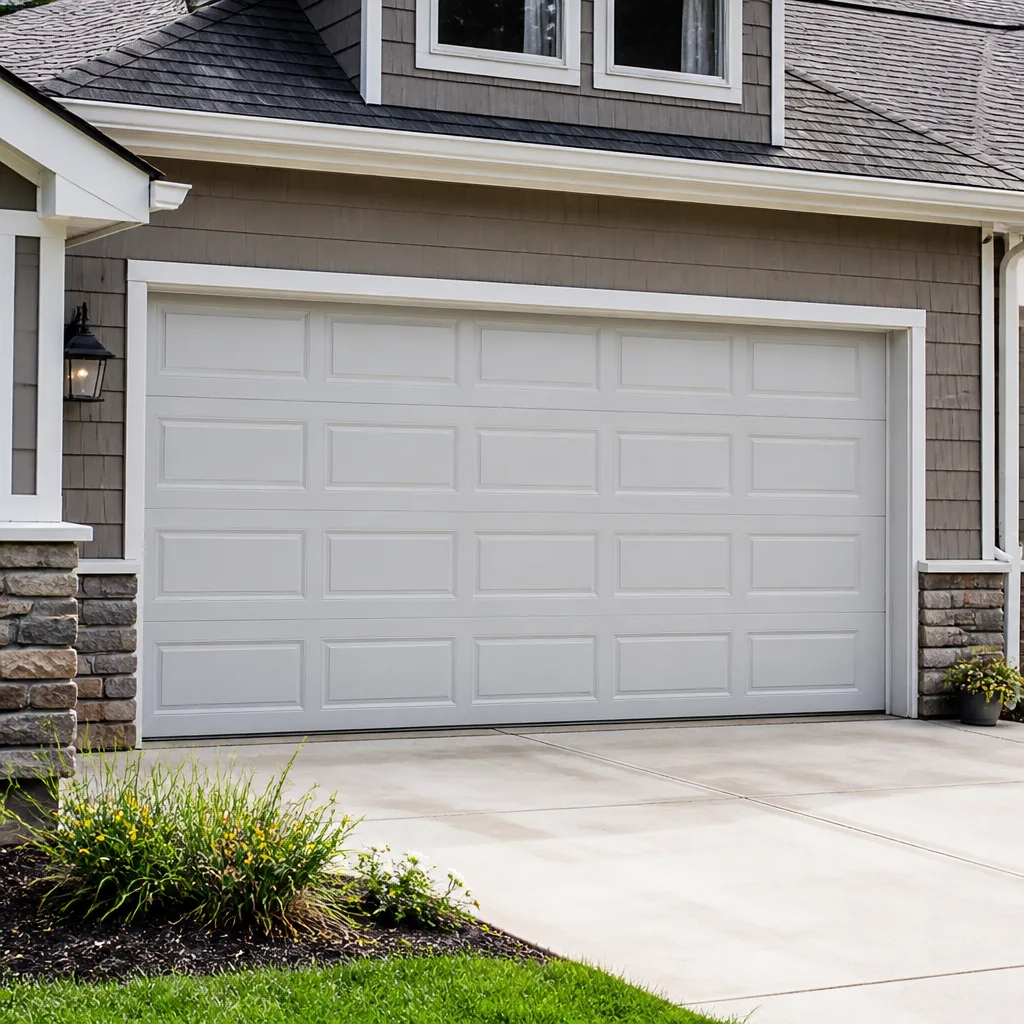 Raised-panel steel
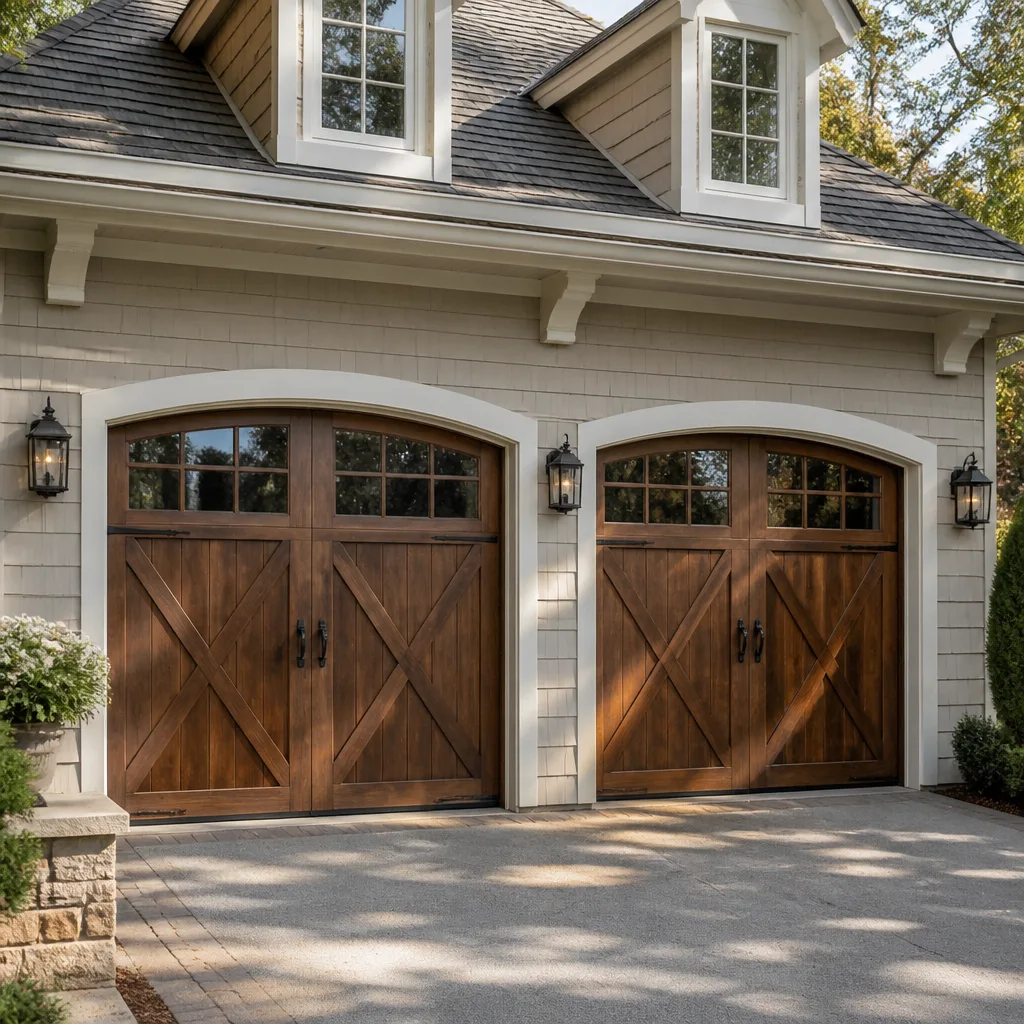 Carriage house
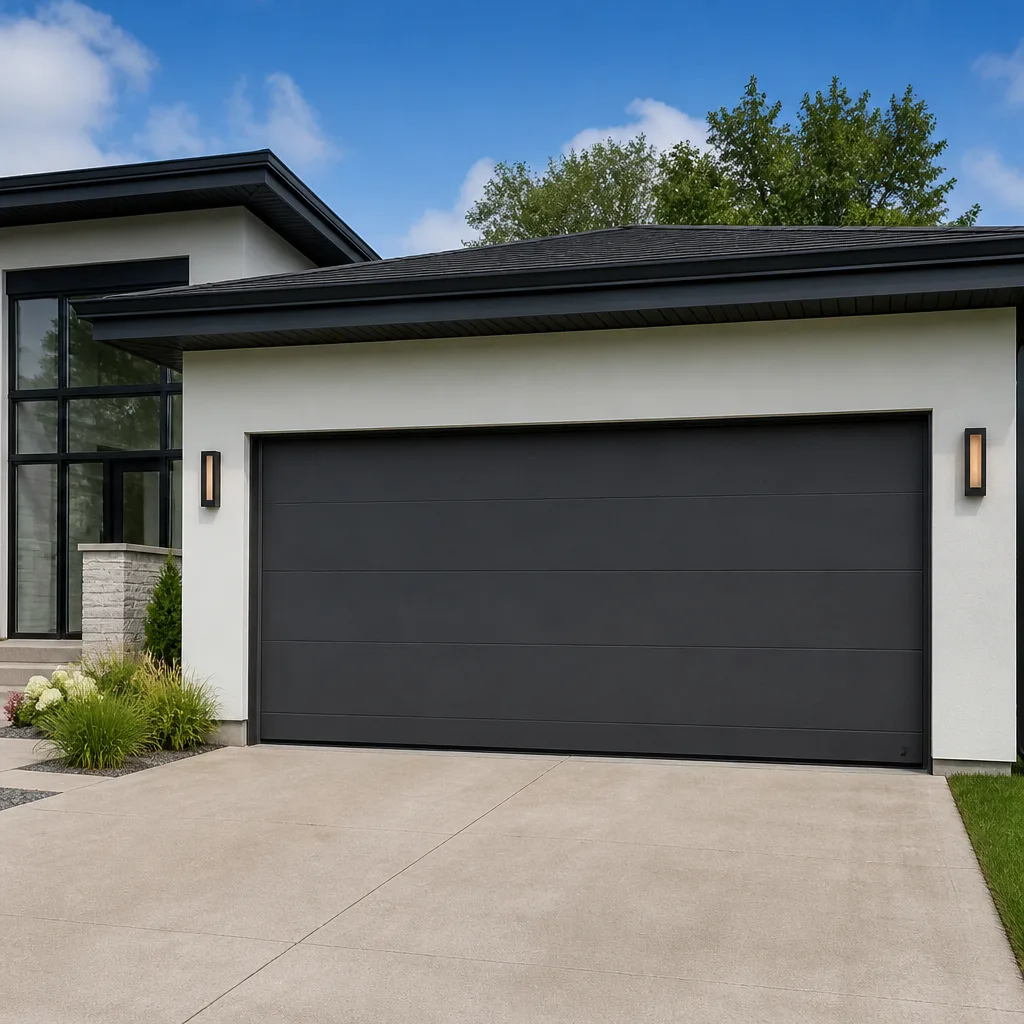 Modern flush
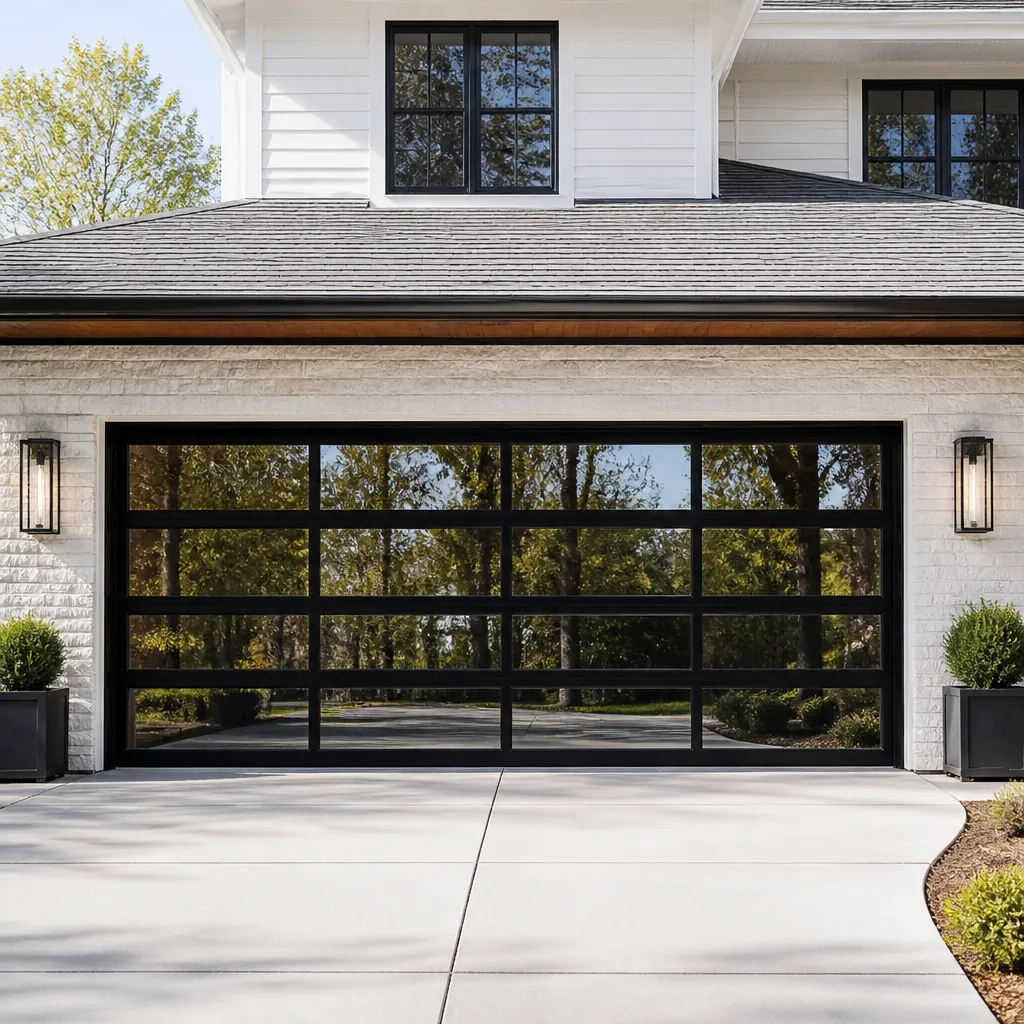 Full-view glass
 LiftMaster openers
 Chamberlain openers
Full 25-point door and opener safety check with every visit - springs, cables, rollers, tracks, and your LiftMaster or Chamberlain opener included
You get a price before we start. It does not change when the pro arrives.
Get your free estimateHow Long Does Garage Door Parts Take? Timelines and What to Expect
Nine out of ten spring replacements take under an hour on-site. The job that blows past that estimate almost always had a warning sign the homeowner noticed two weeks earlier and didn’t mention when they called. That’s the part nobody tells you: the timeline for a garage door repair is mostly decided before the truck pulls into your driveway – by whether parts are in stock locally, whether the original installer used standard or proprietary hardware, and whether one broken part has been quietly hiding damage to its neighbors. This guide breaks down realistic on-site times for the five most common repairs, explains why sourcing is the real variable, and shows you how to describe your problem so the right parts show up with the technician. We’ve seen all of it in Spring Valley, from 1980s doors in older tracts to brand-new builds on the edge of the valley.
Quick Answer
Most garage door repairs take 30 to 90 minutes on-site. Spring and cable jobs usually run 45-60 minutes, roller replacements 30-45 minutes, opener repairs 45-75 minutes, and full panel swaps 1-3 hours depending on the model. The real wildcard isn’t labor – it’s part availability. A shop that stocks common parts for Clopay, Amarr, Wayne Dalton, and LiftMaster systems can often finish same-day; a call center that orders from a regional warehouse can add two to five days.
Styles & brands we work with
- Raised-panel steel
- Carriage house
- Modern flush
- Full-view glass
- LiftMaster openers
- Chamberlain openers
Table of Contents
- The Realistic Timeline for the Five Most Common Repairs
- Why Part Sourcing Is the Real Time Variable
- “While We’re In There” Discoveries and How to Handle Them
- How to Describe Your Problem Before the Appointment
- The Jobs That Genuinely Can’t Be Done Same-Day
- Spring Valley Specifics: Climate, Codes, and What We See Here
- How to Plan Your Morning Around a Repair
The Realistic Timeline for the Five Most Common Repairs
When a homeowner in Spring Valley calls with a problem, the first question we ask is what the door is doing – not what they think is broken. That’s because the same symptom (door won’t open) can mean three different repairs with three different timelines. Here’s what the clock actually looks like for the five jobs we do most.
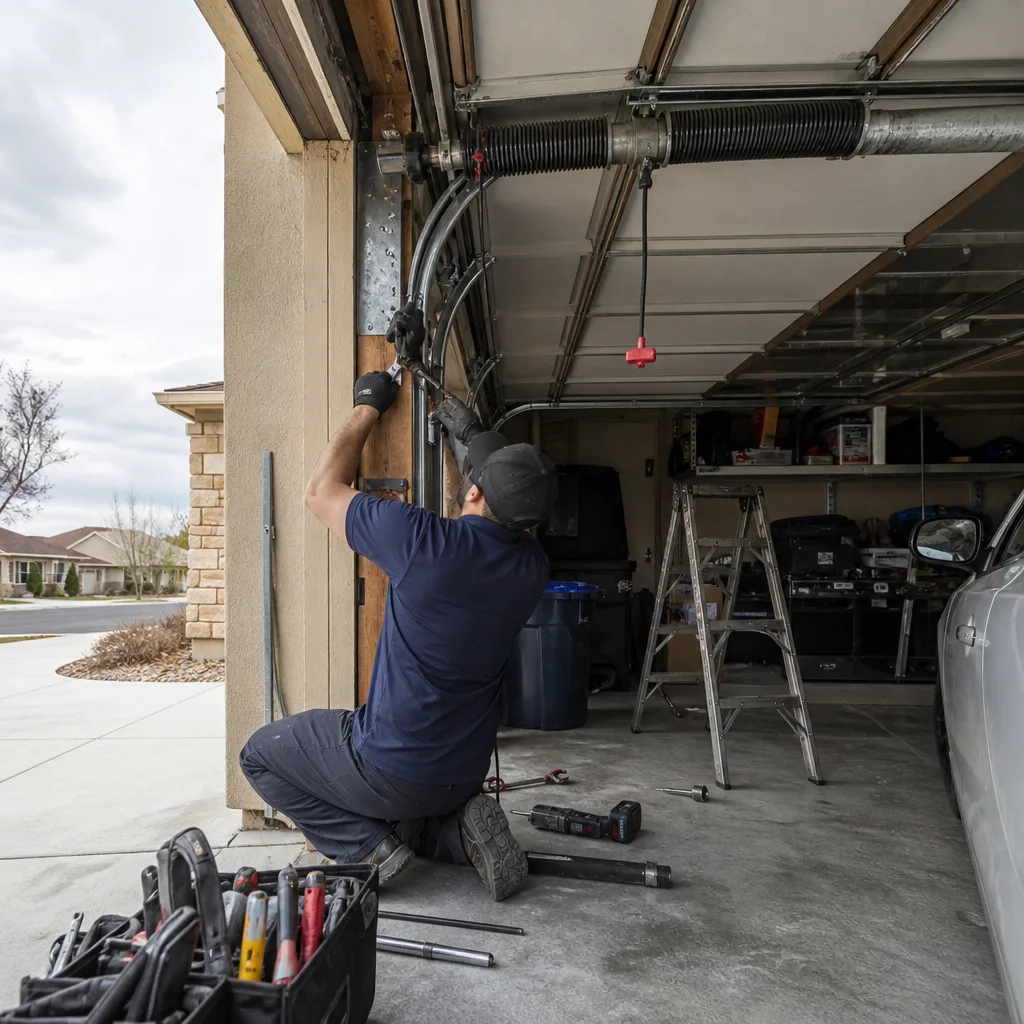
Torsion and extension spring replacement: 45-60 minutes. This is the most common repair by far, and it’s the one people dread the most. A door is 200 pounds riding on two springs. Respect it. We won’t walk a homeowner through this one over the phone because the tension involved can maim a hand in a fraction of a second – this is a trained-professional job, full stop. On-site time for a clean replacement on a standard double door is under an hour. Longer if the original springs were undersized or if the center bearing plate is seized.
Cable replacement: 45-60 minutes. Cables rarely fail alone. If one snapped, the other is often stretched or frayed, and the drum on the failed side usually needs inspection. We replace cables in pairs as a rule, because installing one new cable next to a worn one just moves the failure date forward by a few months.
Roller and hinge replacement: 30-45 minutes. This is the fastest job on the list. Nylon rollers on a standard seven-foot door are quick work, and if the hinges aren’t bent, you’re looking at a half-hour. Steel rollers on an older Wayne Dalton door sometimes need penetrating oil and patience if they haven’t moved in a decade.
Opener repair or replacement: 45-75 minutes for a repair, 2-3 hours for a full replacement. If the opener is straining, the problem is almost never the opener – it’s usually the door’s balance, and we check that first. A logic board or gear replacement on a LiftMaster or Chamberlain unit is a 45-minute job. A full opener swap with new rail and safety sensors is closer to two hours, plus programming remotes and keypads.
Panel replacement: 1-3 hours. This is where model matching matters most. Clopay and Amarr panels have to match the exact series and color, and if the original install is more than a few years old, the color can have faded slightly. We measure and confirm the model before quoting the time, because guessing here costs days.
Why Part Sourcing Is the Real Time Variable
Here’s the counterintuitive part about garage door repair time: 90% of the variation between a 45-minute job and a five-day job isn’t labor. It’s whether the part is on the truck or in a warehouse three states away.
Think about how a national call center works. You call a 1-800 number, a dispatcher in another time zone takes your information, and the job gets routed to whichever subcontractor has an opening. That subcontractor may or may not stock the part for your door. If they don’t, they order it – and now you’re waiting two to five business days for a spring that a local shop could have handed you that afternoon. The dispatcher didn’t do anything wrong. They just didn’t know your door.
Now think about how a locally owned shop works. A real local operation knows that most of the doors in a given county fall into a handful of models, and stocks the springs and cables that fit them. When you call and describe the door, the person on the other end can usually tell from experience whether they’ve got the part in the truck or need to pull it from a shelf. That’s a five-minute difference, not a five-day one.
The variables that determine which scenario you’re in:
- Door age and brand. A 2015 Clopay or Amarr door uses standard torsion springs that most shops stock. A 1990s off-brand door may use a non-standard spring with a specific wire gauge and inside diameter – that has to be measured and ordered.
- Standard vs. proprietary hardware. Some manufacturers use proprietary end plates, drums, or opener rails. If the original installer used standard hardware, replacement is quick. If they used a proprietary setup, the part may need to come from the manufacturer.
- Opener logic boards. This is the single biggest stock variable. A shop may carry twenty common LiftMaster boards but none for a discontinued Genie model from 2008. That’s a two-to-four-day order.
- Panel matching. If you need a panel on a Clopay or Wayne Dalton door, the color and texture have to match the run. Older doors often have enough fade that we order the matching series rather than risk a mismatch.
We’ve written more about how a stocked truck changes the equation on our Garage Door Repair in Spring Valley page. The short version: ask before you schedule whether the shop stocks the part for your door, and ask what happens if they don’t. A straight answer there tells you what kind of operation you’re dealing with.
“While We’re In There” Discoveries and How to Handle Them
Here’s a scenario that catches people off guard. The technician gets the door open, finds the broken spring, and then notices that the cable on the same side is frayed, one of the rollers is seized, and the bottom bracket has a hairline crack. None of those were the reason you called. All of them will fail within the year. That’s what “while we’re in there” looks like.
The right way to handle it is simple, and it’s on us as much as on you. Here’s how we do it, and what to ask any shop to do:
- Show, don’t tell. The technician should walk you to the door and physically point at the frayed cable or the seized roller. If you can’t see it, it’s not a discovery, it’s an upsell.
- Quote each item separately. A clean quote lists the primary repair and each additional item with its own price. That way you can say yes to the spring and no to the rollers without the whole job falling apart.
- Give you the “why now” and the “how long.” A good technician will tell you when the add-on part is likely to fail and what it costs if it does – not just that it’s worn. “That cable has maybe three months left, and a cable failure usually takes the drum with it” gives you a real choice. “You should probably replace the whole door” does not.
- Let you sleep on it if it’s not urgent. Spring and cable replacement is urgent. Rollers and hinges usually aren’t. A shop that pressures you on cosmetic add-ons on the same call is telling you something about how they’ll treat you next time.
You’ll never feel pressured on a call that Otto answers himself. The price quoted on the phone is the price at the door, and if the technician finds something else, it’s your call, not theirs. Our Garage Door Opener Repair & Installation in Spring Valley page covers this in more detail for opener jobs, where the “while we’re in there” issue most often involves a motor that’s straining because the door is out of balance.
How to Describe Your Problem Before the Appointment
The single biggest thing you can do to shorten your own repair time is describe your problem accurately when you call. A vague description (“the door is broken”) forces the technician to load a generic kit and hope. A specific description lets them load the exact part.
Here’s the detail we need, in order of importance:
- What the door does when you press the button. Does it move at all? Move six inches and stop? Move but look crooked? Strain and hum without moving? Each of those points to a different failure.
- What you hear. A loud bang followed by a door that won’t open is almost always a spring. A grinding noise from the top of the door is usually a bearing plate or opener gear. A rhythmic tick is a roller or hinge.
- The door’s make and model. Look for a sticker on the inside of the top panel or on the track. “Clopay, installed around 2014” gives us a real starting point. If you can text us a photo of the sticker, even better.
- Age of the door and the opener. If the door is 15 years old and the opener is 12, we’re likely looking at a combination of worn parts, not one failure.
- Whether the door is balanced. If you can safely pull the emergency release with the door closed and lift the door by hand, does it stay open halfway or fall? Don’t do this on a door with a visibly broken spring – it will fall hard. Only test this on a door that’s currently functioning.
When you call (888) 318-1978, a live person answers – not a menu, not a dispatcher three states away. You’ll get a price on that call, and it holds when the technician arrives. That’s the whole point of the way this shop runs.
The Jobs That Genuinely Can’t Be Done Same-Day
Most repairs can be done same-day when the part is in stock. But there’s a short list of jobs that genuinely cannot – and knowing which ones before you call saves you a day of frustration.
- Special-order springs. A torsion spring is matched to the door’s weight and height. If the door was custom-built or the original installer used a non-standard spring, the part has to be made and shipped. That’s usually two to five business days. There’s no shortcut here – a mismatched spring is a safety issue, not just a performance one.
- Proprietary opener parts. Logic boards, travel modules, and motor assemblies for discontinued models often come direct from the manufacturer. If your opener is a model from before roughly 2010 and it’s not a common LiftMaster or Genie, plan for a few days.
- Specific panel matches. If a Clopay or Amarr panel has to match a color that’s been off the market for years, the shop either has it in the back or the manufacturer does. Nine times out of ten the answer is “the manufacturer,” and that’s a week.
- Full door replacement. This is never same-day. New doors are measured, ordered, and scheduled, because installation is a half-day job that has to fit the opening and the existing track and opener. Anyone promising a same-day door replacement is either guessing or cutting corners.
- Structural track issues. If the track is bent from a vehicle strike or the header has rotted, the repair is more than a parts swap. Track straightening on a normal setup takes an hour. A bent header or a rotted jamb is a two-visit job.
Notice the pattern: nothing labor-intensive is on that list. Every job that genuinely can’t be done same-day is one where the part, not the person, is the bottleneck. That’s exactly the reason a shop that stocks locally is faster than a shop that orders from a warehouse – not because the person is faster, but because the truck is stocked.
Spring Valley Specifics: Climate, Codes, and What We See Here
Spring Valley isn’t Las Vegas proper, and the differences matter for garage door timelines. The valley’s dry heat (regularly over 100°F in July and August) is hard on springs and rollers. We see spring failures cluster in the first two weeks of real heat each summer, because the cycle count on a worn spring gets pushed past its limit faster in the heat. If your door is 8-10 years old and you’re in that window, don’t be surprised if a spring goes this season. In the older tracts west of Rainbow and in the established parts of Spring Valley, we also see a lot of original 1990s installs – which means standard springs are usually in stock, but the cables and rollers on those doors have usually been through one replacement already.
If you’re in a newer build on the east side or near the 215, most doors are 2010s-vintage Clopay, Amarr, or Wayne Dalton, and the parts are standard. Those jobs move fast. The ones that surprise homeowners are the middle-vintage doors – 2005 to 2012 – where the original installer used a proprietary opener on a standard door, and the opener logic board is the part that fails. We keep common LiftMaster and Chamberlain boards on the truck for exactly that reason.
The other Spring Valley specific is permits. Structural changes to a garage door opening – widening it, changing the header, moving the track wall – usually need a county permit. A spring, cable, roller, or opener replacement does not. If someone tells you a spring replacement requires a permit, ask for the code citation. It doesn’t. A full door replacement usually does, and a legitimate shop will handle the paperwork for you rather than hand it back. For new door installations in Spring Valley, see our Garage Door Installation in Spring Valley page.
How to Plan Your Morning Around a Repair
If you’re scheduling a repair, here’s a realistic way to plan the day:
- Spring or cable on a standard door: block 90 minutes. On-site time is usually 45-60 minutes; the rest is cushion for setup, safety check, and balance testing.
- Roller or hinge work: block 60 minutes. Most jobs finish in 30-45.
- Opener repair: block 2 hours. Board or gear work is usually under an hour, but if the fix turns into a full opener replacement, you don’t want to be rushing to a meeting.
- Panel replacement or door replacement: block a full morning. Even when the part is in hand, matching, fitting, and finishing a panel or door takes real time.
Two rules that save a lot of headache: don’t schedule a repair the day before a trip (parts delays are rare but real, and if the door won’t close you’ll want the buffer), and pull the car out of the garage before the technician arrives if the door will open. If it won’t open, park on the street and clear the driveway. The technician can’t safely work around a vehicle under a door.
Common Mistakes to Avoid
- Calling the 1-800 number instead of a local shop. A national dispatch center can’t tell you what’s in stock in Spring Valley, and the price you hear is often not the price you get. Ask for the shop’s address and a license number you can verify before booking.
- Not describing the symptom. “The door is broken” gives the technician nothing. “Loud bang, door won’t open, spring looks broken” gives them everything. This is the difference between a same-day fix and a two-day order.
- Authorizing “while we’re in there” work without seeing it. A legitimate add-on comes with a physical point at the part and a separate line on the quote. If you’re asked to approve a repair you can’t see, decline and ask for a written itemization.
- DIY spring or cable replacement. We don’t give step-by-step instructions for these, and no reputable shop will. The tension on a torsion spring can release in a fraction of a second and has put experienced tradespeople in the hospital. This is the one job where the right call is always to call.
- Assuming the opener is the problem. If the opener is straining, the door is almost always out of balance. Replacing the opener without fixing the balance burns out the new motor too, and it happens a lot in the older Spring Valley neighborhoods where doors are 15-20 years old.
- Ignoring a small panel ding. A rock chip on the bottom panel is a $200 fix today and a $900 panel-plus-paint-match fix in two years, once the color has faded and the panel is discontinued. If you’re in a newer build, deal with it while the match is easy.
- Scheduling a repair without confirming part availability. Ask the shop: “Do you stock the spring for a 2014 Clopay double door?” If the answer is “we’ll find out when we get there,” you’re gambling with your day.
See the difference
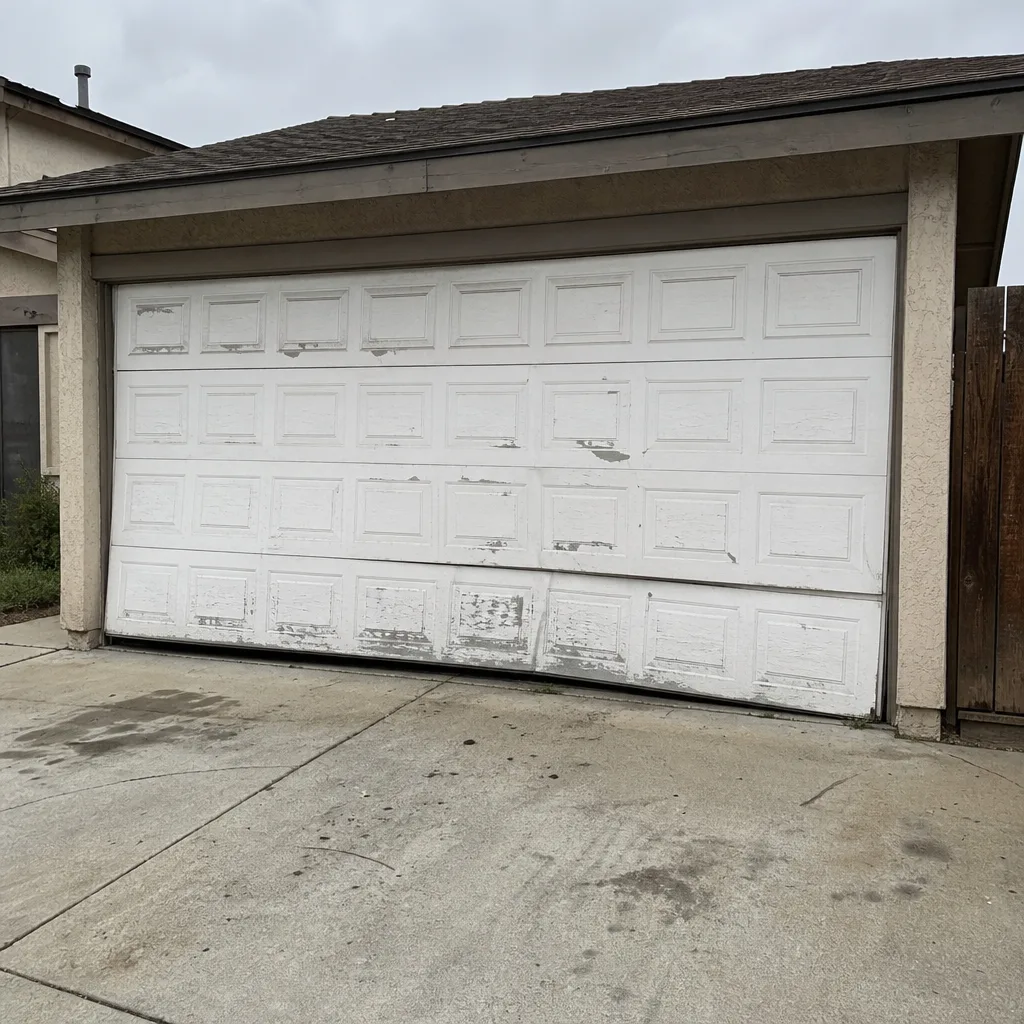 Before
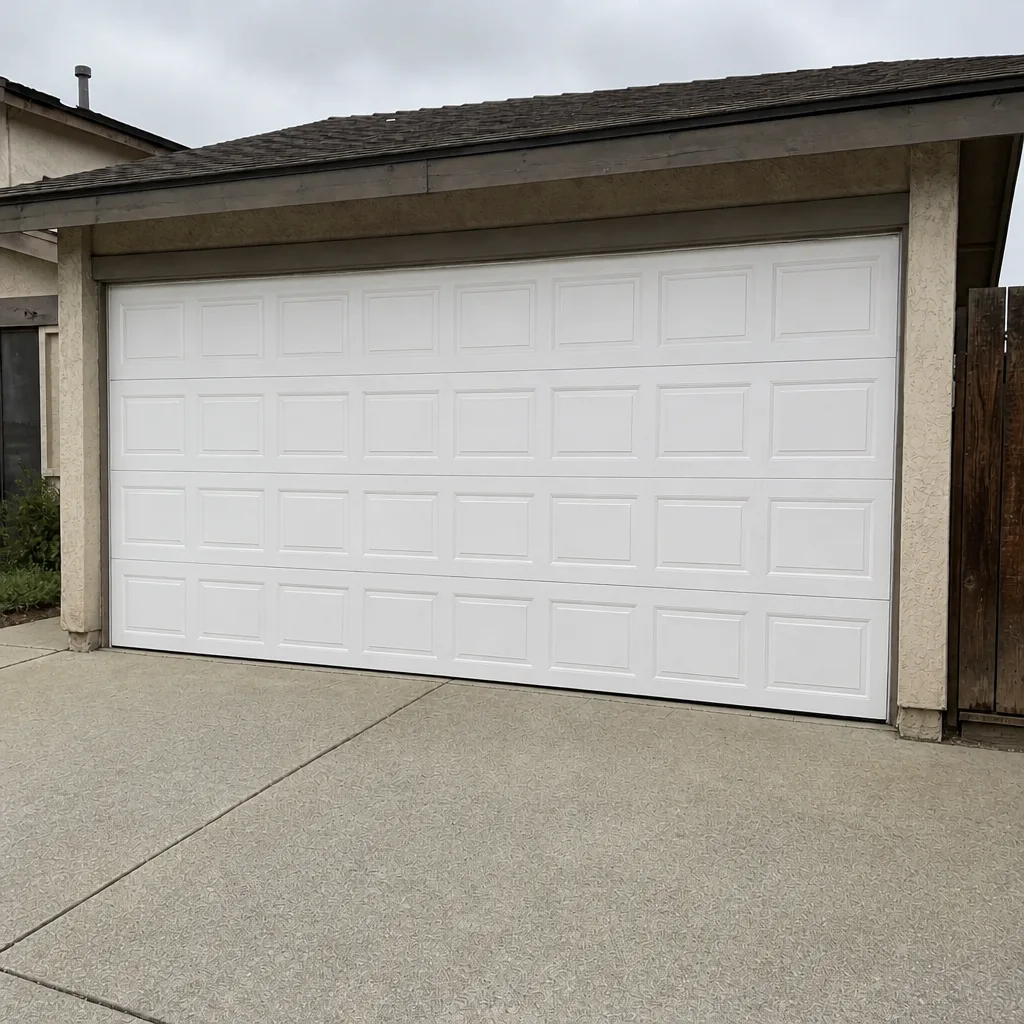 After
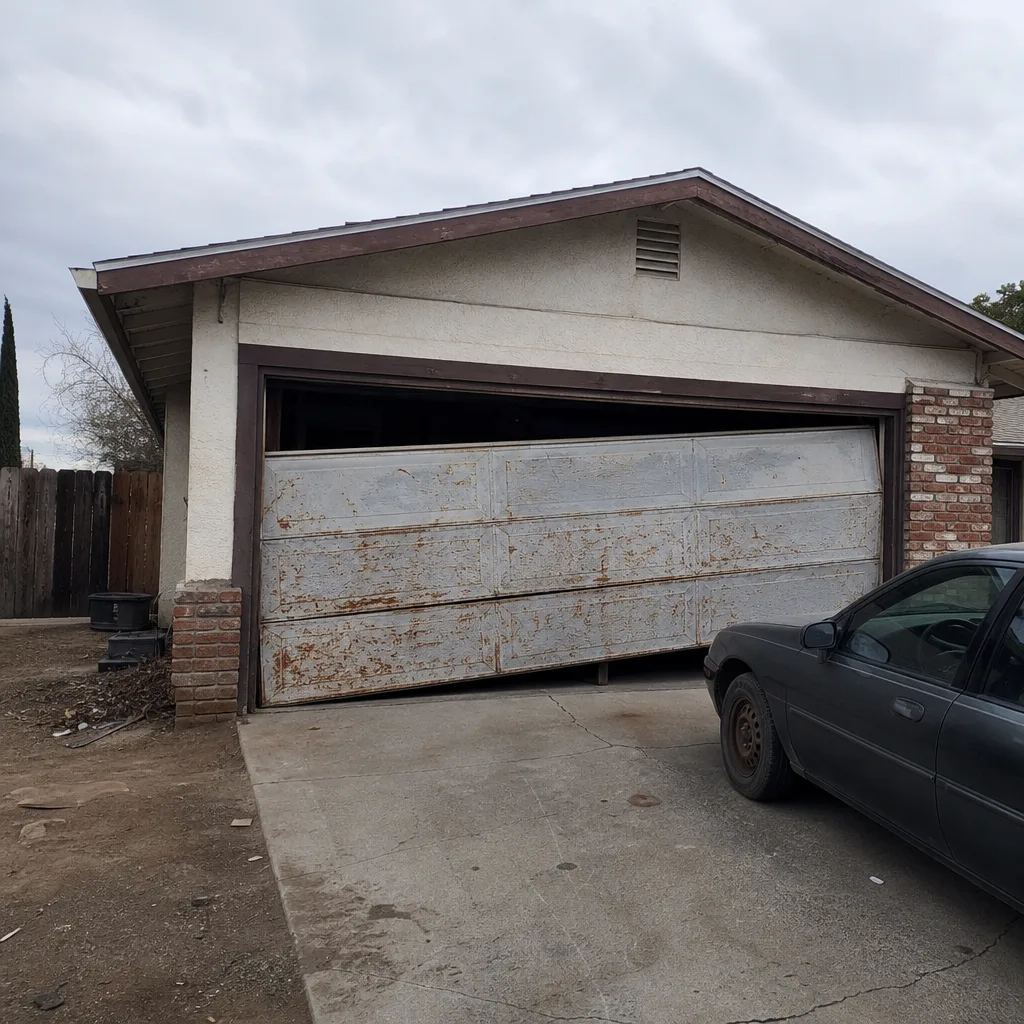 Before
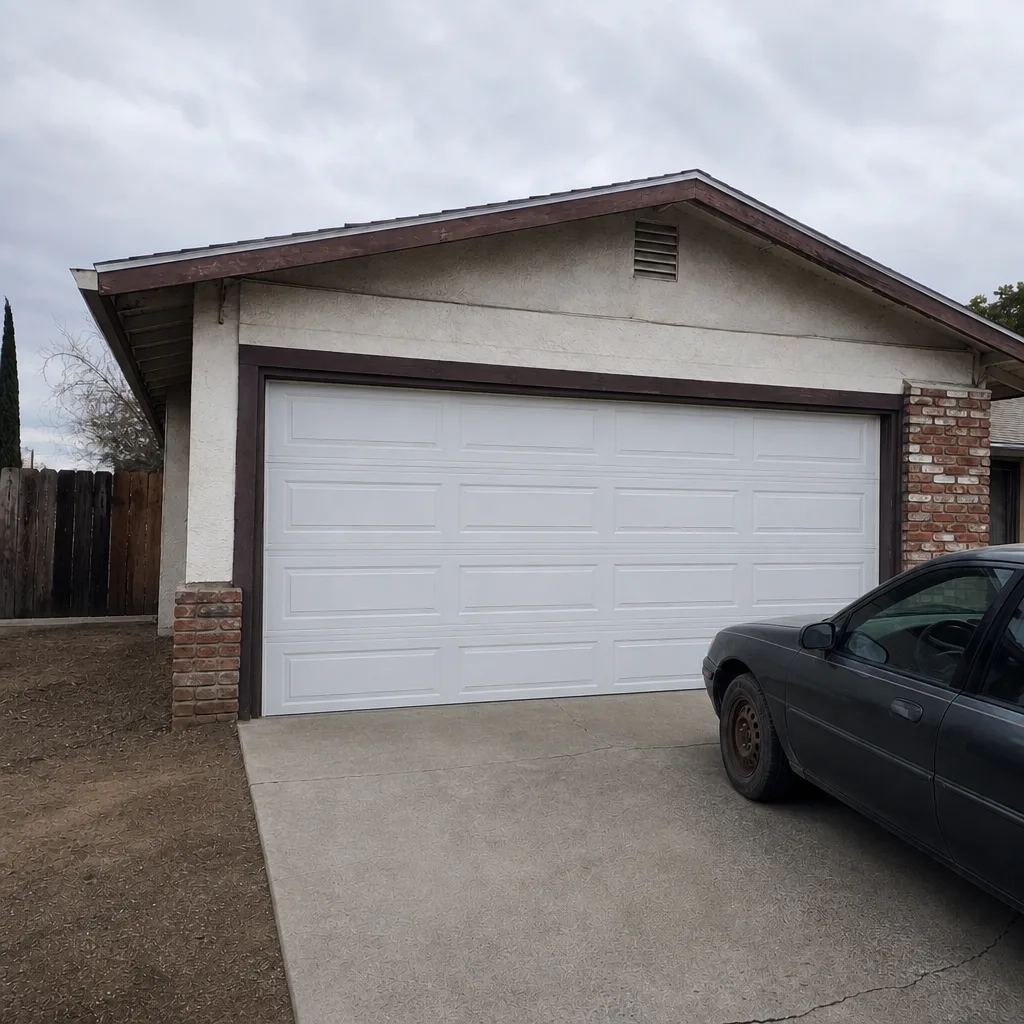 After
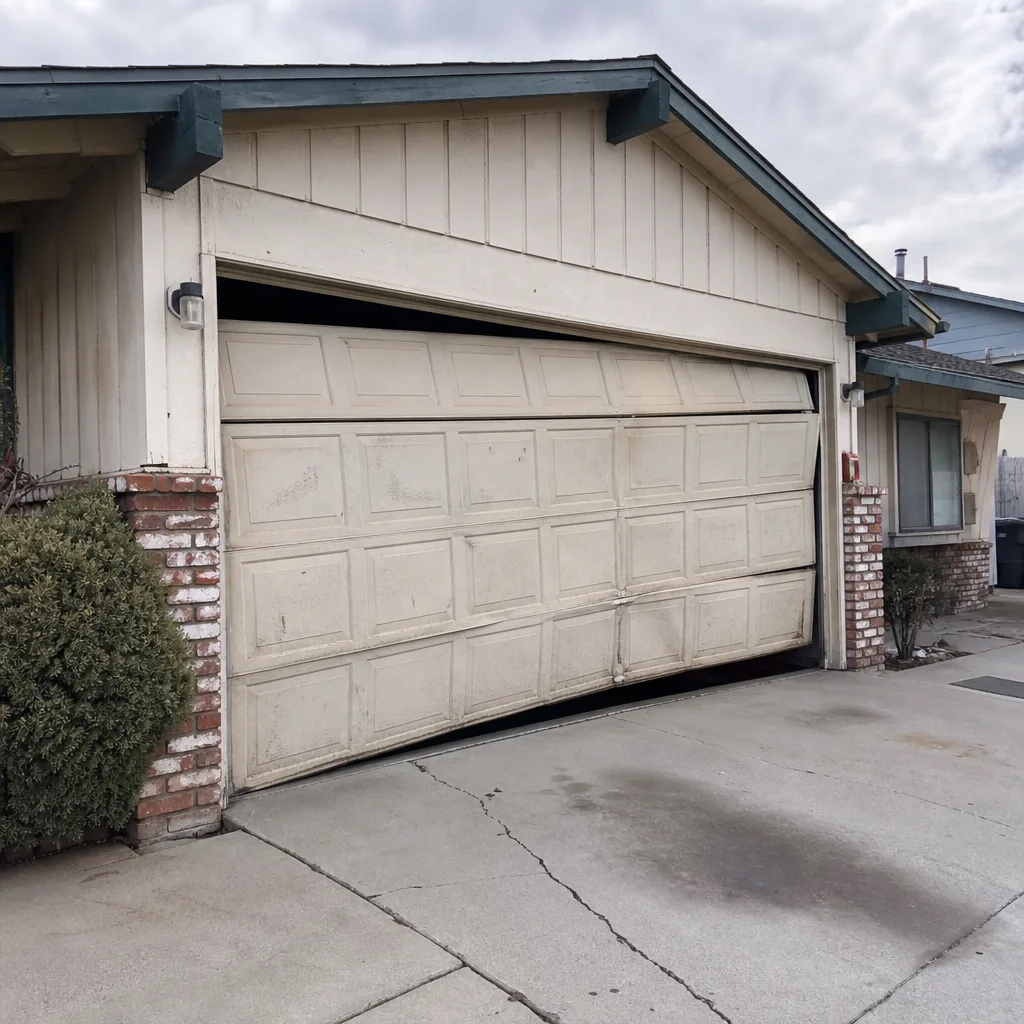 Before
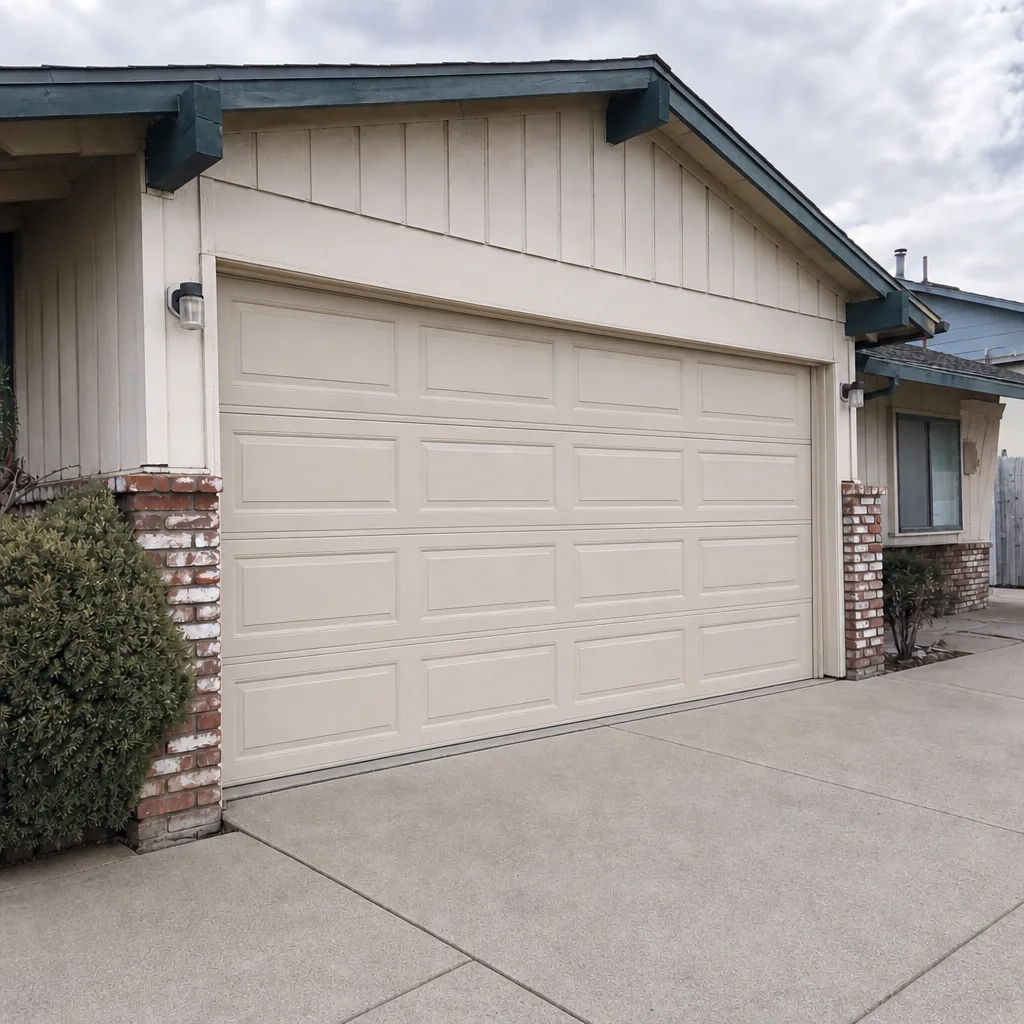 After
When to Call a Professional
Call a professional any time a spring is broken, a cable is frayed, or the door has come off the track – those are safety issues, not maintenance. Call if the door is straining, moving unevenly, or the opener is making noise it didn’t used to; the underlying cause is usually a balance problem that gets worse with use. Call if the bottom bracket is bent or the panel has a crack, especially on a door over ten years old where the part may need to be ordered. And call before you panic on a Saturday night when the door won’t close and your car is locked in. Otto’s Garage Door Spring Valley offers free estimates in Spring Valley – call (888) 318-1978, and a live person will pick up and give you a real timeline and a real price.
Frequently Asked Questions
Spring replacement takes 45-60 minutes on-site for a standard double door, and most jobs are same-day if the spring is in stock. The right spring is matched to the door’s weight and height, so a mismatched door takes 2-5 days for a special order. We don’t recommend DIY spring work under any circumstance – it’s the single most dangerous repair on the door. Call (888) 318-1978 for an exact quote, and estimates are free.
Usually, yes – if the part is in stock, which it is for most standard springs, cables, rollers, and openers in Spring Valley. The way to know for sure is to call and describe the door and the symptom; a live person will tell you on that call whether it’s a same-day fix or a special order. Call (888) 318-1978 and we’ll give you a straight answer, not a sales pitch.
No. The price quoted on the phone is the price at the door. If the technician finds additional worn parts while working, those are quoted separately and shown to you physically before anything is authorized, and you can say no without the original job changing. That’s the whole reason the shop runs this way. Call (888) 318-1978 for a quote that holds.
Yes. The business operates under a published address and license number you can verify before anyone arrives, and the technicians who show up are background-checked and uniformed. Every job comes with the 90-Day Done Right Promise in writing on the invoice. Call (888) 318-1978 with any questions before you book.
Installation is a scheduled half-day job, not same-day, and most doors take 1-3 weeks from measurement to install because the door has to be ordered to fit your opening. Measuring takes 30 minutes on-site, the written price comes with the measurement, and the install itself is usually a morning. Our team has up to 22 years of experience across Clopay, Amarr, Wayne Dalton, and LiftMaster systems. Call (888) 318-1978 to schedule a free measure.
A repair needs a second visit when the part has to be ordered – special-order springs, discontinued opener boards, or a panel color that has to come from the manufacturer. In those cases the first visit is the diagnosis and measurement, and the second visit is the install, usually 2-5 business days later. If you want to skip that first trip, describe the door on the phone and we can sometimes confirm the part before we come out. Call (888) 318-1978 to run through it.
The Bottom Line
Most garage door repairs take under 90 minutes on-site, and the biggest variable is whether the part is on the truck. Springs and cables run 45-60 minutes, rollers under 45, opener repairs 45-75, and panel or door replacements are 1-3 hours or more. When the job stretches to days, it’s almost always a special-order part or a proprietary opener, not slow labor. The two things you can do to shorten your own timeline: describe the symptom in detail when you call, and confirm part availability before you book. Somebody who knows the doors in your neighborhood can answer that in ten seconds. Somebody reading from a script three states away can’t.
If you’re in Spring Valley and something on your door is off, call Otto’s Garage Door Spring Valley at (888) 318-1978 for a free estimate. A live person answers, the price on the phone is the price at the door, and the name on the invoice is the name on the license. Start at our Otto’s Garage Door Spring Valley home page if you want the full picture of what we do.
Written by the team at Otto’s Garage Door Spring Valley.