
Last updated November 18, 2026
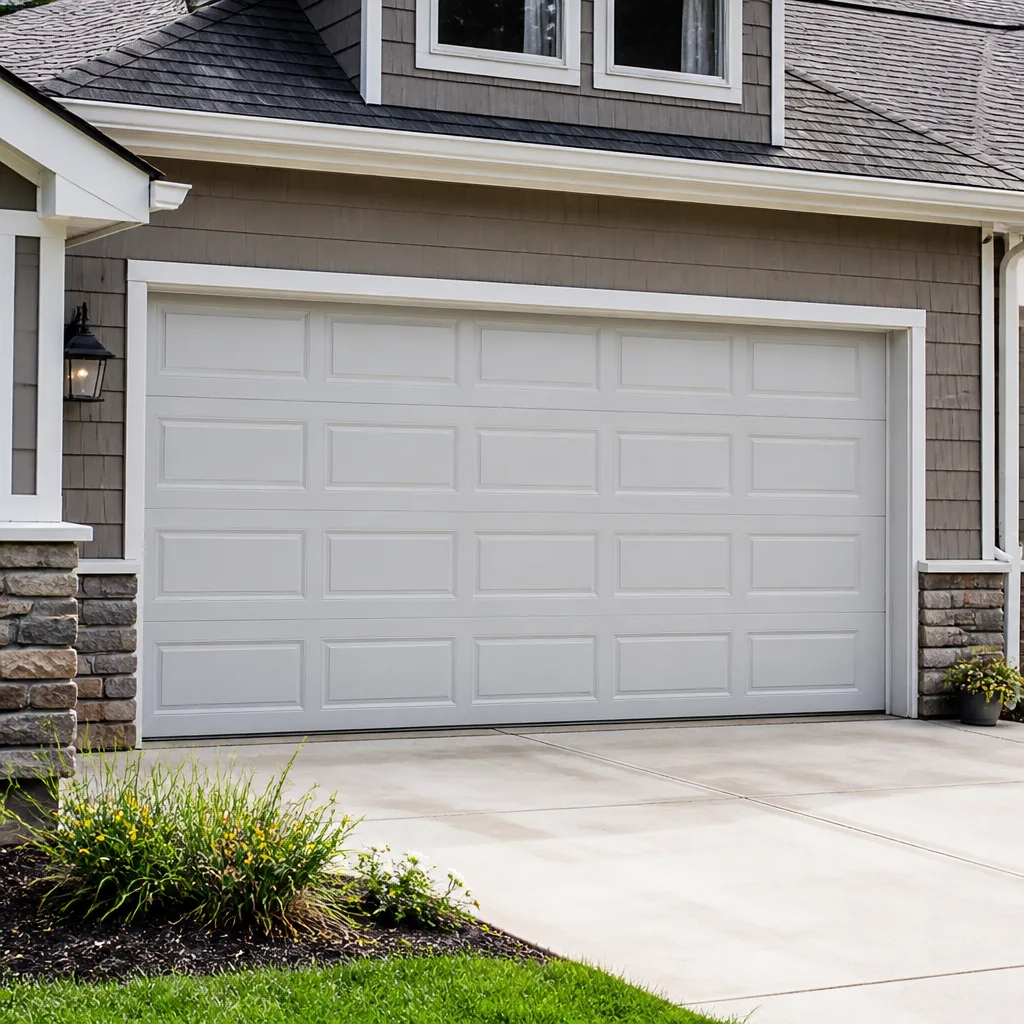 Raised-panel steel
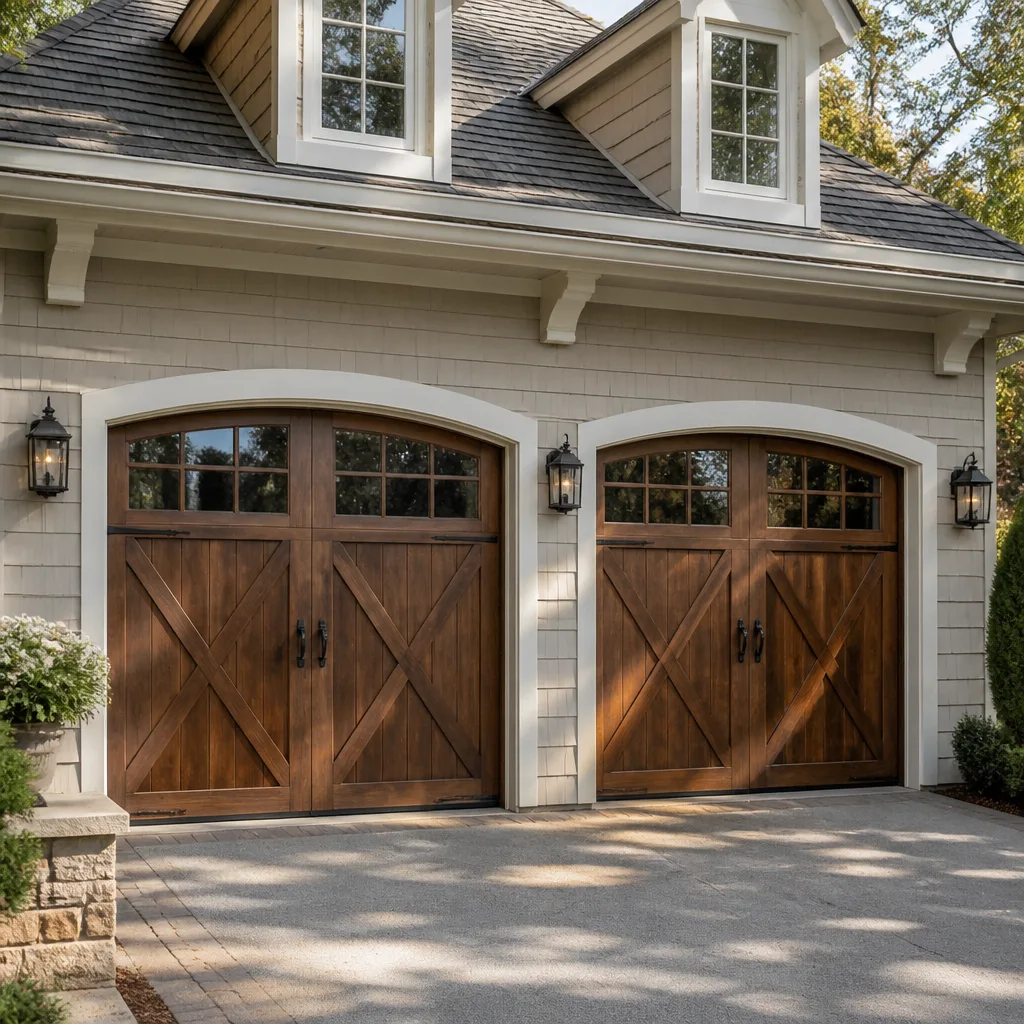 Carriage house
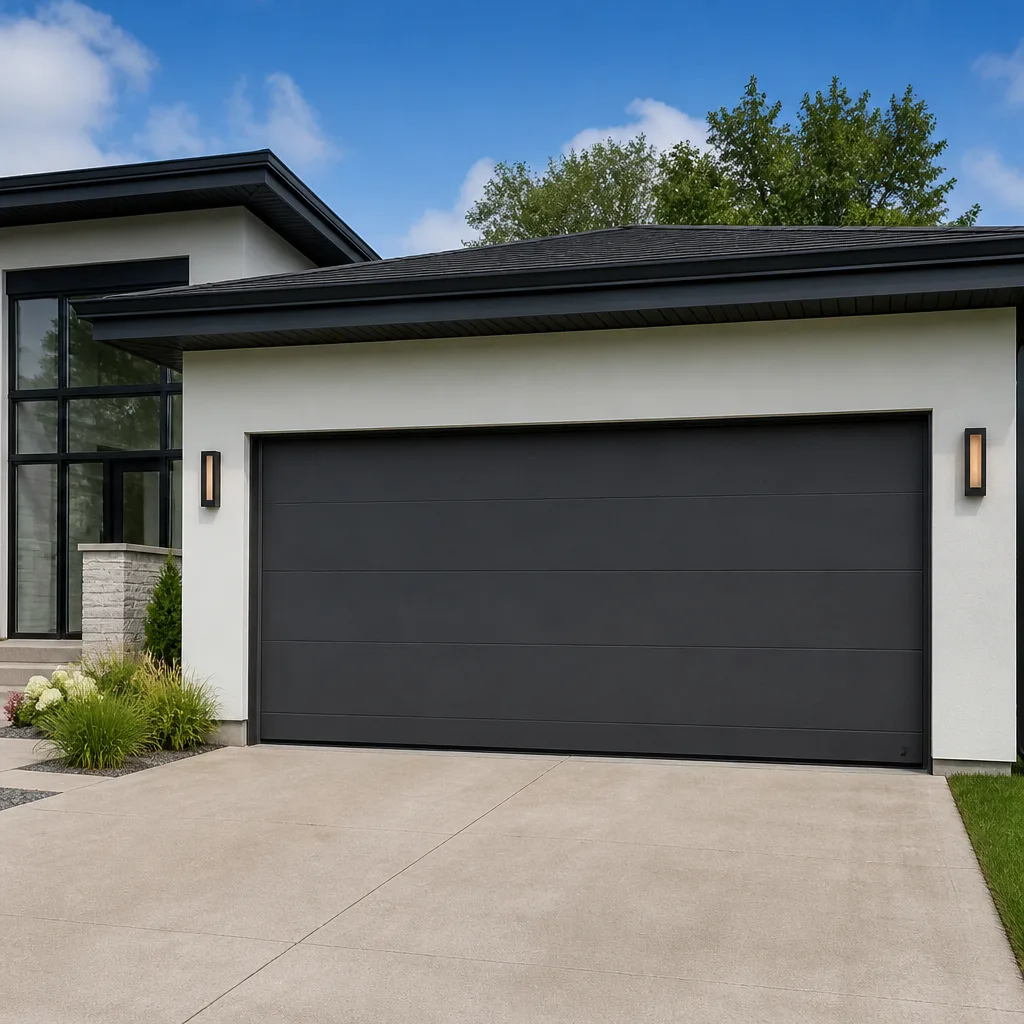 Modern flush
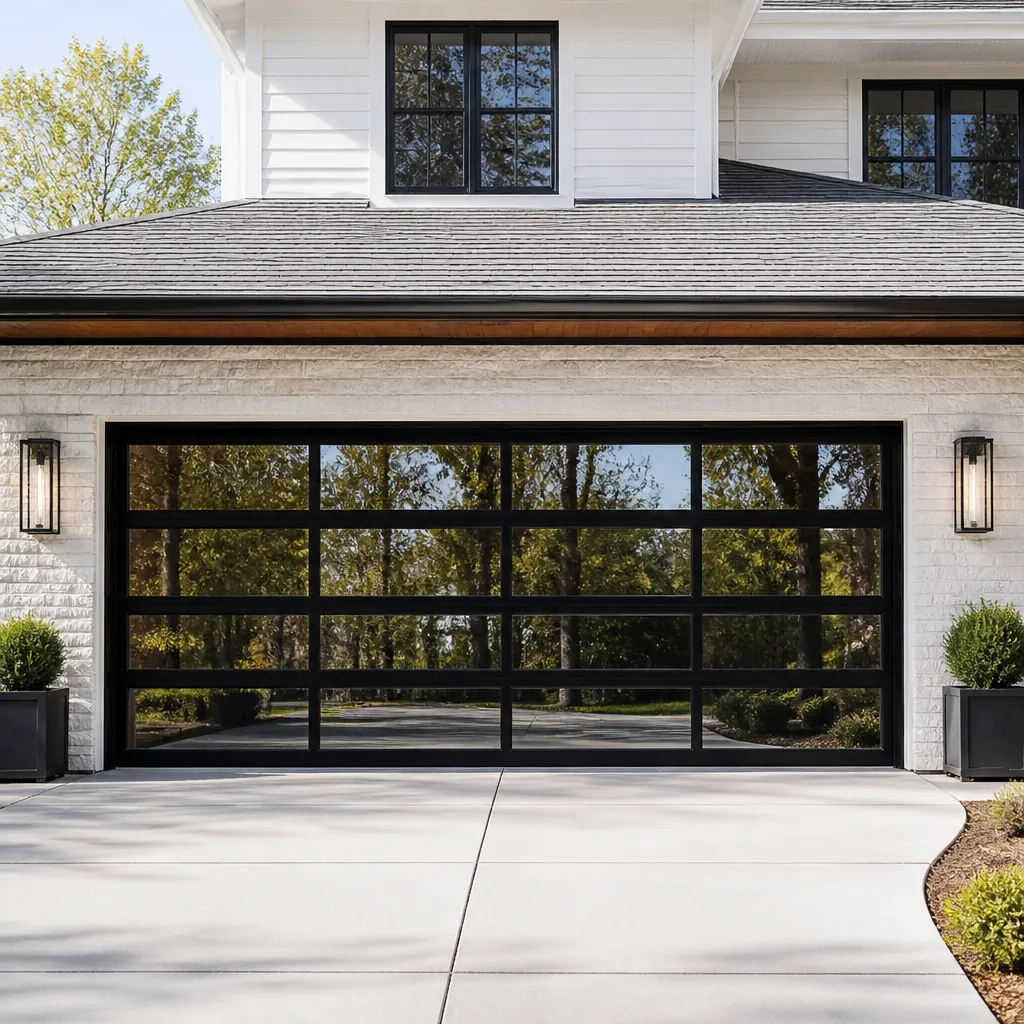 Full-view glass
 LiftMaster openers
 Chamberlain openers
Full 25-point door and opener safety check with every visit - springs, cables, rollers, tracks, and your LiftMaster or Chamberlain opener included
You get a price before we start. It does not change when the pro arrives.
Get your free estimateGarage Door Warning Signs: A Spring Valley Homeowner’s Reference Guide
A spring doesn’t just snap. It tells you it’s going for weeks before it goes. The sound is a specific metallic creak under load, different from the squeak of a dry roller. Most homeowners hear both and do nothing. One costs about $20 in lubricant to prevent. The other costs a couple hundred to fix and occasionally sends someone to urgent care. In Spring Valley’s dry heat, that warning window gets shorter every summer. This guide names exactly what you’re hearing and seeing, what it means mechanically, and whether it’s a watch-it, fix-it-soon, or stop-using-it-now situation.
Quick Answer
The main garage door warning signs are unusual noises (creaks, grinds, bangs, pops), visible mechanical issues (slack cables, a gap in the spring, a sagging door), and behavioral changes (the door moving slowly, unevenly, or reversing on its own). In Spring Valley, heat makes several of these worse: warped bottom seals, UV-cracked cables, and dry rollers show up faster than in milder climates. Any sign involving the torsion spring or a frayed cable means stop using the door and call a trained professional.
Styles & brands we work with
- Raised-panel steel
- Carriage house
- Modern flush
- Full-view glass
- LiftMaster openers
- Chamberlain openers
Table of Contents
- The Three-Tier Severity Framework: Watch, Schedule Soon, Call Today
- What the Sounds Are Telling You
- Visual Warning Signs You Can Spot From the Driveway
- The Warning Pattern That Precedes a Spring Failure
- Opener Problem or Mechanical Problem?
- Spring Valley Heat: Warnings That Are Urgent Here
- Behavioral Signs: Slow, Uneven, Reversing
- Common Mistakes to Avoid
The Three-Tier Severity Framework: Watch, Schedule Soon, Call Today
The trouble with a symptom list is that it doesn’t tell you what to do first. So we sort every warning into three buckets. This isn’t guesswork: it’s how we triage doors across Spring Valley every week.
Tier 1 – Watch. Minor symptoms that aren’t failures yet but will get worse without attention. A light roller squeak. A bottom seal starting to flatten. A door that sounds a little dry. Handle these with a $15 tube of white lithium grease and a visual check every few months. No emergency, no panic, just maintenance.
Tier 2 – Schedule Soon. The door still works, but something mechanical is wearing out. A single cable showing a few frayed strands, a slowing opener, a door that binds partway up, a section that’s gotten harder to close. Book a service call in the next couple weeks. Don’t wait until it breaks on a Saturday night with your car sealed inside.
Tier 3 – Call Today and Stop Using It. Signs that something load-bearing is about to let go. A visible gap in the torsion spring. A cable that’s come off the drum or is slack and tangled. A door that’s sagging in the middle or dropped on one side. A loud bang followed by the door refusing to open. These are not “keep using it and watch” situations. A door is 200 pounds of steel riding on two cables. Respect it.
- Tier 1 (Watch): squeaks, dry rollers, worn bottom seal, minor rattles.
- Tier 2 (Schedule Soon): fraying cable, slowing opener, binding, uneven travel.
- Tier 3 (Call Today): spring gap, slack or off-drum cable, sagging door, loud bang.
The framework only works if you actually know the tiers. Once you do, a symptom stops being a vague worry and becomes a decision. That’s the whole point of this Spring Valley guide.
What the Sounds Are Telling You
Doors talk. The tricky part is that different sounds come from different places, and homeowners mix them up constantly. Here’s how to tell them apart.
- The metallic creak under load. This is the one that matters most. It happens as the door lifts, a sharp metal-on-metal groan from the spring shaft. It means the torsion spring is dry or already fatigued. In a Spring Valley door that’s seen a few summers, this is the sound that precedes a failure. Lubricant buys time; it doesn’t undo fatigue.
- The high-pitched roller squeak. This is usually a dry steel roller on the track. Harmless in itself, but it grinds the roller bearing down over time. White lithium grease on the roller stem quiets it. Cheap fix, worth doing.
- The grinding growl. That’s usually the opener’s gear or chain, or the door binding in a bent track. If it only grinds during part of the travel, it’s mechanical binding. If it grinds the whole way, suspect the opener.
- The loud bang followed by silence. That’s a torsion spring breaking. It sounds like a gunshot in the garage. The door won’t lift afterward because the spring was doing the lifting. Do not try to raise it by hand.
- The pop from overhead. Often a stretched spring slipping or a cable snapping off the drum. Same rule: keep hands away and call.
One habit that pays off: stand in the garage and listen to the full up-and-down cycle every few months. You’ll learn your door’s normal sound, and the change is what you notice. In our experience, the Spring Valley homeowners who catch failures early are the ones who know the baseline.
Visual Warning Signs You Can Spot From the Driveway
You don’t have to touch anything. Five seconds of looking tells you a lot. Do this walk-around once a month, especially after a stretch of 100-degree Spring Valley afternoons.
- Check the cables. Look at the two cables running down each side of the door. Healthy cable is smooth steel. Frayed cable shows broken strands sticking out like a frayed rope. Slack or off-track cable hangs loose instead of staying taut against the drum. Frayed or slack cable is a stop-using-it sign.
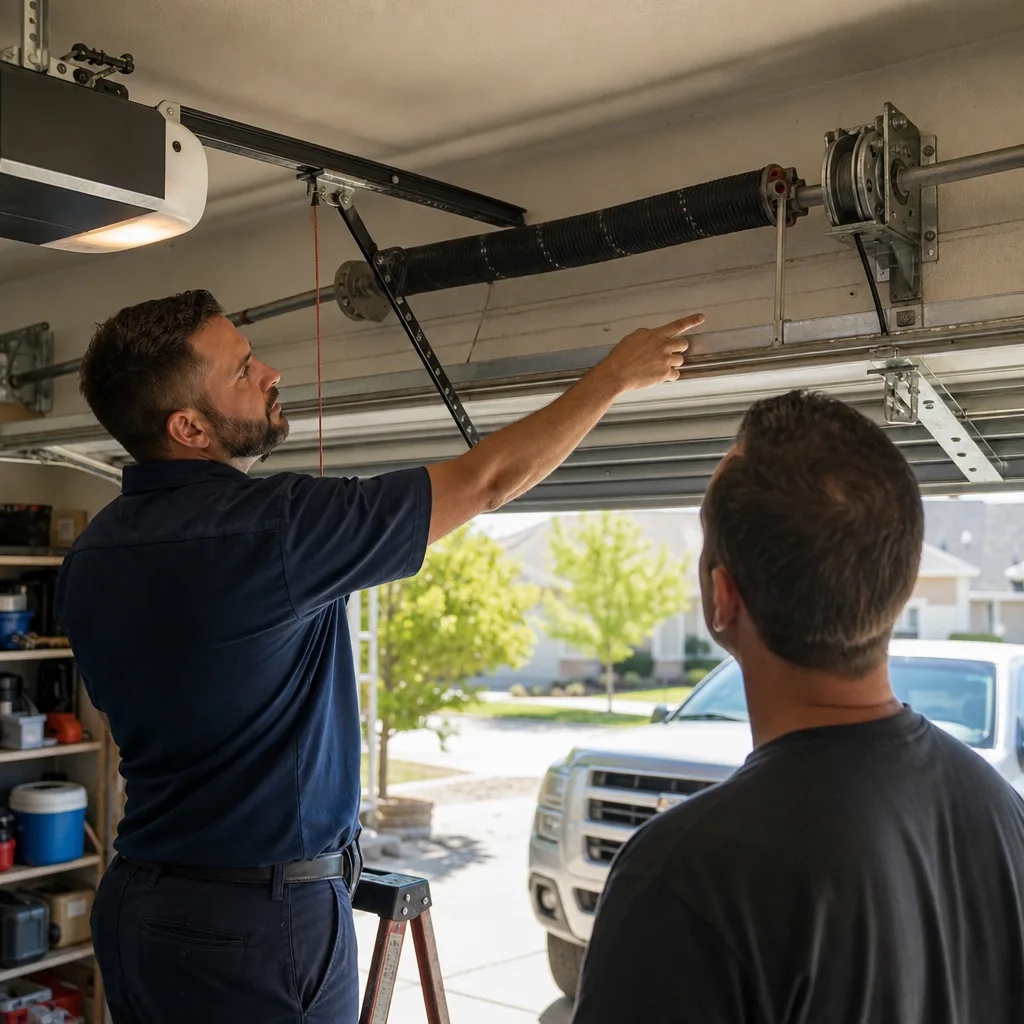
- Look at the torsion spring. On a standard door, that’s the coil above the door on the shaft. A gap of an inch or more anywhere in the coil means the spring has broken. Do not run the door. One broken spring means the other one is carrying double the load and can go next.
- Check the bottom seal. The rubber strip along the bottom. In Spring Valley heat it hardens, cracks, and warps. A warped seal lets in dust, insects, and summer heat, and it can trip the safety reverse. It’s a Tier 1 or 2 item, easy to replace.
- Eyeball the door panels. Stand back and look for a door that’s sagging in the middle or lower on one side. That hints at a stretched cable or a bent track. Both are Tier 2 at least.
- Check the track. Bent or misaligned track causes binding and grinding. A little bend can be straightened by a pro; a big one needs track replacement.
None of this requires tools or climbing. If any of it looks wrong, that’s your signal to get an experienced eye on it before the door makes the decision for you.
The Warning Pattern That Precedes a Spring Failure
Torsion springs don’t fail at random. They fail after a measurable number of cycles (one open plus one close), and the wear shows up in a predictable order. We count spring cycles the way you count tire miles, and we can usually tell a homeowner roughly what’s left on theirs.
Here’s the pattern to know:
- Weeks before failure: a metallic creak develops under load, and the door may start feeling slightly heavier when you lift it by hand (opener disconnected).
- Days to a week before: the door travels a little slower, and the creak gets louder and more regular during the lift.
- Hours to moments before: a sudden bang, then the door won’t open. In some cases the door lifts a foot and stops dead.
That middle stage is the window to act. A lubrication and inspection call catches fatigue before the snap. Once you hear the bang, you’re in stop-using-it territory – that’s a Tier 3, hands-off, call-today situation.
Why does this matter more in Spring Valley? Heat and dryness accelerate spring fatigue and dry out the steel. A door that would squeak through a mild-climate summer can wear faster here. That’s why we tell Spring Valley homeowners to schedule a spring check in late spring, before the peak of summer, rather than waiting for the noise to get worse. You’ll find the Garage Door Repair in Spring Valley service page covers the spring-replacement side of this in detail.
Opener Problem or Mechanical Problem?
Homeowners often assume the opener is failing when the door itself is the problem. Here’s the truth: if the opener is straining, the problem is almost never the opener. A healthy opener lifts a balanced door with barely any effort. If it’s working hard, the door is fighting back.
You can usually tell the difference without touching the springs or cables. Try these safe checks:
- Disconnect the opener (pull the red release cord while the door is closed) and lift the door a few inches by hand. If it feels heavy or won’t hold in place, the door’s balance is off – that’s a mechanical/spring issue, not an opener issue. Reconnect and call.
- Watch the lights and listen. If the opener clicks or hums but the door doesn’t move, and the door feels balanced by hand, the opener’s gear or capacitor is likely the culprit.
- Check the wall control. A door that only responds at some buttons can be a wall-control or remote pairing issue – common with LiftMaster and Chamberlain units.
- Note the pattern. Binding (grinding mid-travel), uneven lift, and slow travel are mechanical. Nothing-at-all or random stops are often opener-side electrical issues.
If the balance test says “heavy,” don’t run the opener – it’ll just wear the gears out chasing a door that needs spring work. We go deeper on the electrical side in our Garage Door Opener Repair & Installation in Spring Valley page. Either way, the point of this check is to know which conversation to have on the phone, so the visit is the right visit.
Spring Valley Heat: Warnings That Are Urgent Here
Our climate does a number on garage doors that milder places never see. Spring Valley’s dry summer heat and intense sun crack, warp, and dry out components faster. Some warnings here are Tier 1 elsewhere and Tier 2 here. Three to watch:
- Heat-warped bottom seals. The rubber strip hardens and curls in the sun, opening gaps at the floor. Beyond letting in dust and heat, a warped seal can trigger the safety reverse and leave you guessing why the door won’t close. In Spring Valley, replace it before it hardens completely.
- UV-cracked cables. Sun-baked cable can show surface cracking and fraying sooner than in cooler climates. Frayed cable is a Tier 2 or 3 item – get it checked early, don’t wait for the snap.
- Dry rollers and hinges. Our low humidity pulls the lubricant out. A door that’s quiet in spring can be squeaking by July. A yearly lubrication pass prevents it.
There’s a simple rule of thumb for Spring Valley: treat a fall lubrication and inspection as part of your yearly routine, the same way you service the AC. The heat won’t wait, and neither should a worn cable. A quick check in spring also catches a warped Clopay or Amarr bottom section before it becomes a replacement instead of a repair.
Behavioral Signs: Slow, Uneven, Reversing
How the door moves says as much as the noise it makes. Behavior is the easiest thing to notice because you don’t need to know what the parts are called – you just see something’s off.
- Slow travel. A door that’s noticeably slower than it used to be is telling you it’s working harder. Could be dry rollers, a worn spring, or an aging opener. Start with the balance test in the section above.
- Uneven travel. One side rising faster than the other, or the door cocking sideways. That’s a balance or track issue – the door’s being forced. Tier 2, at least.
- Reversing on its own. The door closes a foot or two and goes back up. Usually the safety sensors or a binding door triggering the reverse. It’s a safety signal – the door doesn’t want to close because something’s wrong. Check the track and sensors, then call if it persists.
- Stops short or won’t finish. Often a travel-limit issue on the opener, or a door binding in the track. Note when in the travel it stops.
- A door that closes but won’t secure. If it bounces and reopens, it might be a misaligned seal, a bent track, or a sensor facing the sun in a Spring Valley afternoon – the sun can blind the safety eye on certain Genie units.
Any behavior that includes reversing or safety-sensor trouble deserves a call, because a door that won’t close is a door that won’t lock. Reach us through the Otto’s Garage Door Spring Valley home page or call. A trained eye on the door beats a guess every time.
Common Mistakes to Avoid
- Assuming a squeak is “just aging.” Some sounds are noise; some are the creak of a spring on its last cycles. Learn the difference before it costs you a midnight emergency.
- Greasing the torsion spring to quiet a creak and calling it fixed. Lubricant buys time; it doesn’t restore fatigue. A quiet spring can still be a tired one that’s about to snap. Get it inspected.
- Trying to lift a door after a spring breaks. A 200-pound door with a broken spring is a hazard. Don’t touch it, especially in the middle of a hot Spring Valley day when everything’s already strained.
- Running the opener on a binding door. It wears the gear and the motor chasing a mechanical problem. Fix the door first, then use the opener.
- Ignoring a frayed cable because the door still opens. Frayed cable is a warning, not a working component. Each cycle brings the fray closer to the break.
- Skipping the monthly driveway walk-around. A ten-second look at cables, spring, and seal catches most Tier 2 problems before they become Tier 3. Most Spring Valley failures we see weren’t surprises – they were ignored.
- Booking the cheapest phone quote and getting the higher one at the door. Ask for a written price before anyone touches the door, and confirm it won’t change. That’s the standard we hold to, and you should too.
One more mistake worth naming for a Spring Valley homeowner: waiting until summer breaks everything at once. The heat wave that fries your AC also dries out your rollers and hardens your seals. Get ahead of the season, not behind it.
See the difference
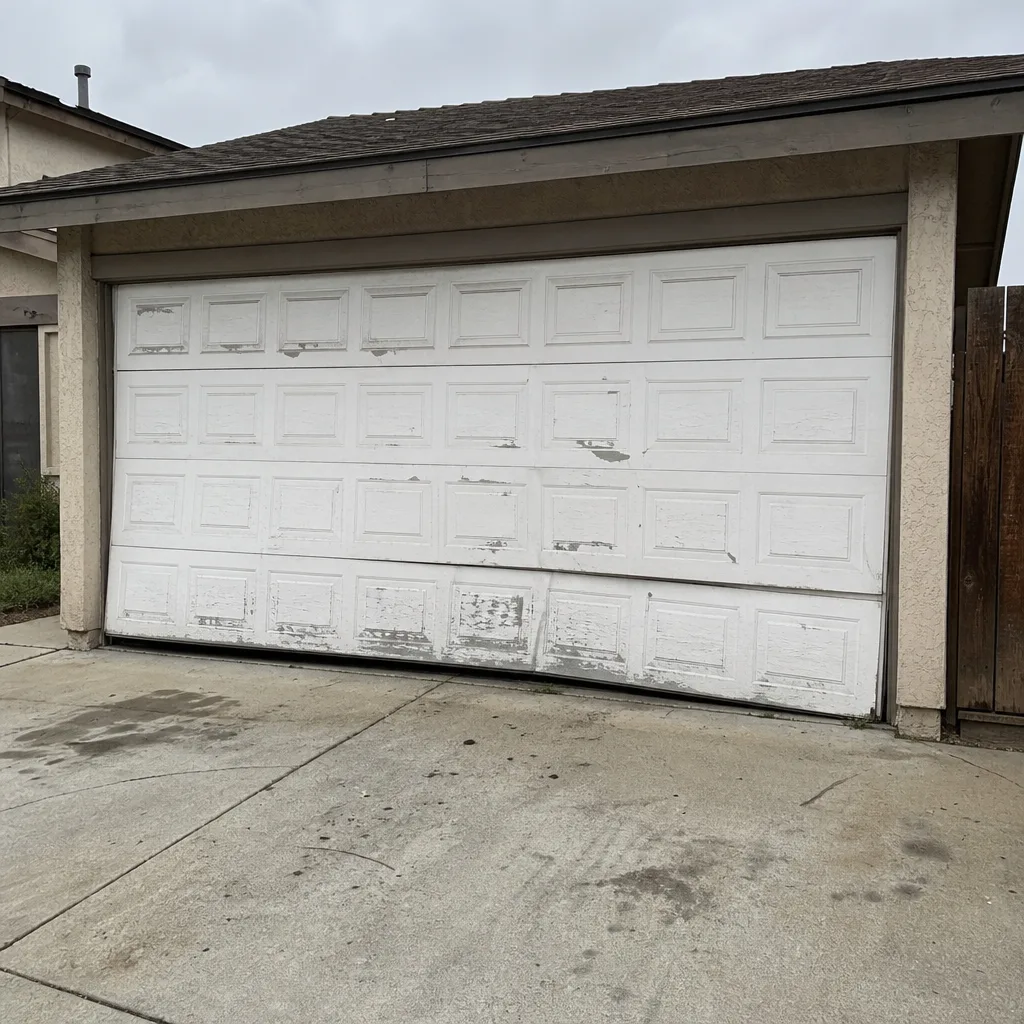 Before
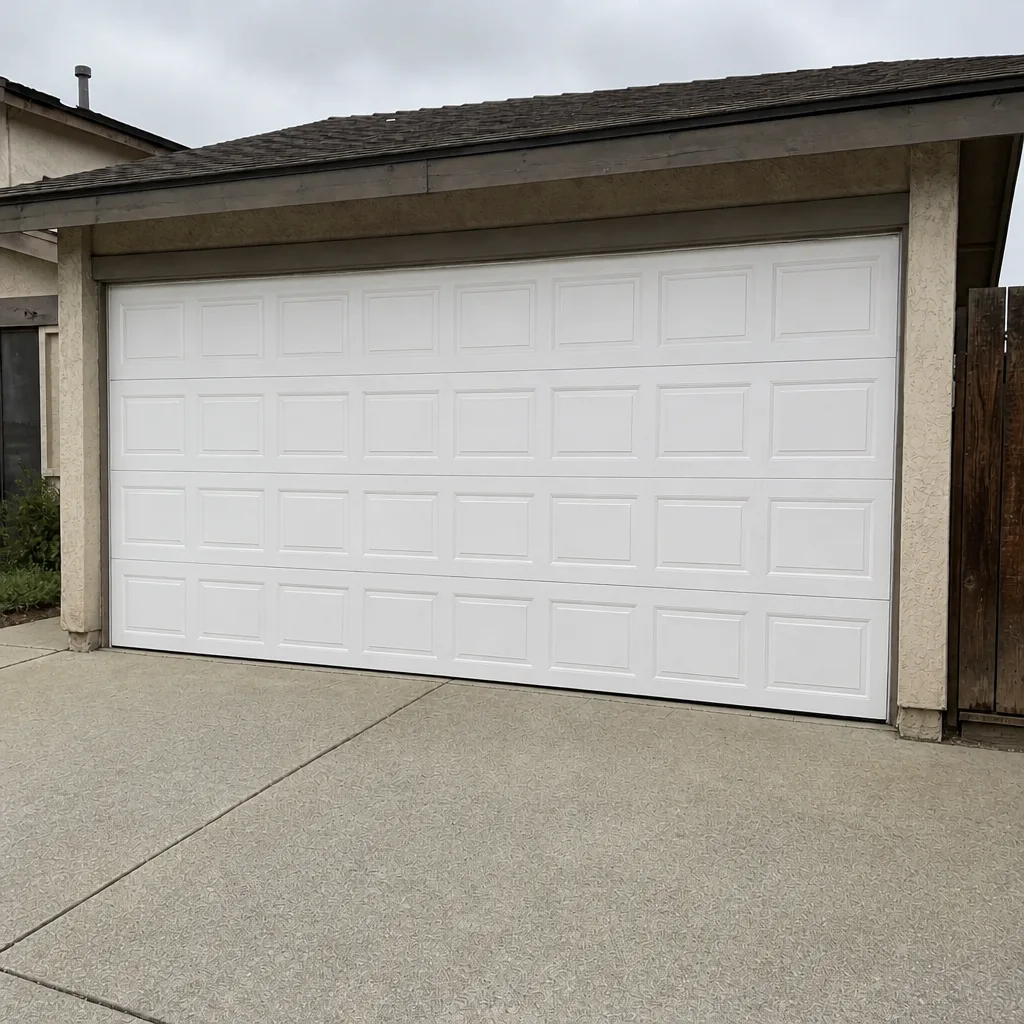 After
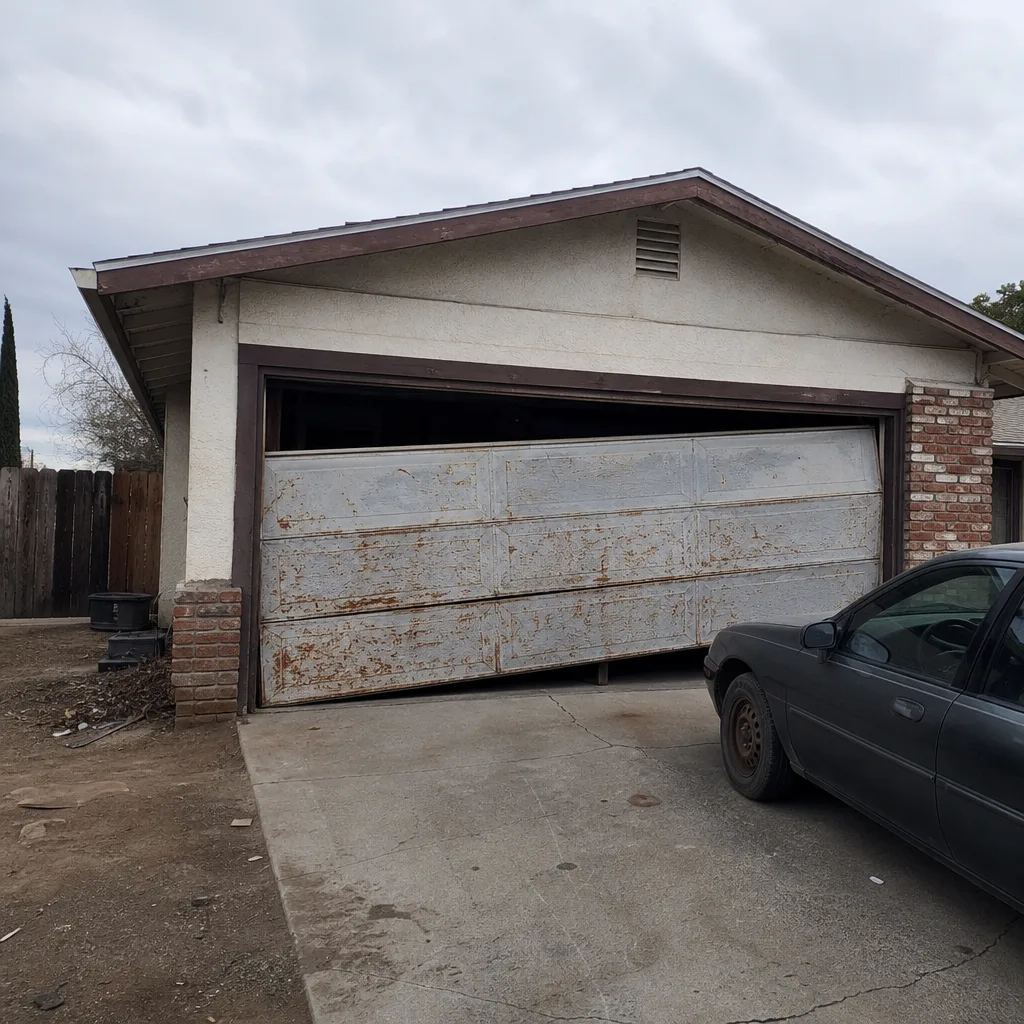 Before
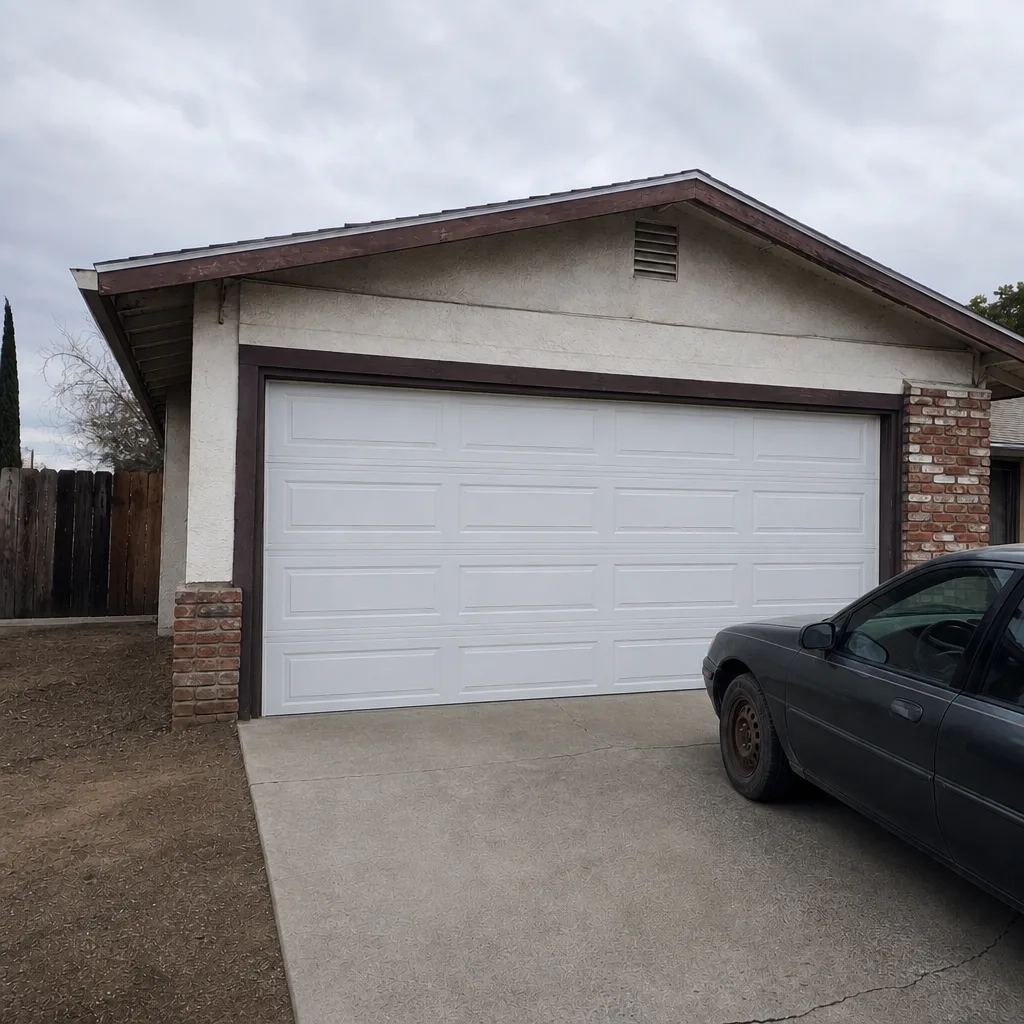 After
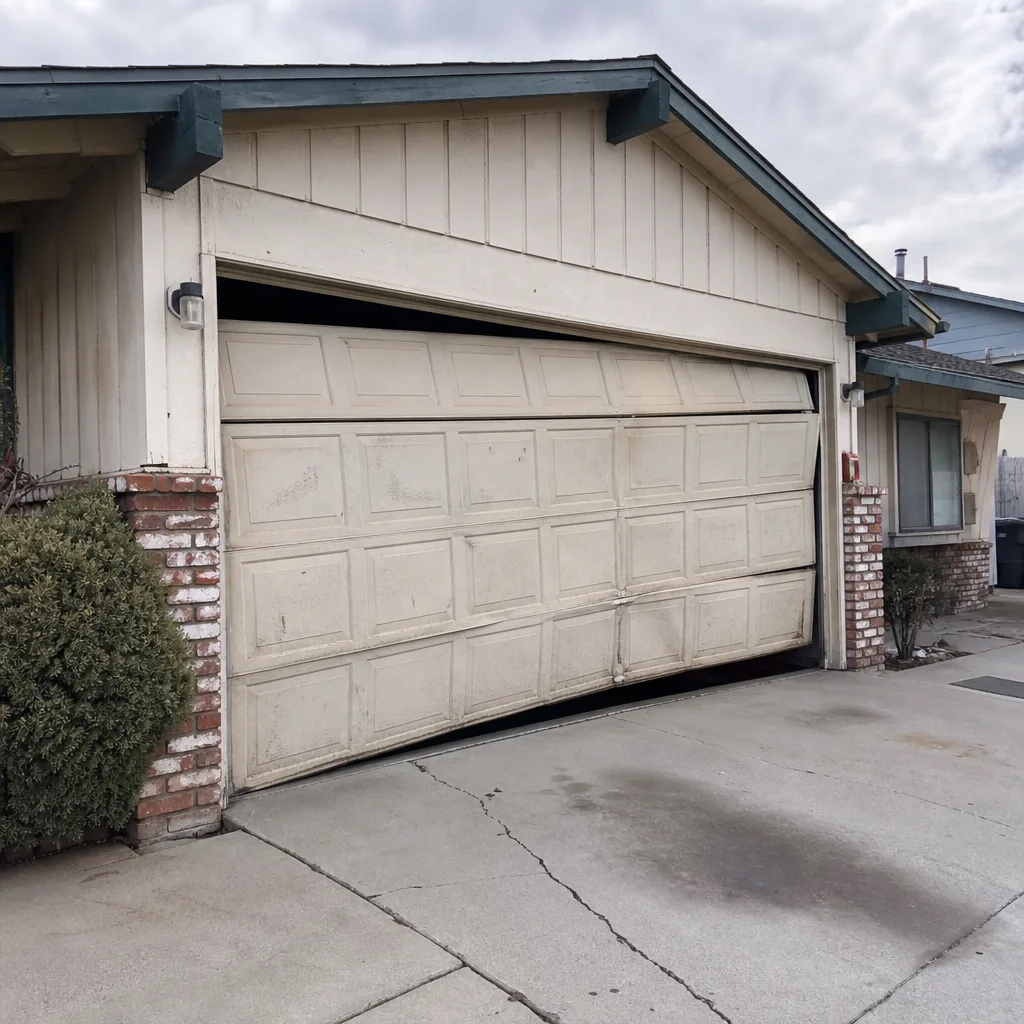 Before
 After
When to Call a Professional
Call a professional the moment you see a spring gap, a slack or off-drum cable, a sagging door, or hear that loud bang. Those are stop-using-it signs, and they aren’t a job for a homeowner with a ladder and a guess. Call early if the door is slowing, binding, reversing, or the opener’s straining on a heavy door. Call for a yearly inspection if you want to catch spring fatigue before it snaps. A door is 200 pounds of steel riding on two cables, and the springs store enough energy to hurt a person in an instant. Respect it. Otto’s Garage Door Spring Valley offers free estimates in Spring Valley – call (888) 318-1978. A live person answers, and the price we quote holds when we get there. For a full replacement situation, see our Garage Door Installation in Spring Valley page.
Frequently Asked Questions
The most reliable sign is a metallic creak under load that gets louder and more regular over weeks, often with the door feeling heavier and traveling slower. A gap in the torsion spring means it has already broken. If you hear a loud bang and the door won’t lift, it has failed – stop using it and call. Call (888) 318-1978 for an inspection, free estimates in Spring Valley.
Disconnect the opener with the red release cord and lift the door a few inches by hand while it’s closed. If it’s heavy or won’t hold, it’s a door/balance problem, not the opener. If it feels light and balanced but the opener hums without moving it, suspect the opener’s gears or capacitor. Either way, a trained technician can confirm in minutes – call (888) 318-1978.
Yes. Spring Valley’s dry heat and strong sun accelerate three things: warped bottom seals, UV-cracked cables, and dried-out rollers. Symptoms that would be minor in a mild climate become real problems here faster. That’s why a yearly lubrication and inspection pass matters more than homeowners expect.
You can, but it costs more. A squeak from a dry roller is a few dollars of lubricant to fix now and a worn bearing later. A creak from a fatigued spring is a warning of a much bigger repair. Address it early – call (888) 318-1978 and we’ll tell you where yours stands.
No. We quote before the visit and hold that price at the door. Ask for it in writing and confirm it won’t move. If you’ve got another written estimate, we’ll give you a free second opinion. Call (888) 318-1978 for a free estimate in Spring Valley.
Our technicians are experienced – up to 22 years – and we’re locally owned and owner-operated with a published address and license number you can verify before anyone shows up. We’re background-checked and we carry the owner’s name on our back. Call (888) 318-1978 with any questions, or to book a free estimate.
The Bottom Line
Garage door failures rarely arrive without warning. A creak, a frayed cable, a slow lift, a hard seal – each is the door telling you something’s wearing out, and each falls into a clear tier: watch it, schedule soon, or call today. In Spring Valley’s heat, that warning window is shorter, so the monthly walk-around and a yearly inspection pay for themselves. The one thing you never do is guess at a spring or a cable. If you see a gap or a fray, stop and call a professional. Call Otto’s Garage Door Spring Valley at (888) 318-1978 for a free estimate, and we’ll tell you straight what your door needs.
Written by the team at Otto’s Garage Door Spring Valley.