
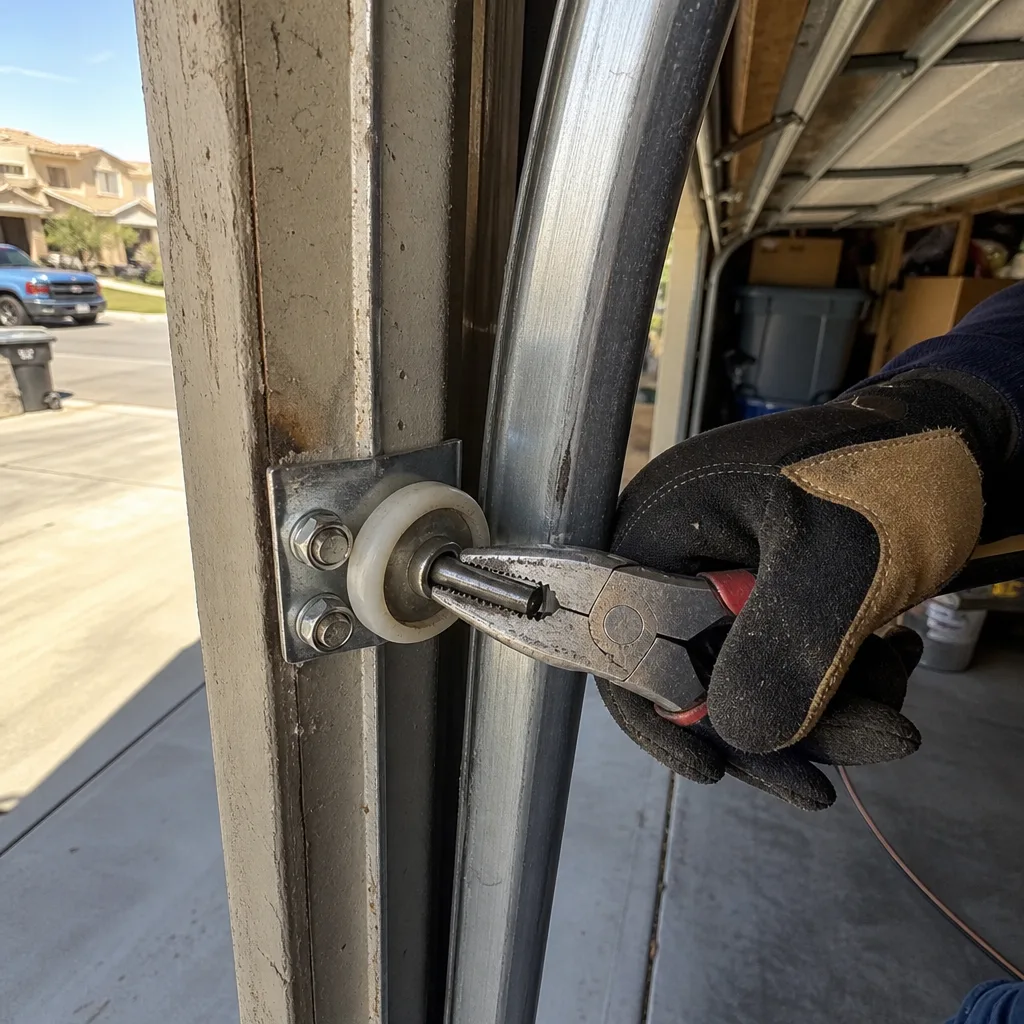
Last updated November 18, 2026
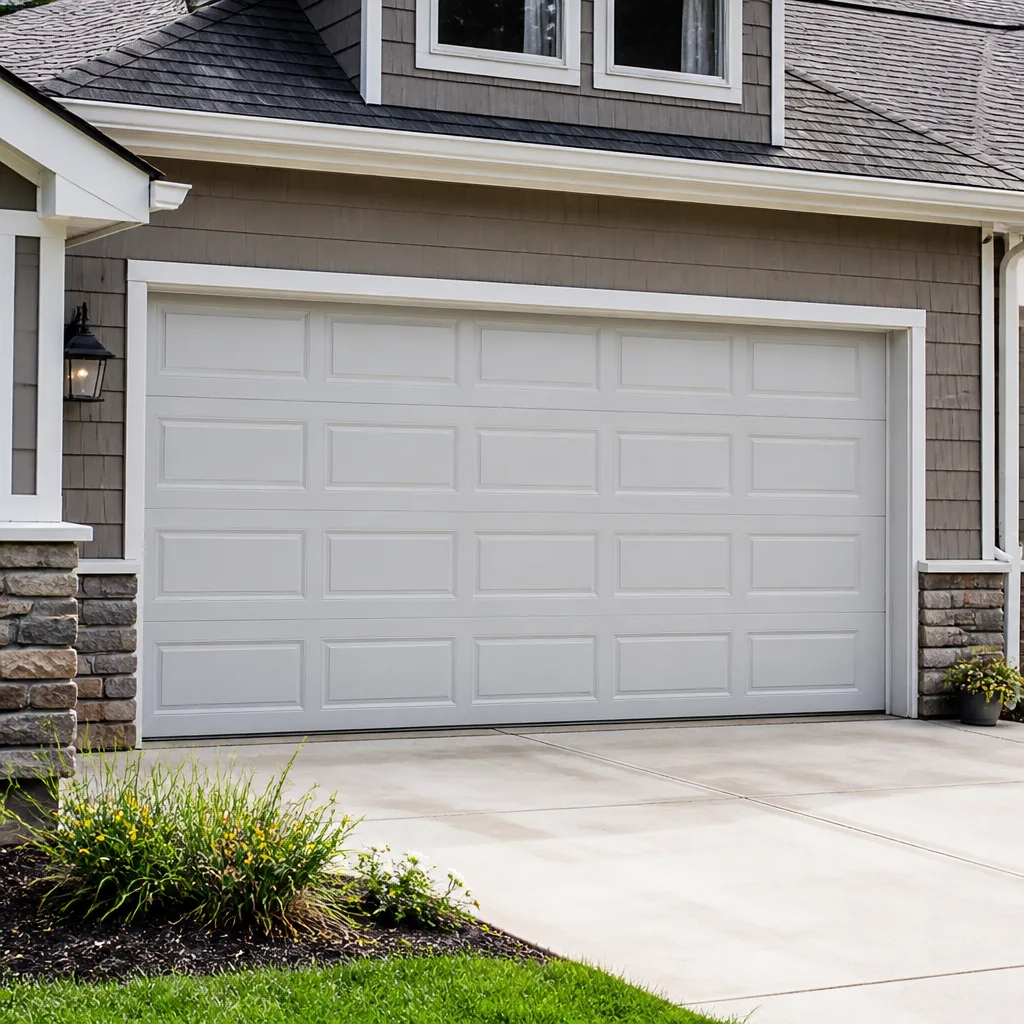 Raised-panel steel
 Carriage house
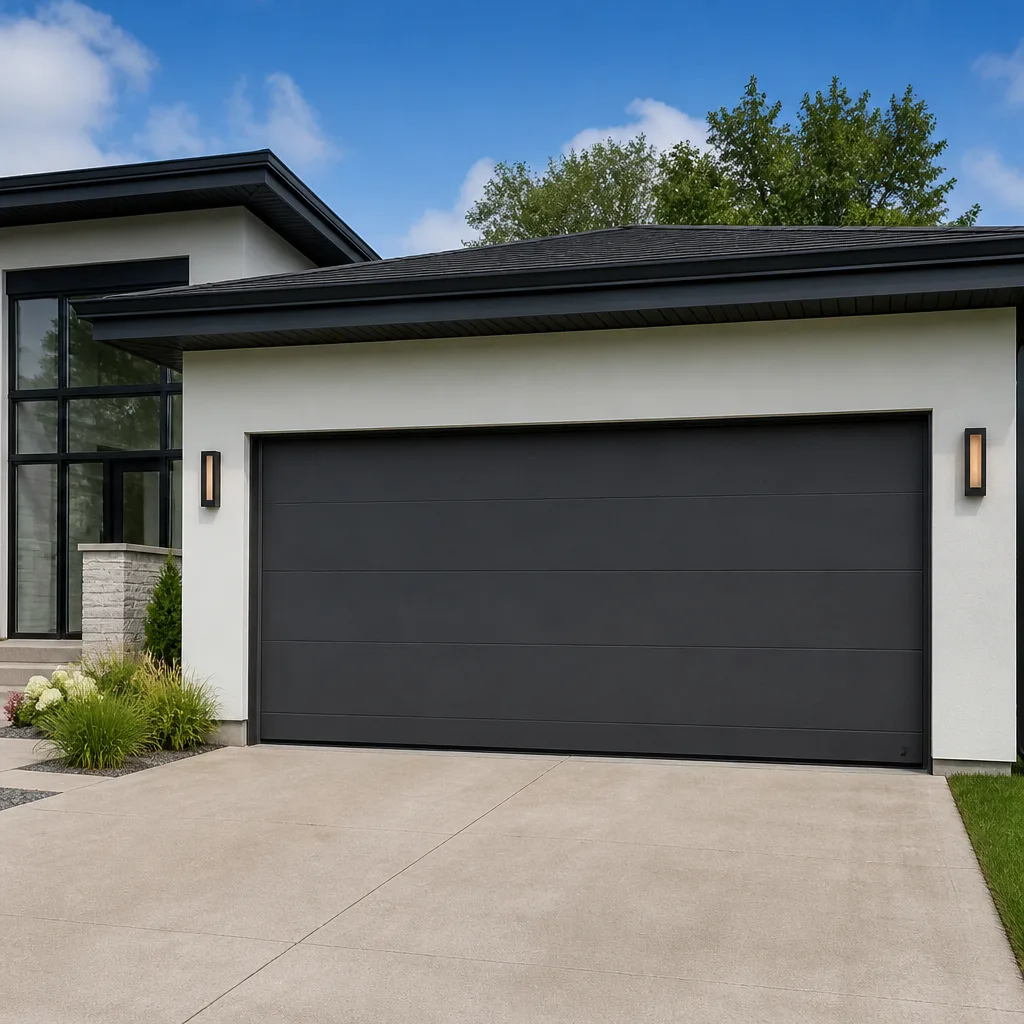 Modern flush
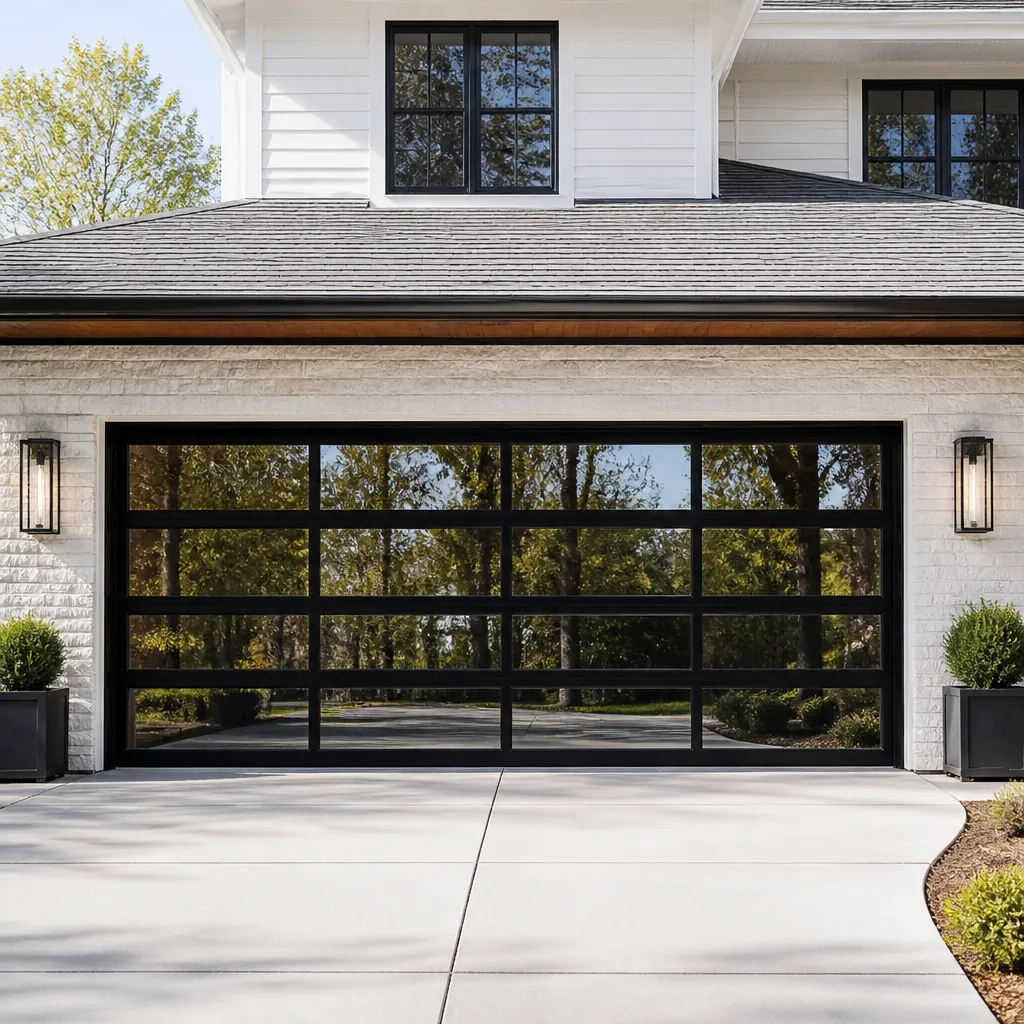 Full-view glass
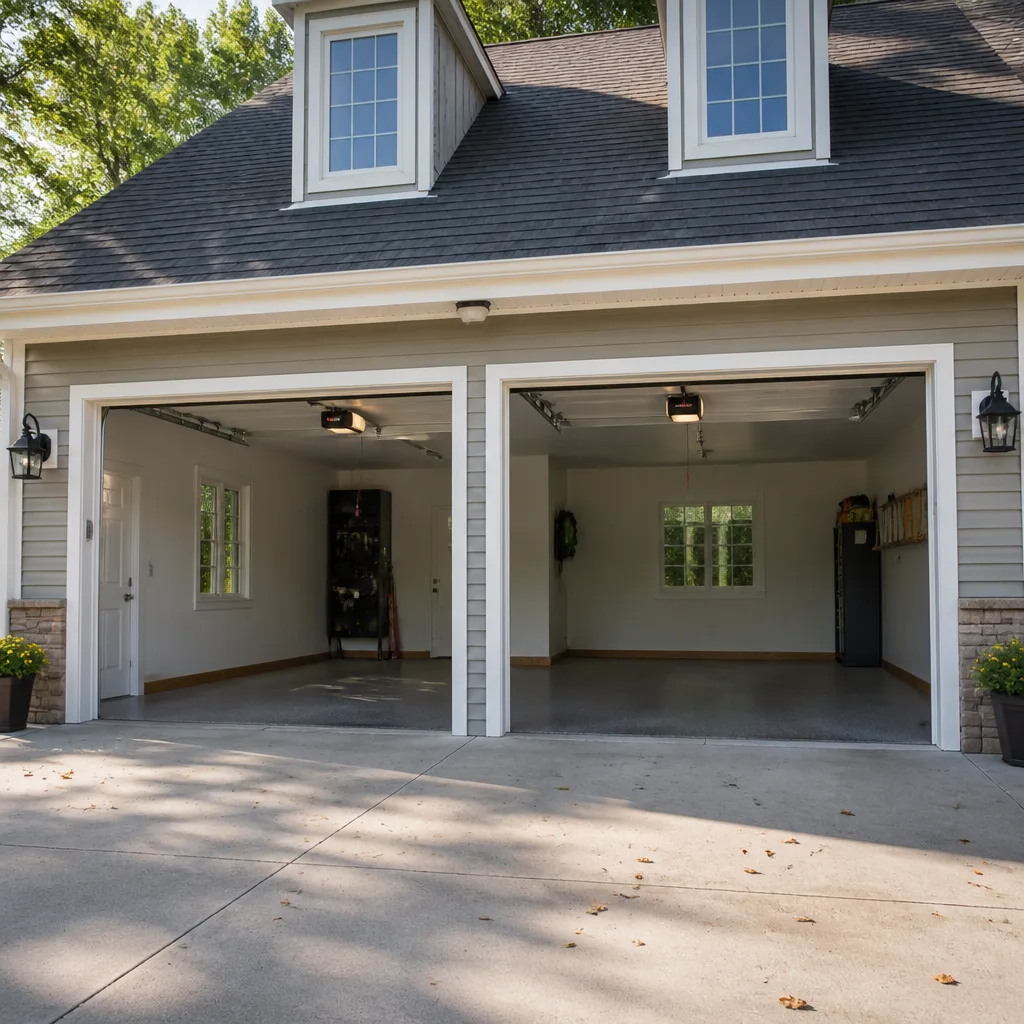 LiftMaster openers
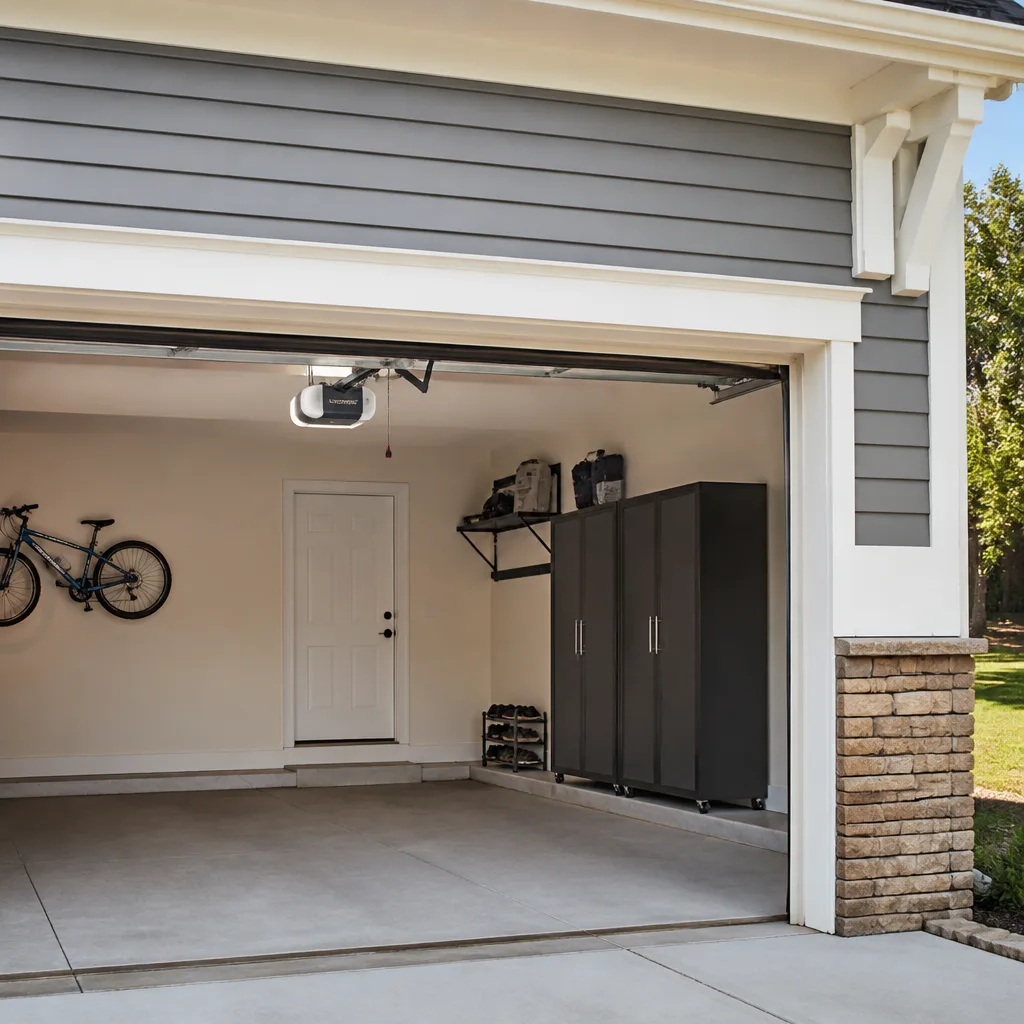 Chamberlain openers
Full 25-point door and opener safety check with every visit - springs, cables, rollers, tracks, and your LiftMaster or Chamberlain opener included
You get a price before we start. It does not change when the pro arrives.
Get your free estimateGarage Door Repair Warning Signs Every Homeowner Should Know
The words we hear most on a service call are “it’s been making that noise for a while.” That while is usually about six months – six months of a spring stretching past its limit, a roller grinding metal on metal, or an opener pulling a door that no longer wants to move. The trouble is that a failing door doesn’t sound broken at first. It sounds like your door, the way your car sounds like your car right up until the day it doesn’t start. This guide resets your baseline. By the end, you’ll know what a healthy garage door in Spring Valley should sound, feel, and move like, and you’ll spot the difference before a small fix turns into a Saturday emergency with your vehicle sealed inside.
Quick Answer
The clearest garage door repair warning signs are a door that takes longer than 5 seconds to open, shudders on the way up, makes grinding, scraping, or popping sounds, shows rust streaks below the cable drums, or leaves an uneven gap at the floor. Any one of these means the door needs a trained eye soon – two or more together mean don’t wait.
Styles & brands we work with
- Raised-panel steel
- Carriage house
- Modern flush
- Full-view glass
- LiftMaster openers
- Chamberlain openers
Table of Contents
- Why “Normal” Is the Hardest Thing to Judge on a Garage Door
- The Speed-and-Jerk Test: How a Healthy Door Moves
- The Sound Catalog: What’s Normal and What Means Trouble
- Visual Red Flags Most Homeowners Look Past
- Seasonal Changes That Are Normal vs. Seasonal Changes That Aren’t
- The 30-Second Monthly Check
- What You Should Never Touch Yourself
- Common Mistakes to Avoid
Why “Normal” Is the Hardest Thing to Judge on a Garage Door
Every other machine in your house gives you a control to compare against. The fridge hums at the same pitch every day. The furnace clicks on the same way in October as it did in September. Your garage door has no such reference because it lives outside, it’s built of a few hundred pounds of steel and wood riding on springs, and it changes a little every single month. By the time a homeowner notices something “off,” the change has been gradual for half a year.
That’s why “listen for unusual noises” is useless advice. Unusual compared to what? The benchmark has to be concrete, not a feeling. So we’ll start with the numbers and the senses, the same way we check a door when we pull up to a house in Spring Valley.
Here’s the baseline for a healthy residential door:
- Open time: 3 to 5 seconds from the floor to fully open on a standard 7-foot door. Slower than 5 seconds means friction, a tired spring, or an opener working too hard.
- Motion: smooth and steady, no pause, no shudder, no hopping. Every inch moves at the same pace.
- Sound: a low, steady hum from the opener, a soft roll from the rollers, and nothing else. No pops, no clicks, no grinding.
- Alignment: the door lands flush, with the bottom seal touching the floor evenly from corner to corner.
- Balance: pull the release and the door should hold itself mid-height. If it drops or rises on its own, the springs are out of balance.
Every door gives its warnings before it fails. Your job is just to know what those warnings look like, sound like, and feel like.
The Speed-and-Jerk Test: How a Healthy Door Moves
Walk out to your Spring Valley garage and watch the door all the way up. Not from inside the house through the kitchen window – actually stand and watch it. The way the door moves tells you more in five seconds than the motor ever will.
What you’re watching for:
- Straight up. A healthy door rises in a straight line, at one constant speed. If the door lurches, pauses, or jerks when it changes direction at the top of the track, the opener is fighting the door.
- No shimmy. Watch the panels. If the door wobbles side to side, a roller is worn or a hinge is loose.
- Fast enough. Time it. If it takes 7 seconds or more to come up, the springs are tired, the tracks are binding, or the opener is undersized for the door. On a LiftMaster or Chamberlain opener you’ll usually hear the motor straining a half-second before anything visibly goes wrong.
- Equal speed down. A healthy door closes at the same pace it opens. If it slams the last foot, the springs are shot and the opener is doing work it shouldn’t be doing.
The start of opening or closing is where most failures announce themselves. If you hear or see a single jerk at the beginning, that’s not normal. It’s the sound of a spring at the end of its cycles pulling a door that no longer wants to follow along.
If the opener is straining, the problem is almost never the opener. Nine times out of ten in Spring Valley, it’s the springs, the rollers, or a bent track. A new motor won’t fix what a tired spring started.
The Sound Catalog: What’s Normal and What Means Trouble
Sound is the best diagnostic tool if you know the catalog. Here’s what each noise usually means. If you hear one of these, take it seriously.
- A single loud bang, then the door won’t lift: a torsion spring has snapped. Do not try to lift the door. Call a trained professional. That spring stores enough energy to break a wrist, and we mean that literally.
- A twang or metallic ping when the door moves: a spring is breaking down internally, or a cable has come loose from a drum. Same rule – stop and call.
- Scraping or grating, steady while the door moves: metal on metal. Rollers worn flat, or a panel rubbing a track.
- A rhythmic click-click-click in time with the door: a loose hinge or a roller that has popped out of its bracket.
- A rattle or shudder in the opener housing: a chain or belt running too loose, or the motor geared down fighting a heavy door.
- A grinding noise only on a Genie or older opener: a stripped drive gear, usually at 8 to 12 years. Repairable, but the door itself may still be the actual problem underneath.
A healthy door sounds like nothing much. If you can hear it from the far end of the house, something is trying to get your attention.
Visual Red Flags Most Homeowners Look Past
Walk into your garage with a flashlight once. Look at these four spots. Most Spring Valley homeowners have never looked at any of them.
- Cable fraying. Look at both cables that run along the sides of the door. A healthy cable is smooth and evenly wound. Frizzled strands, a birdcage look, or a cable sitting loose on the drum means a cable is failing – and a snapped cable can whip. Stop using the door.
- Rust streaks below the drums. Look at the metal plate at each top corner (the drum). A rust streak running down from it means water is getting in, usually from a worn bearing or a seal that let moisture track down the spring. Common in Spring Valley after a wet winter, and it’s the first thing a knowledgeable eye catches.
- Uneven gap at the floor. Stand inside the closed door with the lights off. Any daylight under the bottom seal, especially at one corner, means the door is out of level – usually a bent track or a stretched spring on one side.
- Panel bowing at mid-height. Look at the door from the side, along the panels. A bowed middle panel is a sign the door has been hit, the springs are unbalanced, or a hinge has failed. On Clopay and Amarr doors, a bowed middle panel usually shows up around year 8 to 12.
Add one more to the list: a crooked track. Run your hand along the track – gently – while the door is fully open. Any dent, bend, or wobble in the vertical section is where your roller will eventually snag. A bent track makes a door dangerous in a way that squeaks don’t.
Seasonal Changes That Are Normal vs. Seasonal Changes That Aren’t
Spring Valley weather puts garage doors through real swings. A 100-degree July afternoon followed by a 40-degree winter night moves metal a lot, and doors respond. Some of what you see seasonally is fine. Some of it is telling you something.
Normal seasonal behavior:
- A little quieter in summer, a little louder in winter as grease thickens. If the door only gets stiff in the first cold week of the year, expect it to settle.
- The bottom seal gets brittle every few years. Rubber ages. That’s a five-minute replacement.
- A faint creak from a hinge when September gets dry and dusty. A single drop of lubricant is the answer.
Not normal, even seasonally:
- The door groaning or grinding all winter, not just the first cold week. That’s a spring winding down, not the weather.
- Freezing in place, then lurching open. The springs are near the end of their cycles.
- Rust appearing below the drums after a wet season. Water is getting past a seal somewhere.
- A door that sounds different every month. Drift is the signal – a healthily maintained door sounds about the same in January and July.
We count spring cycles the way you count tire miles. On a door with heavy use, a cold-snap groan in the first week of winter can mean the spring has a couple hundred cycles left, not two thousand. It’s worth having somebody tell you what’s left on yours rather than waiting for the snap.
The 30-Second Monthly Check
Here’s the check we do on our own doors. Any homeowner can do it in under a minute, once a month, before backing the car out.
- Watch the door the whole way up. One minute of attention. Get the 3-to-5-second baseline into your head. Anything slower than that in a month is new information.
- Listen. Close your eyes for two seconds while the door moves. Anything beyond a soft hum is worth noting.
- Grab the bottom handle and gently rock the closed door. A door that moves more than a half-inch front-to-back has a loose hinge or a track issue.
- Look down at the springs. A torsion spring is the coil above the door. You’re looking for one, not two. If one is snapped, don’t touch a thing.
- Glance at the safety eyes. Wave a hand through the photo-eye beam near the floor. The door should reverse on the first close test. If it doesn’t reverse, that’s a call today – not tomorrow.
If any of those five steps gives you a bad feeling, you know what to do. If all five come back clean, you’ve just reset your baseline for another month. That’s the whole trick.
What You Should Never Touch Yourself
A few of the fixes above are easy – swapping a worn roller, lubing a hinge, replacing a bottom seal. Others are not, ever, on any door.
Do not adjust, wind, unwind, or touch the springs or the cables. A torsion spring under tension holds hundreds of pounds of stored energy. When they go, they go with a bang that people remember. We’ve had homeowners in Spring Valley tell us they tried to “help” a spring along with a wrench and put themselves in the hospital. The savings on a repair aren’t worth the risk. Do not climb a ladder to work on the opener rail while the door can still move. Do not pull the manual release on a door that’s stuck halfway – a released door under a broken spring can come down hard. When in doubt, stop and call. Our crew has seen this dozens of times, and the right move is always the same: back away from the springs and let someone trained to handle them do it.
Common Mistakes to Avoid
- Waiting for the bang. Homeowners wait for the spring snap and think nothing before that matters. That snap is the last warning, not the first.
- Blame the opener. A strained opener is almost always a symptom. Replacing the motor on a door with bad springs leaves you with a new opener grinding against a door that still won’t lift – a very common scene in Spring Valley when people call us after a big-box install.
- Oiling the springs to fix the noise. Grease doesn’t fix a stretched spring. It quiets the symptom and hides the problem for a few more months.
- Ignoring the gap at the floor. An uneven seal in a Spring Valley garage isn’t just a draft in winter – it’s where rain and dust get to your stored goods, and it’s usually a bent track waiting to catch.
- Calling the number on the last postcard. If a national outfit quoted you one price on the phone and billed another at the door, you learned why an unverifiable address and license matter. Ask for both before you schedule.
- Skipping the monthly check. Most garage door failures we walk into in Spring Valley could have been caught at a two or three month age if the homeowner knew what to listen for.
- Tightening a hinge you don’t recognize. On some doors, that fastener holds the cable bracket behind the panel. Overtightening can pop a cable off the drum.
See the difference
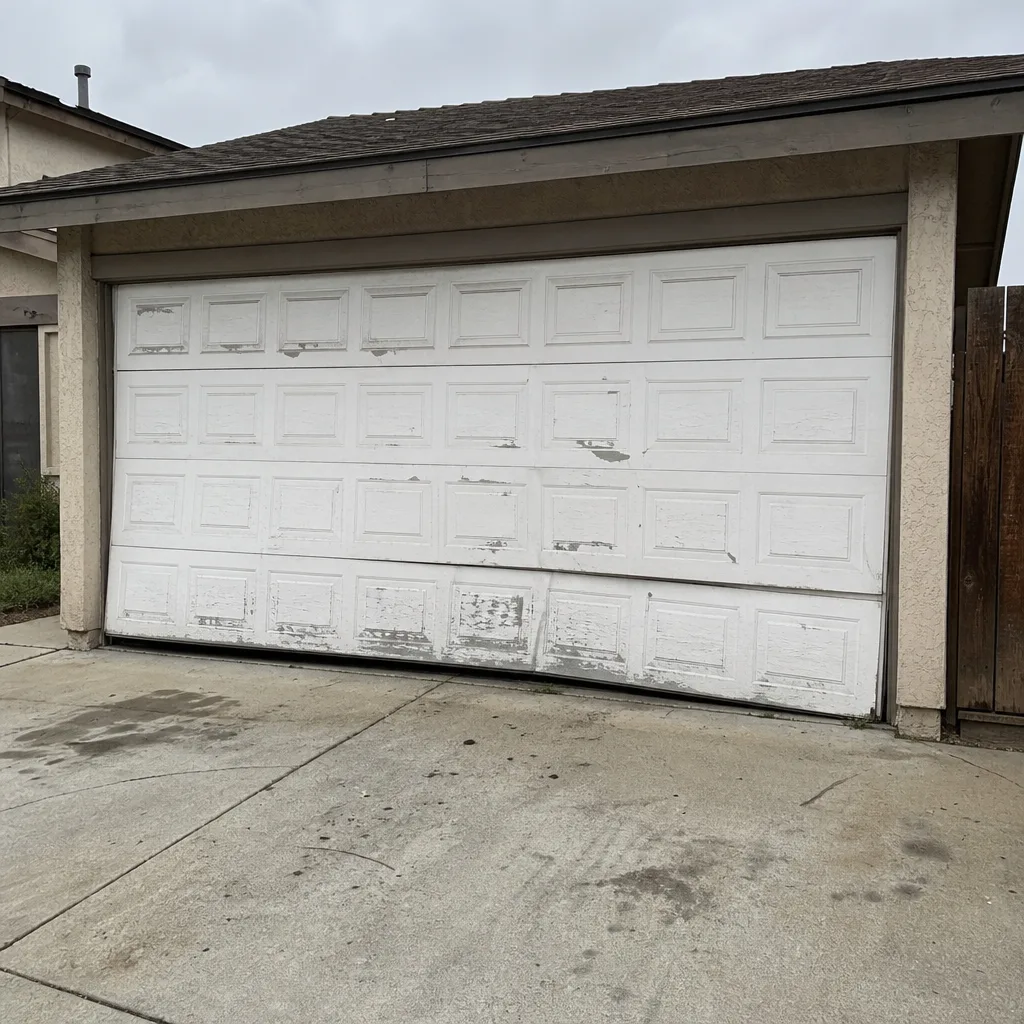 Before
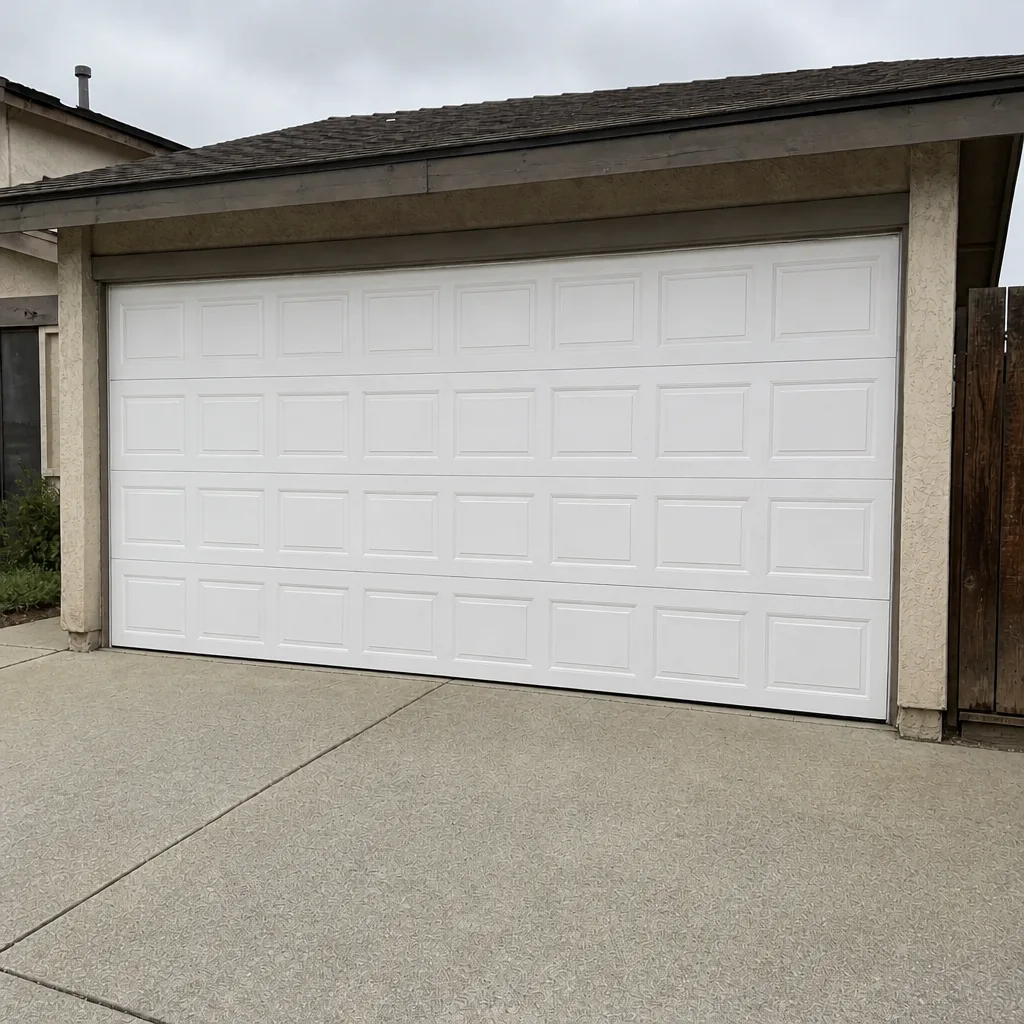 After
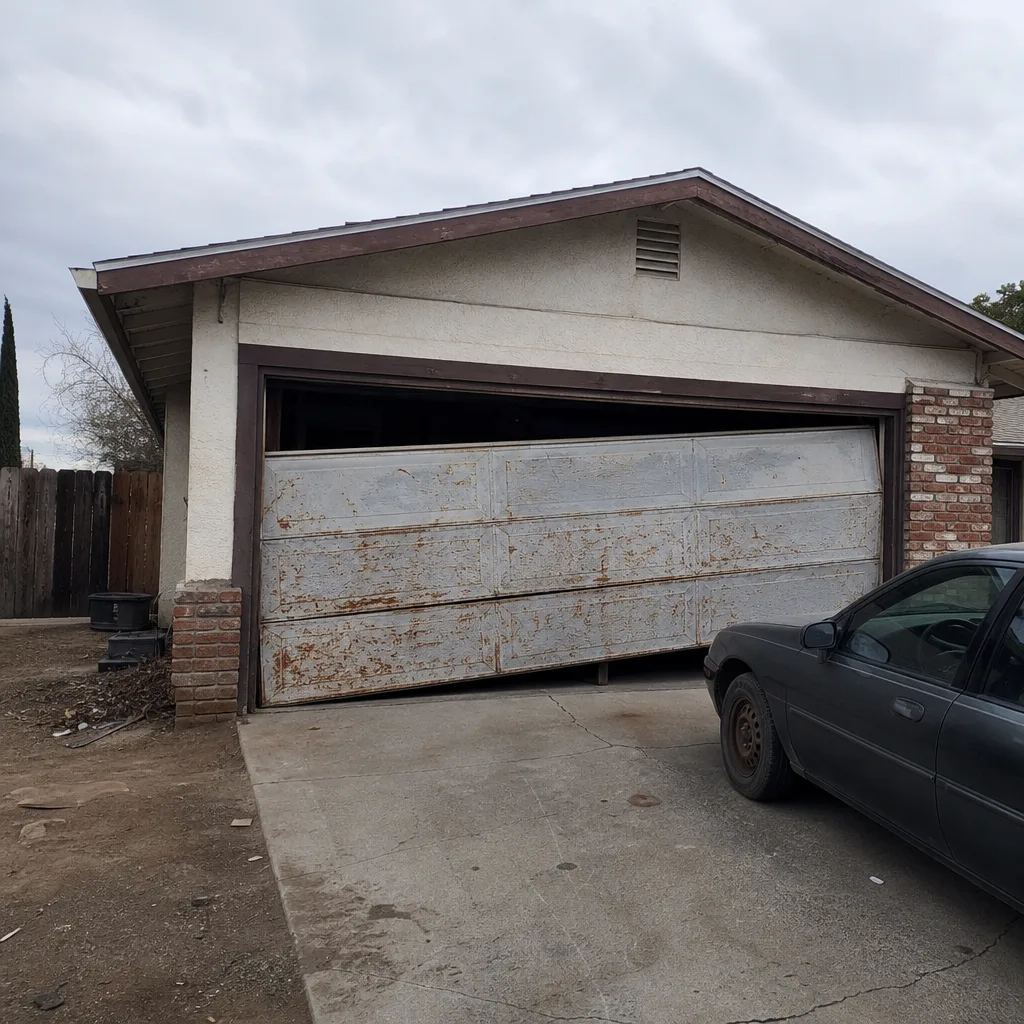 Before
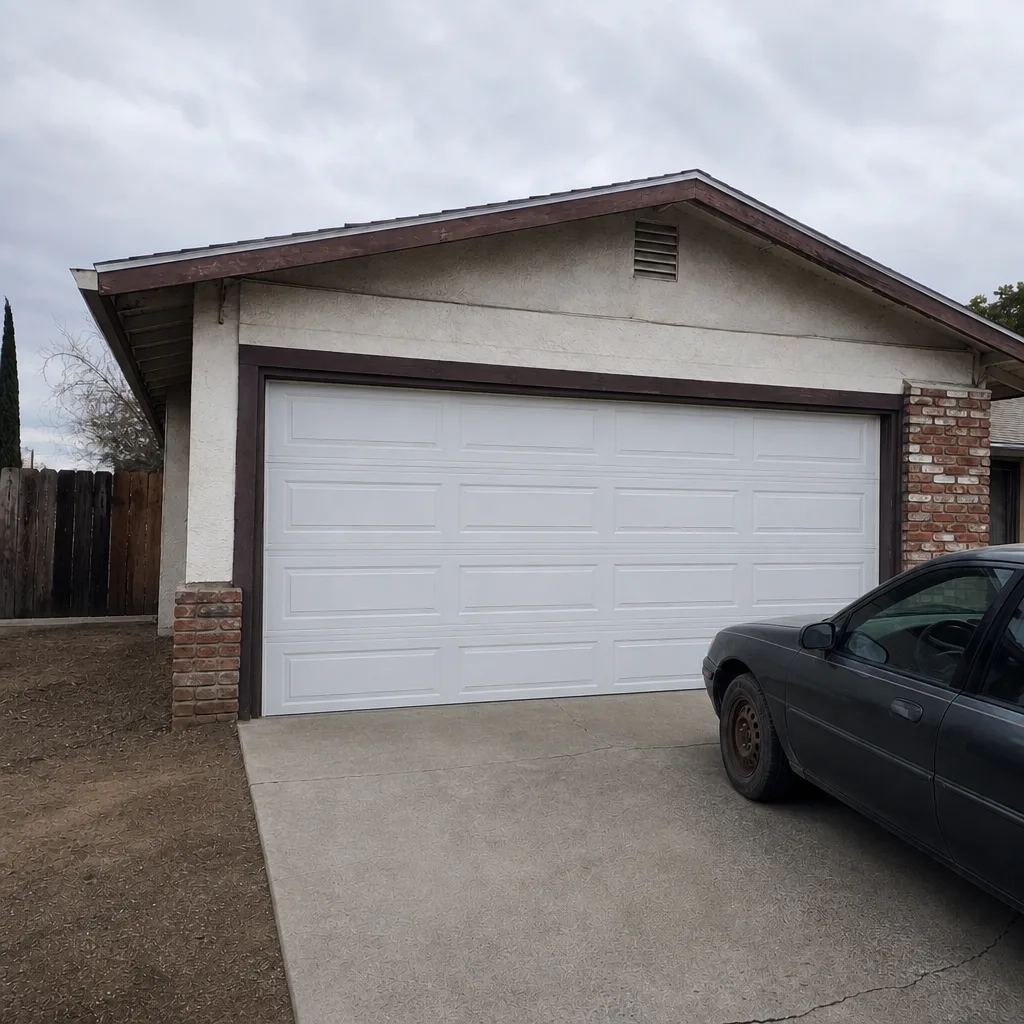 After
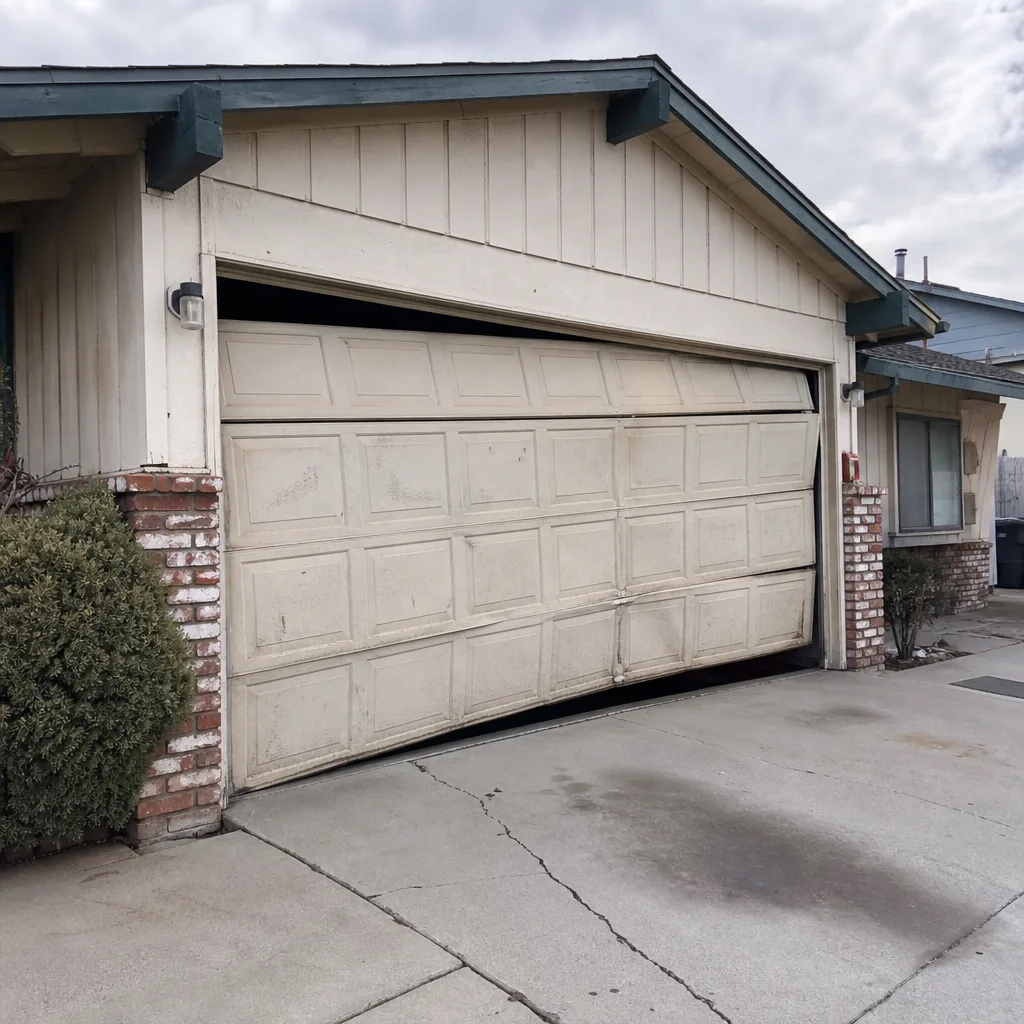 Before
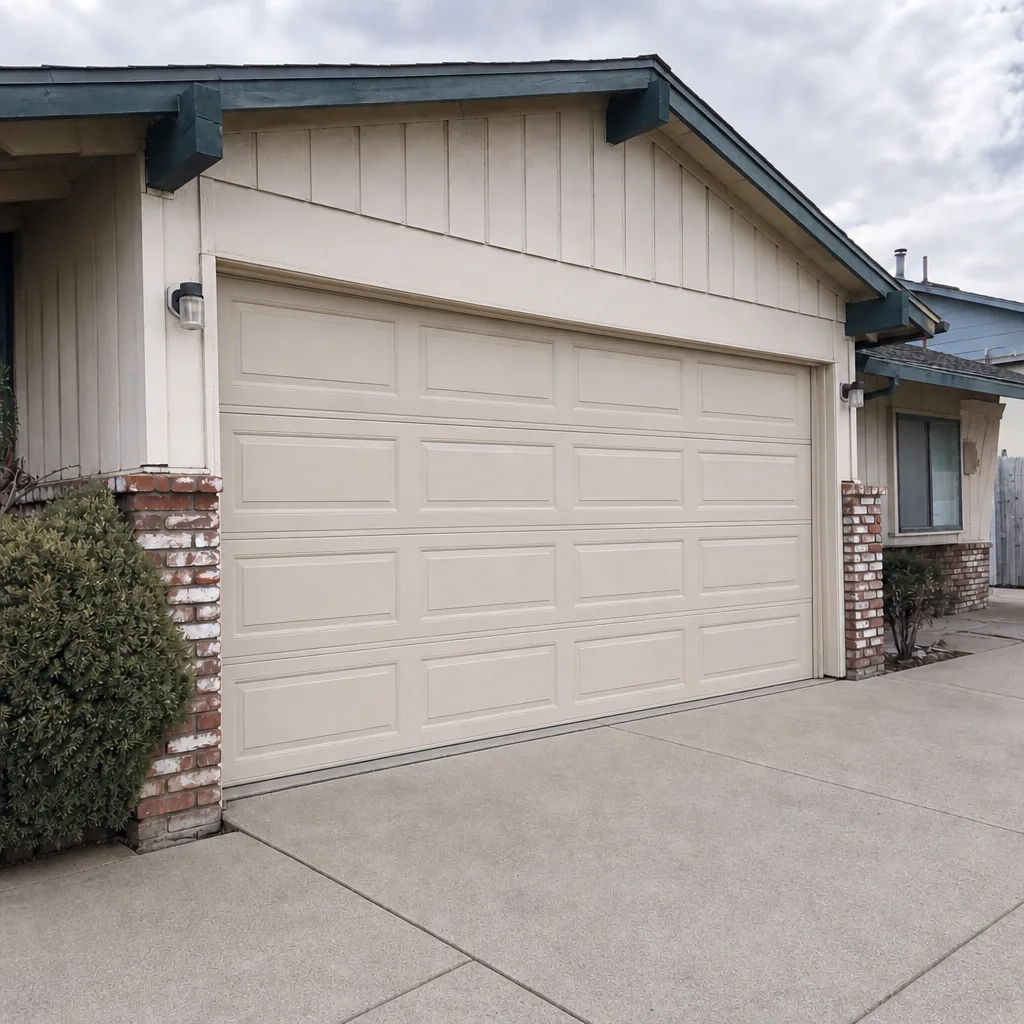 After
When to Call a Professional
Call a professional for anything involving the springs, the cables, the torsion bar, or a bent track. Call now, not next week, if a spring has snapped, a cable has frayed, the door slammed down, or a photo-eye doesn’t reverse the door. Also call if the door has been making a warning noise for more than a month, or if two or more items on this list show up together – a shudder plus a rust streak plus a slower open is three problems pointing at the same failing part. Our technicians have up to 22 years of experience with every major brand including LiftMaster, Chamberlain, Genie, and Raynor, and we quote on the phone, hold the number at the door, and put ninety days in writing on every repair. Otto’s Garage Door Spring Valley offers free estimates in Spring Valley – call (888) 318-1978.
Frequently Asked Questions
A door that takes more than 5 seconds to open or shudders as it moves. That’s the earliest reliable sign – it’s what a Spring Valley homeowner notices first, and it’s the sign that usually still leaves room for a straightforward fix rather than a full spring replacement. Call (888) 318-1978 for a free estimate if you see it.
Most single-spring replacements in Spring Valley run in the low-to-mid hundreds, with a two-spring job running somewhat more. We quote on the phone and hold that number at the door – no surprises from the driveway. Call (888) 318-1978 for an exact quote on your door; estimates are free.
Usually yes. A snapped spring with a vehicle sealed inside is exactly the emergency a live person answers the phone for, twenty-four hours a day. Call (888) 318-1978 and we’ll quote the job on that call and get you on the schedule.
Yes. Every technician is background-checked, insured, and trained across all major brands. You can verify our license number and published address before anyone arrives – that’s how we’ve operated as a locally owned, owner-operated shop, and it’s the whole reason the phone is answered by a live person around the clock.
No. We quote on the phone and hold the price at the door. If we find something the phone didn’t reveal, we tell you before any work starts and let you decide. Nobody on our crew will surprise you with an invoice bigger than the quote.
If it groans for the first cold week and then quiets down, that’s normal. If it grinds or shudders all winter, or the noise gets worse each season, that’s a spring or a roller wearing out – the kind of drift that deserves a look before the next cold snap. Call (888) 318-1978 and we’ll tell you what we hear.
The Bottom Line
Your garage door will tell you when it’s in trouble – long before the bang – as long as you know what normal sounds and feels like. Open times past 5 seconds, a shudder on the way up, grinding rollers, rust streaks below the drums, a bent track, or an uneven gap at the floor are all early warnings you can catch the same day you notice them. The monthly check takes thirty seconds. The spring you don’t touch is worth more than the spring you ruin trying to fix it. If anything in this guide matches what your door is doing, the smartest move isn’t more googling – it’s a free estimate from a shop that publishes its license number and answers the phone around the clock. Call (888) 318-1978 for a free estimate.
Written by the team at Otto’s Garage Door Spring Valley.