
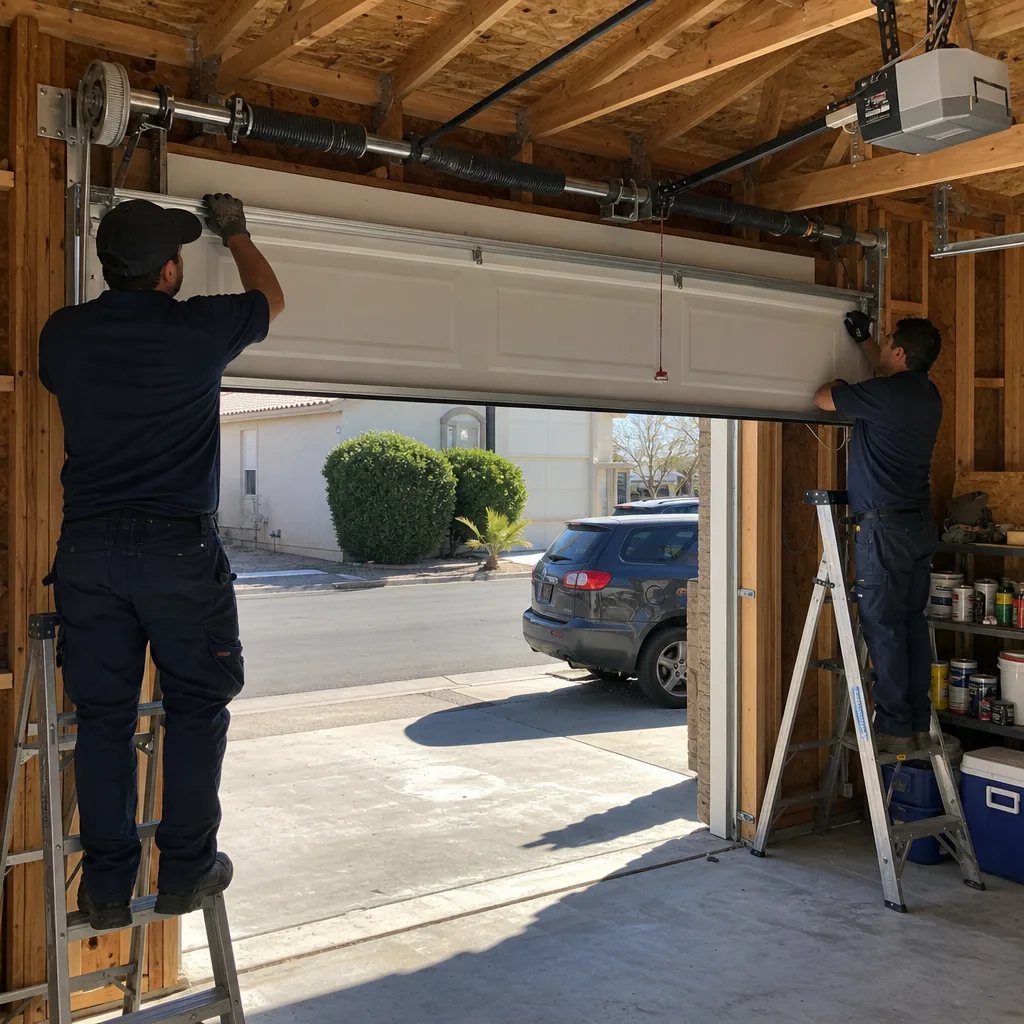
Last updated November 18, 2026
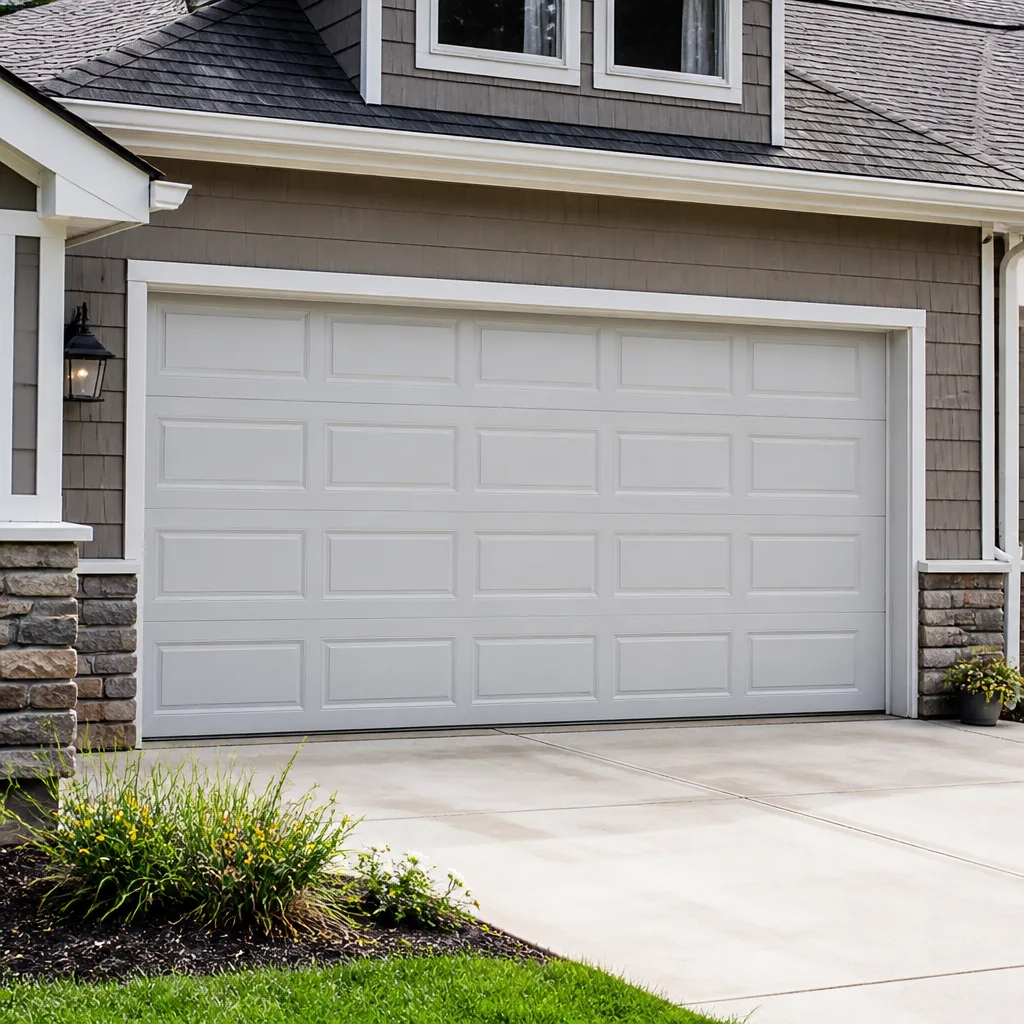 Raised-panel steel
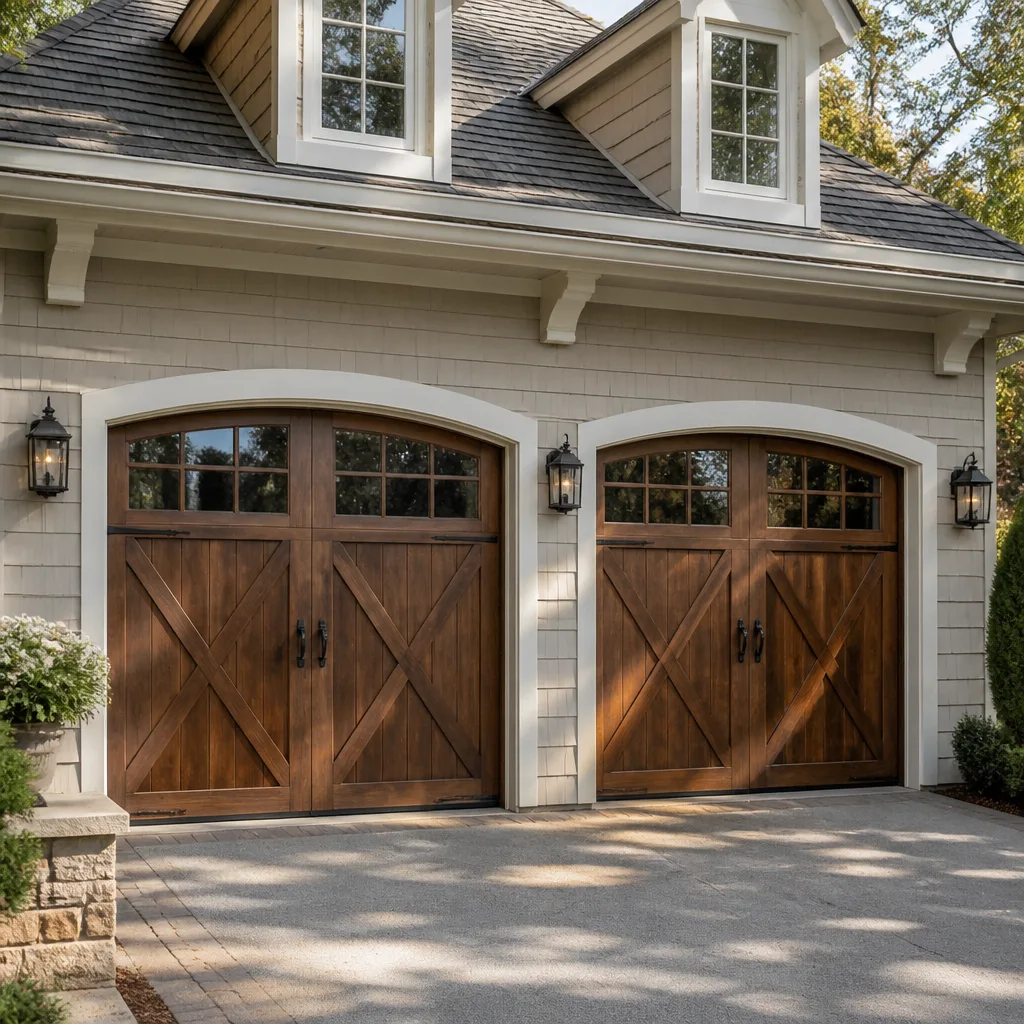 Carriage house
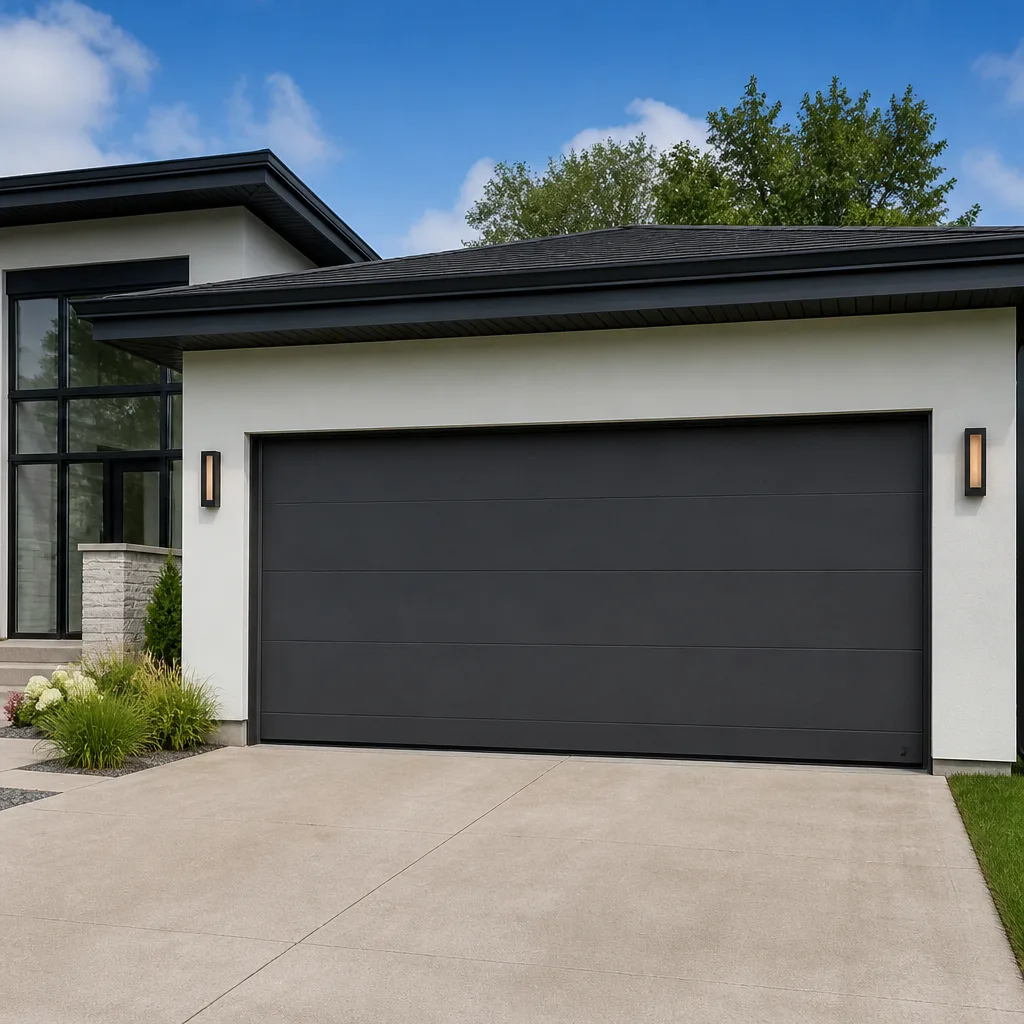 Modern flush
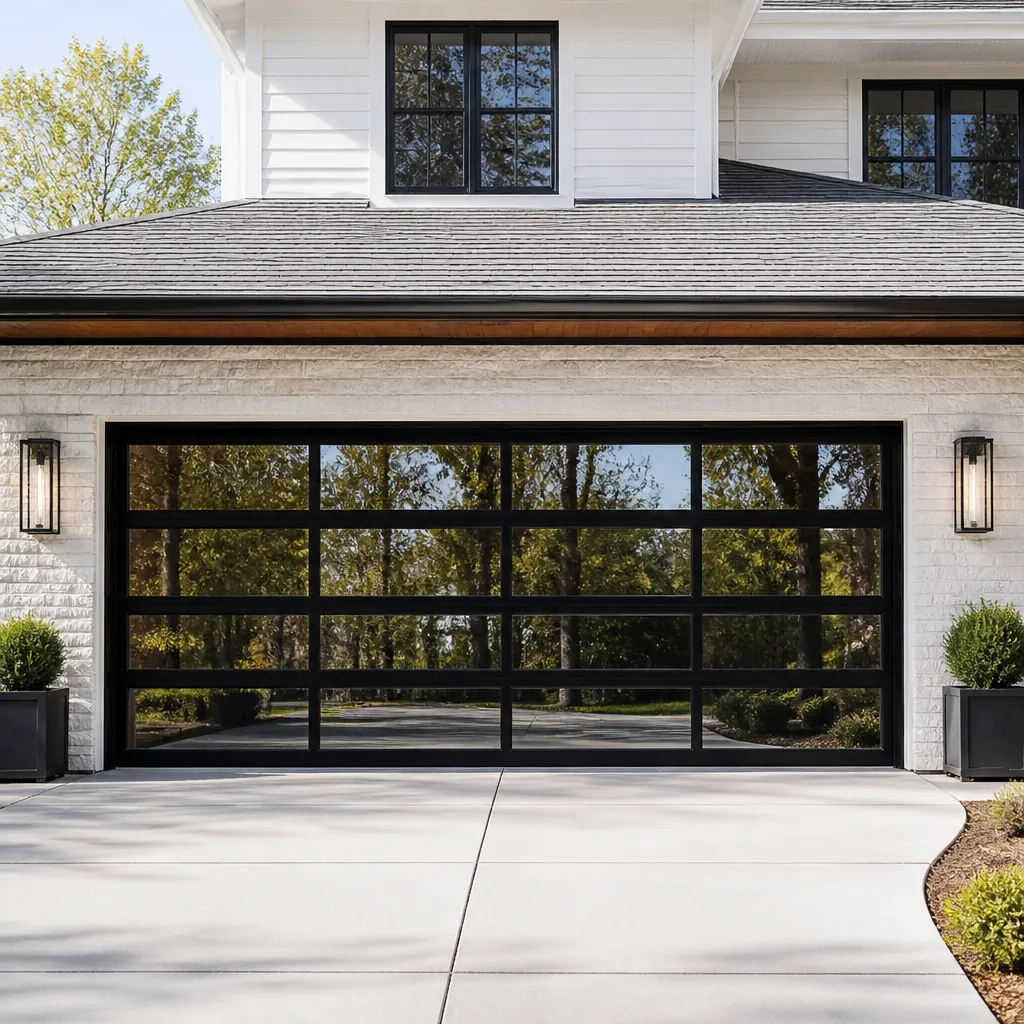 Full-view glass
 LiftMaster openers
 Chamberlain openers
Full 25-point door and opener safety check with every visit - springs, cables, rollers, tracks, and your LiftMaster or Chamberlain opener included
You get a price before we start. It does not change when the pro arrives.
Get your free estimateDIY vs Professional Emergency Garage Door: What’s Safe to Do Yourself
The worst garage door injuries don’t happen to people who had no idea what they were doing. They happen at midnight, in the dark, to a stressed homeowner standing on a stepladder with a flashlight in their teeth who skipped the one step that mattered: releasing cable tension before touching anything. A garage door is 200 pounds riding on two springs, and when a spring lets go, that weight is suddenly held by whatever you do next. This guide tells you exactly what you can safely do at 2 a.m. in Spring Valley, what you should never touch, and how to describe the problem so the person on the phone can tell you whether there’s a safe interim step or whether nothing should move until help arrives.
Quick Answer
In a garage door emergency, a homeowner can safely do three things: disengage the opener with the manual release cord (if the door is fully closed and nothing is broken), secure the door so it can’t move, and check the photo-eye sensors for obstruction or misalignment. Everything else, especially springs, cables, and bottom brackets, needs a trained professional. If a spring is broken, a cable is snapped, or the door is hanging uneven, leave it alone and call Garage Door Repair in Spring Valley at (888) 318-1978.
Styles & brands we work with
- Raised-panel steel
- Carriage house
- Modern flush
- Full-view glass
- LiftMaster openers
- Chamberlain openers
Table of Contents
- The Three Things You Can Always Do Safely
- The Manual Release Cord: What It Does and When Pulling It Makes Things Worse
- What “Securing the Door” Actually Means (It’s Not a Brick)
- Emergency Scenarios Where DIY Makes the Repair Cost More
- How to Describe the Emergency on the Phone
- Photo-Eye Sensors and the Opener Stall You Can Fix Yourself
- Why Spring Valley Doors Fail the Way They Do
- Common Mistakes to Avoid
- When to Call a Professional
The Three Things You Can Always Do Safely
If the door is stuck, won’t open, or slammed down, start here. These three actions cover the overwhelming majority of emergency calls we take in Spring Valley, and none of them require touching a spring, a cable, or a bracket under load.
- Disengage the opener. Pull the manual release cord (usually a red handle hanging from the trolley) only if the door is fully closed and you can see it’s sitting square in the tracks. This takes the opener out of the equation and lets you judge whether the door itself is the problem or the motor is.
- Secure the door so it can’t move. Use a pair of locking C-clamps on the vertical tracks, just above a roller, on both sides. More on why a brick or a chair is the wrong answer in a moment.
- Check the photo-eye sensors. The two small lenses near the floor at each side of the opening. If one is knocked sideways, dusty, or blocked by a snow shovel or recycling bin, the door will reverse or refuse to close. A quick wipe and a nudge back toward its partner fixes a surprising number of “dead door” calls.
That’s the safe list. Everything below that line, springs, cables, bottom brackets, torsion tubes, involves stored energy that can release in a fraction of a second. In our experience, the injuries we hear about happen because the homeowner was already exhausted, in a hurry, and doing the job in bad light. If you’re reading this at 11 p.m. in Spring Valley with a car trapped inside, the smartest move is to call (888) 318-1978 and let someone talk you through what to check.
The Manual Release Cord: What It Does and When Pulling It Makes Things Worse
The manual release cord disengages the door from the opener’s trolley so you can raise it by hand. That’s all it does. It does not release spring tension, it does not make a broken door safe, and it does not fix a bent track. It’s a clutch, not a rescue.
Here’s the situation where pulling it makes things significantly worse: if the door is open, or hanging partway up, and a spring is broken. With a snapped spring, the door’s weight is no longer balanced. Disengaging the opener at that point takes away the only thing holding the door up, and it comes down hard. We’ve seen doors fold bottom panels on top of a car because someone pulled a cord in the dark, thinking they were being careful.
Pull the cord when:
- The door is fully closed and resting evenly on the floor.
- The opener is running but the door isn’t moving (trolley stripped, gear stripped, or the motor has lost its programming).
- You’ve checked that no spring looks stretched out, no cable is dangling, and the door isn’t racked (tilted) in its tracks.
Do not pull the cord when:
- The door is open or partly open and won’t come down.
- You can see a gap in a torsion spring over the header, or a snapped extension spring along the horizontal track.
- A cable is loose, coiled, or hanging off a drum.
If you’re not sure which of those you’re looking at, don’t guess. We’ll ask you a handful of questions on the phone and tell you whether to touch it or stand back.
What “Securing the Door” Actually Means (It’s Not a Brick)
Propping a brick or a milk crate under a garage door feels like securing it. It isn’t. A brick under a door that weighs 200 pounds is holding one point of one panel, and if a spring lets go or a cable slips, the door can buckle, twist, and drop past it. The brick becomes a projectile. We’ve walked into Spring Valley garages where a door had come down on a plastic crate and split a panel in half, turning a $220 spring repair into a full Clopay panel replacement.
Real securing means mechanically stopping the door from traveling in the track:
- Vice-grip locking C-clamps on the vertical track, one per side, clamped snug above a roller so the door physically cannot drop.
- A 2×4 laid on edge across the opening is not enough on its own, but it works as a backstop if you also have clamps in place.
- On a door that’s already up and unbalanced: do not climb up to secure it. Keep everyone clear and call us. This is the call that comes in most often from Spring Valley at night, and the answer is usually “don’t touch it, we’ll be there.”
Bottom line: if the only thing between the door and the floor is a brick, a chair, or your shoulder, the door is not secured. Lock the track or leave it alone.
Emergency Scenarios Where DIY Makes the Repair Cost More
These are the calls where we can tell on arrival that someone tried to help. The repair costs more, not less, because a failure in one part has now spread to three.
- Snapped torsion spring. You can’t buy the right spring at a big-box store, and if you do find something close, the wire gauge and cycle life are almost certainly wrong. Worse, winding a torsion spring by hand with two cold-rolled steel bars is how experienced techs get hurt. This is the single biggest source of serious injuries in the trade. Leave it. A Genie or Chamberlain opener can’t fix a broken spring either, no matter what the manual suggests.
- Snapped or slipped cable. A cable under tension is a whip. When it releases, it moves fast and it cuts. If a cable is hanging, sightseeing means looking from a distance, not lifting it back onto the drum.
- Bent bottom bracket. The bottom bracket is under spring load through the cable. Loosening the wrong bolt on it sends the bracket and cable loose into the room. This is the second most common serious injury on a garage door.
- Door off track. Pushing a racked door back into the track by hand feels like it’s working for the first two inches, then a roller binds, the door torques, and a panel bends. We’ve seen a 30-second “push it back” turn into a full track and panel replacement.
- Opener pulled off the ceiling. If the door was binding and the motor kept pulling, the rail force shears the lag bolts out. Sometimes the opener is on the floor when we arrive. Re-hanging it yourself on the same lag holes is not safe, and the underlying door bind that caused it needs to be fixed first.
If you’re in Spring Valley and your door is doing one of these right now, call (888) 318-1978. A live person answers, we’ll quote the repair on that call, and the number holds when we get there.
How to Describe the Emergency on the Phone
What you tell us in the first 30 seconds determines whether we can give you a safe step to take right now or whether we need to tell you to step away from the door. Here’s what actually helps:
- What happened in one sentence. “The door came down and now I can’t get the car out,” or “I heard a bang from the ceiling and the door won’t lift.”
- Where the door is right now. Fully closed on the floor? Stuck halfway up? Fully open and won’t come down?
- What you can see. A gap in the spring over the door? A cable hanging? A panel bent? Anything crooked in the tracks?
- Make and model, if you know it. LiftMaster, Chamberlain, Genie, Clopay, Amarr, Wayne Dalton, Craftsman, Raynor, the plate on the back of the opener or the sticker inside the door usually tells us.
- Who’s in the house and whether a car is trapped. If someone needs to get out for work or a medical appointment, that changes our priority.
From those answers, we can usually tell whether there’s a safe interim step. A stripped opener gear with a door closed and sitting square? Pull the cord, secure the track, and we’ll get there. A snapped torsion spring with the door halfway up? Don’t touch anything. That’s the difference between a $220 repair and a $900 one, and it isn’t a judgment call you should be making at midnight.
Photo-Eye Sensors and the Opener Stall You Can Fix Yourself
Not every emergency is an emergency. Some things that feel urgent are five-minute fixes, and knowing which is which saves you a call and saves your door from unnecessary handling.
The door goes up a foot, stops, and reverses. Nine times out of ten that’s a photo-eye. Check both lenses near the floor. They need to be pointed at each other, clean, and unobstructed. If a garbage can, a snow shovel, or a kid’s bike is in the beam path, the door will refuse to close. Wipe both lenses with a rag. If one LED is blinking while the other is solid, the one that’s blinking is the problem, usually misalignment from a bump.
The door won’t respond to the remote but the wall button works. Remote batteries, or a limit switch that needs reprogramming. Not an emergency, but worth handling before the next cold snap.
The opener hums but the door doesn’t move. On a Chamberlain or Genie chain drive, this is often a stripped gear inside the motor housing. You can’t fix that yourself, but it’s a known repair and we carry the parts. On a belt drive, the trolley release cord may be disengaged, which is a fix you can make by re-engaging the trolley with the door closed.
If you’re staring at a sensor and can’t tell whether it’s the sensor or something bigger, our Garage Door Opener Repair & Installation in Spring Valley team walks through it over the phone. No charge, no upsell.
Why Spring Valley Doors Fail the Way They Do
Garage doors in Spring Valley live a harder life than doors in a lot of the country, and the failures we roll up to have a rhythm. If you know the rhythm, you know when to look before an emergency starts.
Summer heat is the big one. Spring Valley hits triple digits in July and August, and a garage that faces the afternoon sun can push 130 to 140 degrees inside. That cooks the lubricant in the torsion tube and stiffens the rollers, which forces the opener to work harder, which is why we see a spike in burned-out openers and spring fatigue in late summer. If your door is on the west side of the house, that’s the door to watch.
Whipping wind and desert grit. Spring Valley sits where the wind coming down off the mountains picks up dust, and that grit works into the tracks and hinges. Rails get dry and start to bind. If you hear a grinding squeal in the summer, the door is telling you the rollers are dry, and that’s a fix or a lube before something breaks.
Spring cycles. Standard springs are rated around 10,000 cycles. A household that opens the door four times a day hits that in about seven years. In Spring Valley, we run into doors in the established neighborhoods and older parts of town that are still on their original springs and are well past their rated life. We count spring cycles the way you count tire miles, and we’ll tell you exactly what’s left on yours before it fails at 5 a.m. with your car on the wrong side of it.
Cold snaps. A few nights of freezing temperatures in the winter will harden old grease and stress already-fatigued springs. If a door has been sluggish all fall, January is when it snaps.
If you want a straight read on the door before the weather turns, our Otto’s Garage Door Spring Valley home page has the ways to reach us, and we’re happy to look.
Common Mistakes to Avoid
- Pulling the manual release with the door up. If a spring is broken and the door is open, pulling the cord takes away the only thing holding it. Leave it and call.
- Propping a brick or chair under the door and calling it secure. It isn’t. Lock the track with C-clamps or leave it alone. A door can fold and drop past a brick.
- Trying to wind a torsion spring yourself. The tools alone are specialized, and one slip of a winding bar can break a wrist or worse. There’s no shortcut here that’s worth the risk.
- Buying a “universal” spring at the hardware store. Springs are matched to door weight in inch-pounds, and the wrong one overloads the opener and the cables. In our experience, this is the most common reason a simple Spring Valley spring repair turns into a full rebuild.
- Yanking a door back onto the track by hand. A racked door feels like it wants to go back, and then a roller binds and a panel buckles. The force you’re applying isn’t the force the door needs.
- Hanging the opener back on the same lag holes it ripped out of. The holes are stripped. The reason it pulled out (door binding) is still there. It’ll pull out again.
- Calling a national dispatch line at 11 p.m. and getting a quote that changes at the door. Spring Valley homeowners have been burned by this enough that we hear about it weekly. The number you call should be the number that answers, and the quote on the phone should be the quote on the invoice.
When to Call a Professional
Call us when a spring has snapped, a cable is hanging, the bottom bracket is bent, the door is off track, the door is hanging crooked and won’t close, or the opener has pulled loose from the ceiling. Those are not jobs to attempt in the dark, and they’re not jobs where the wrong move is recoverable. We’re in Spring Valley all week, a live person answers the phone around the clock, and we quote the job on that call and hold the number when we arrive. Our technicians have up to 22 years of experience, and Otto’s Garage Door Spring Valley backs every repair with the 90-Day Done Right Promise in writing on the invoice. Free estimates in Spring Valley, and a free second opinion on any written estimate you’ve already got. Call (888) 318-1978 and we’ll tell you honestly whether it’s an emergency or whether you can wait until morning.
See the difference
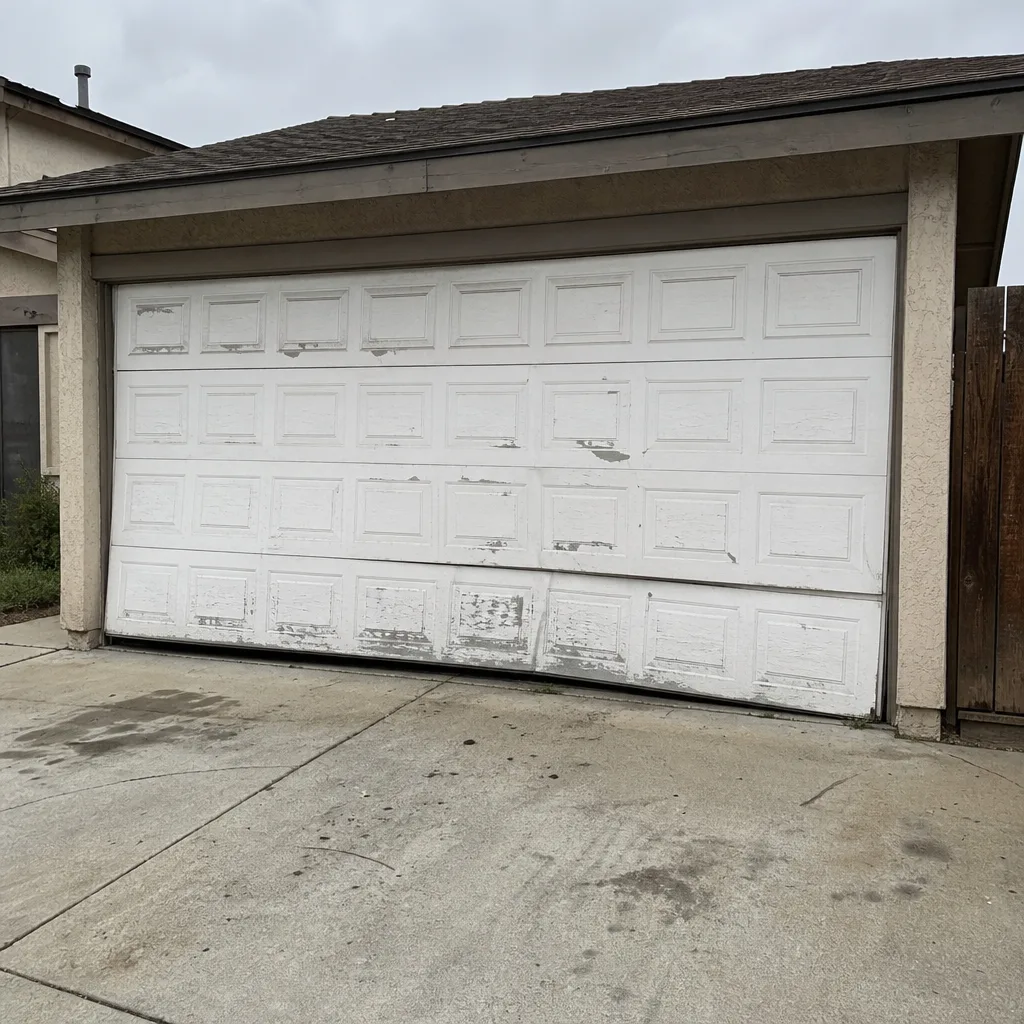 Before
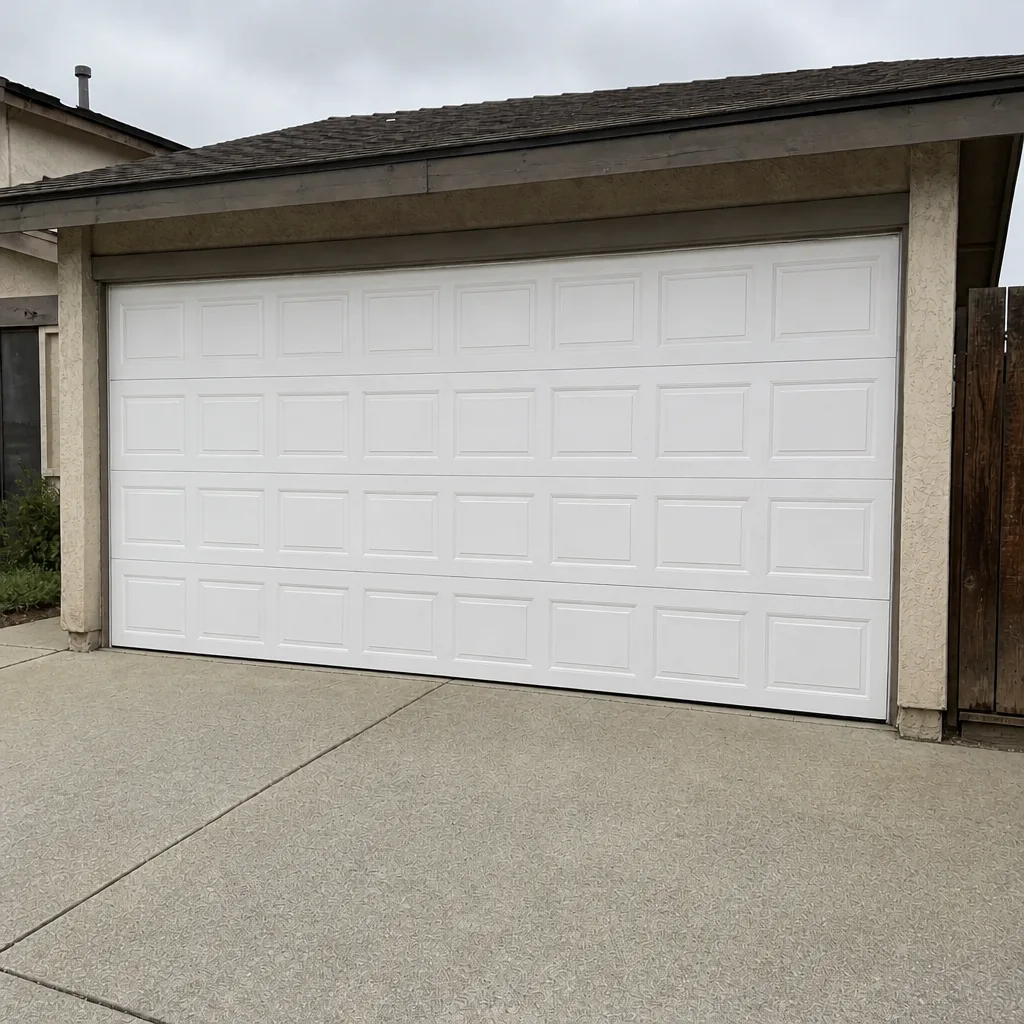 After
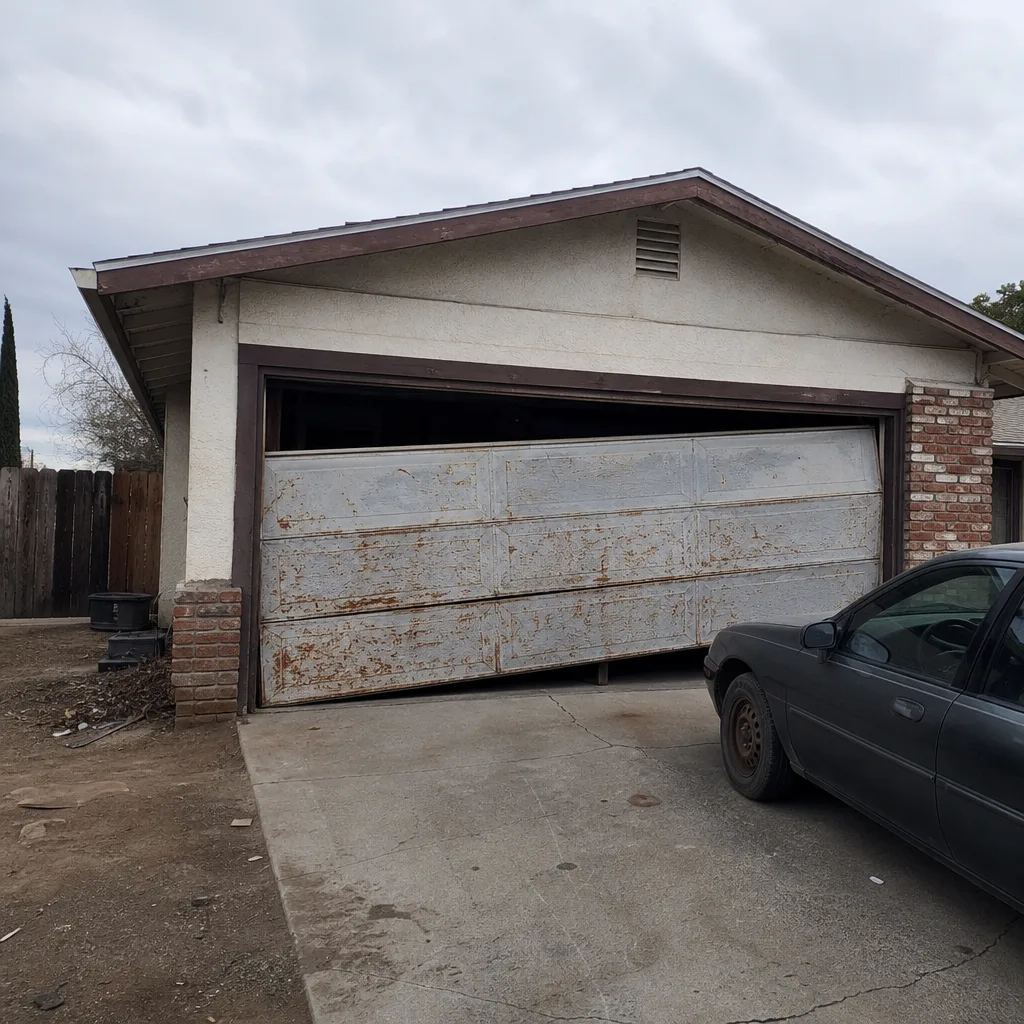 Before
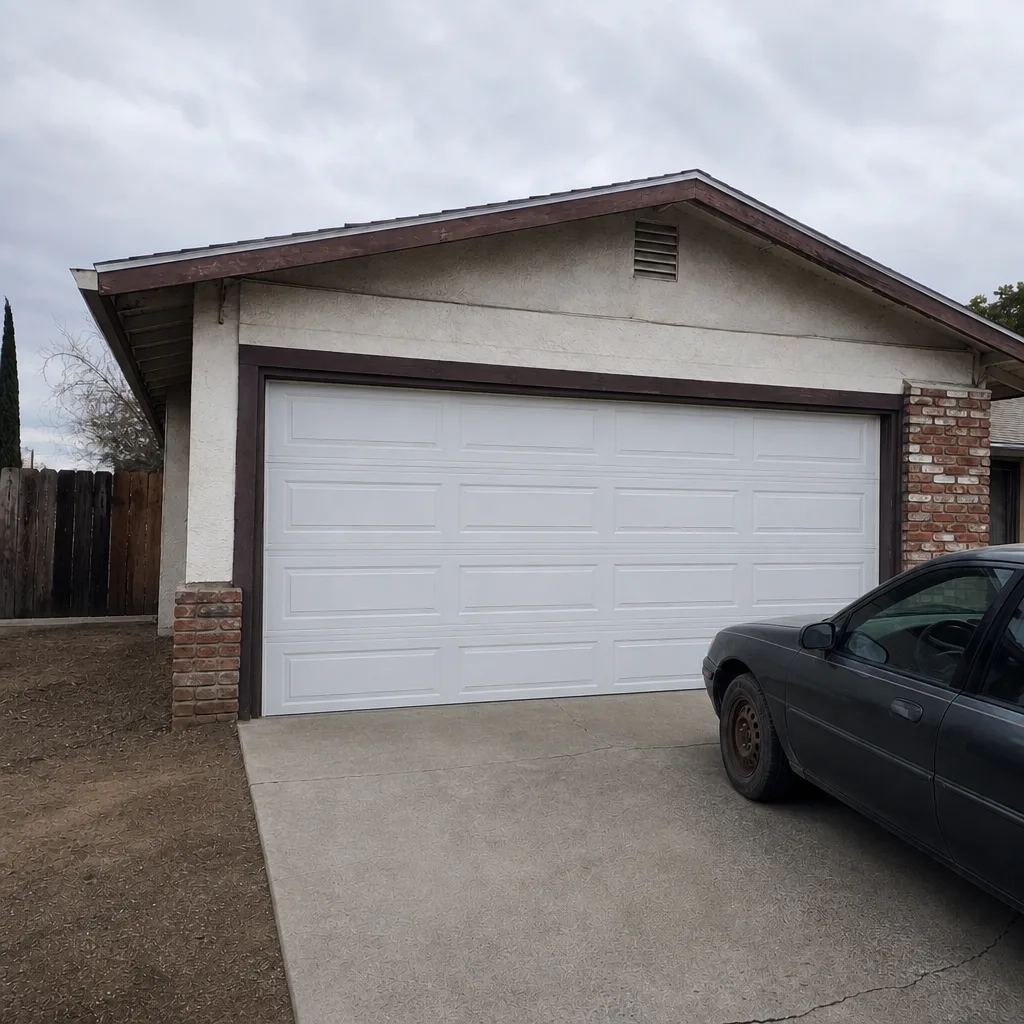 After
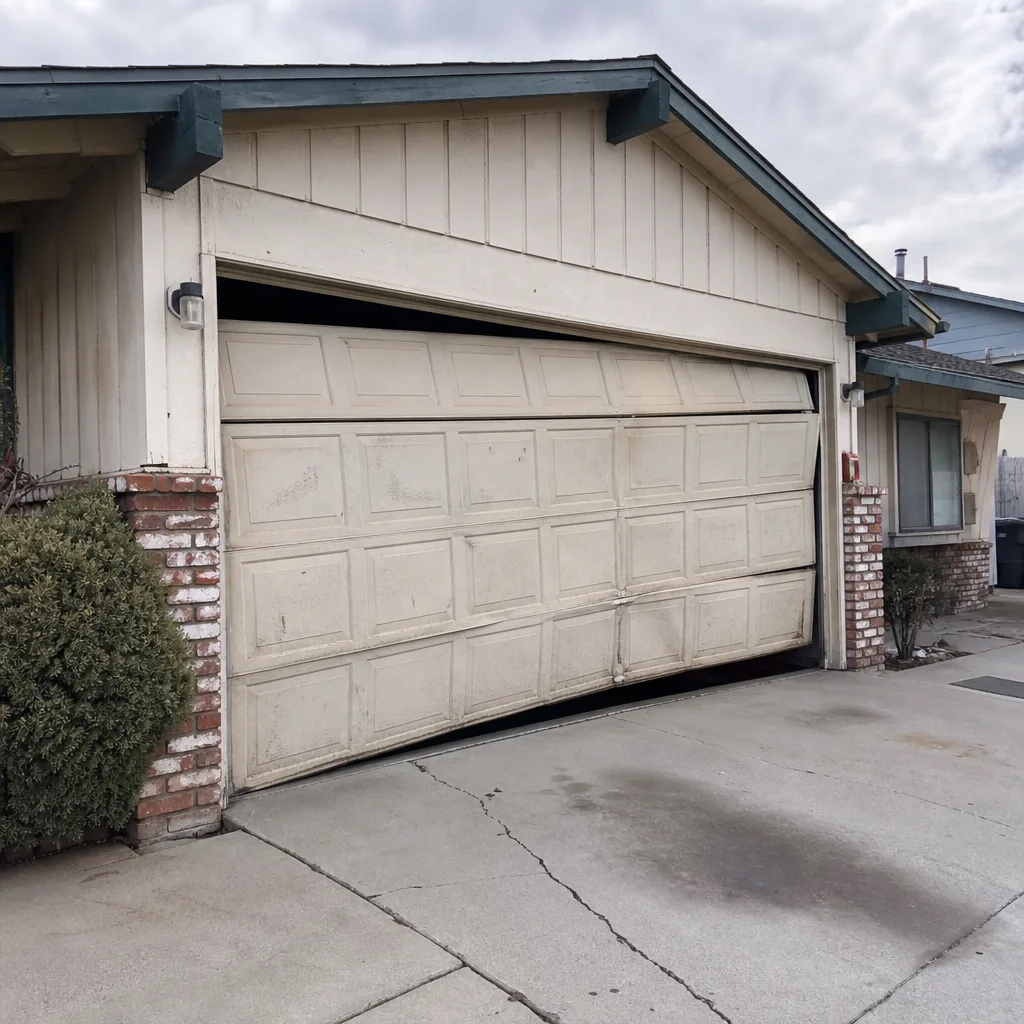 Before
 After
Frequently Asked Questions
In most emergencies, no. You can safely disengage the opener, secure the door in the track, and check the photo-eye sensors. Anything involving springs, cables, or bottom brackets needs a trained professional, because those parts are under stored tension that can release in a fraction of a second. Call (888) 318-1978 and we’ll tell you over the phone whether there’s a safe step to take.
Most emergency repairs run $180 to $340 for a spring or cable issue, and opener repairs are usually in the $120 to $280 range depending on the part. We quote on the phone before we head out and the number doesn’t change when we arrive. Call (888) 318-1978 for an exact quote, and the price is agreed before any work starts.
For true emergencies like a snapped spring with a car trapped, usually yes, and we answer the phone around the clock for that reason. Call (888) 318-1978, tell us where the door is sitting and what you can see, and we’ll tell you honestly whether we can get there today or whether it can safely wait until morning.
No. We quote the job on the phone from your description, and we hold that number at the door. If we find something genuinely different from what we discussed, we’ll show you and agree on it before touching anything. That’s the difference between a quote and an estimate, and we only do the first one. Call (888) 318-1978.
Yes. The business is licensed, insured, and owner-operated, with a published license number you can verify before we knock on the door. The technicians who work on your door are background-checked and trained across all major brands: LiftMaster, Chamberlain, Genie, Clopay, Amarr, Wayne Dalton, Craftsman, and Raynor. Call (888) 318-1978 with any questions.
Don’t try to force the door up. A broken spring means the door isn’t balanced, and pushing it by hand risks the same injury to you that the door can do to itself. Leave it closed, keep everyone clear, and call (888) 318-1978. If you need the car out for work or a medical appointment, tell us that on the call so we can prioritize it.
The Bottom Line
In an emergency, the temptation to just fix it is highest, and so is the chance you’ll make it worse. The three safe moves, disengage the opener (with the door down), secure the track with clamps, and check the sensors, cover the calls you can actually handle yourself. Anything touching a spring, cable, or bottom bracket is a leave-it-alone-and-call situation, and the sooner you call, the cheaper and faster the fix. If you’re in Spring Valley and your door just went, the phone is answered by a live person, the quote on the call is the price at the door, and the job is backed by the 90-Day Done Right Promise in writing. That’s the whole deal. When the door needs replacing rather than repairing, our Garage Door Installation in Spring Valley team handles that too, measured and priced before anything gets ordered.
Contact Us
If your garage door is stuck, broken, or dangerous right now, don’t wait it out. Call (888) 318-1978 for a free estimate in Spring Valley. A live person answers, we’ll walk you through what’s safe to check, and we’ll quote the repair on that call and hold the number when we get there. If it’s not a job we can safely do over the phone, we’ll tell you that too. Free second opinions on any written estimate, no trip charge inside our county, and a standing 10% discount for seniors and veterans. The name on the van is the name on the invoice, and the name on the license. Call (888) 318-1978.
Written by the team at Otto’s Garage Door Spring Valley.