
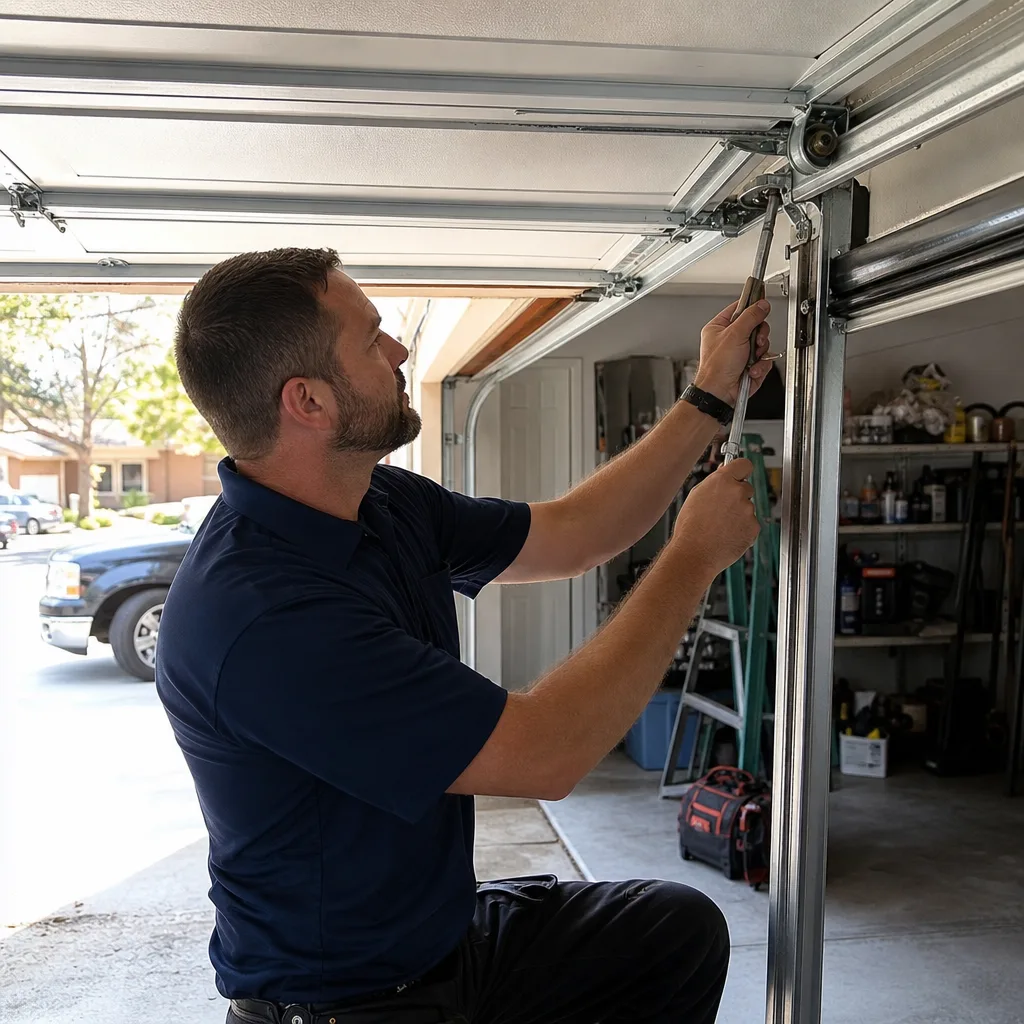
Last updated November 18, 2026
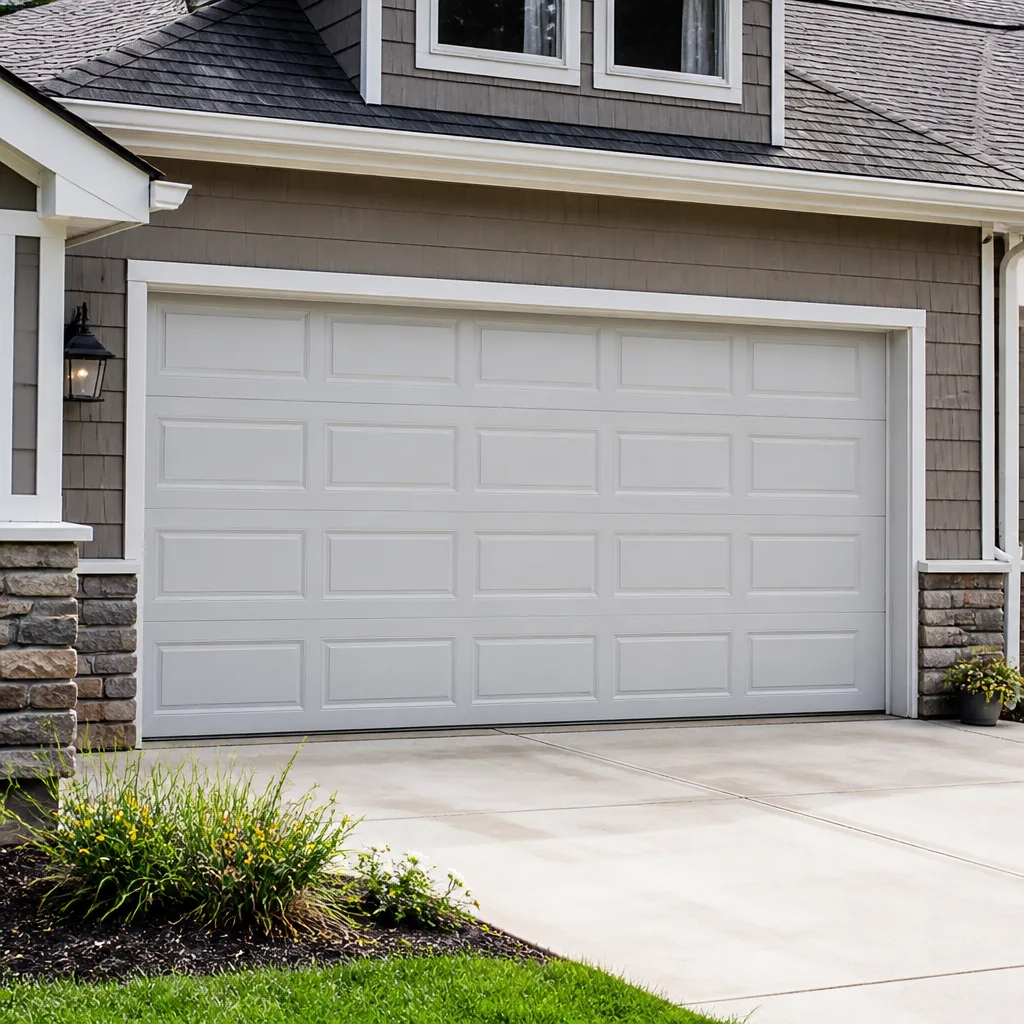 Raised-panel steel
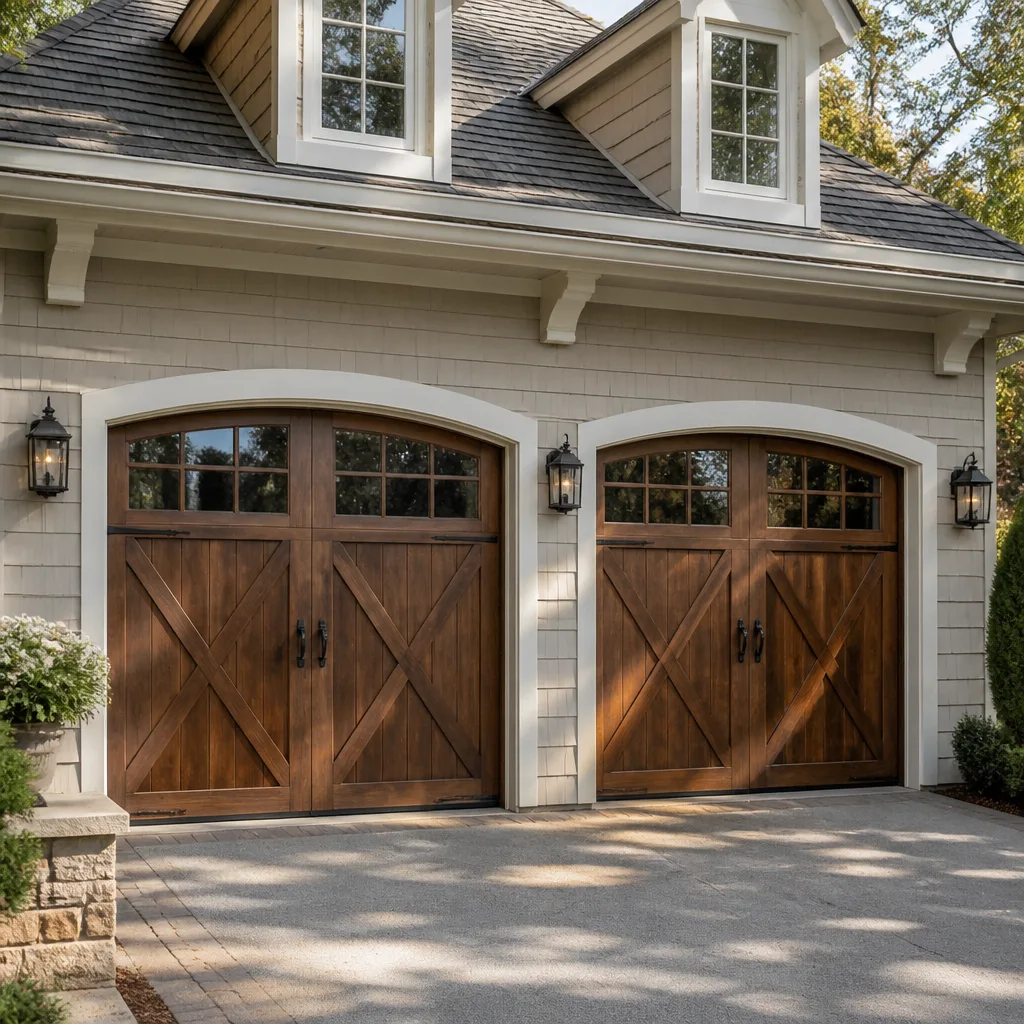 Carriage house
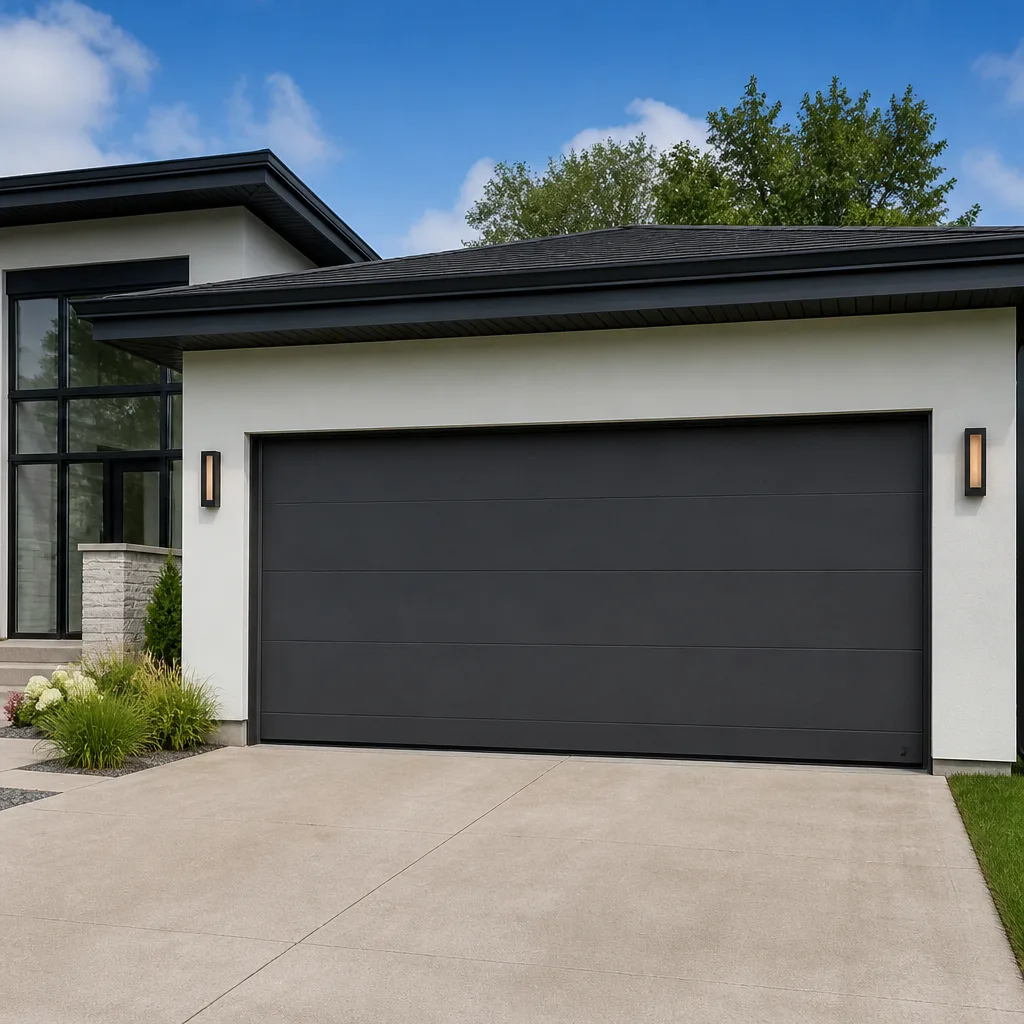 Modern flush
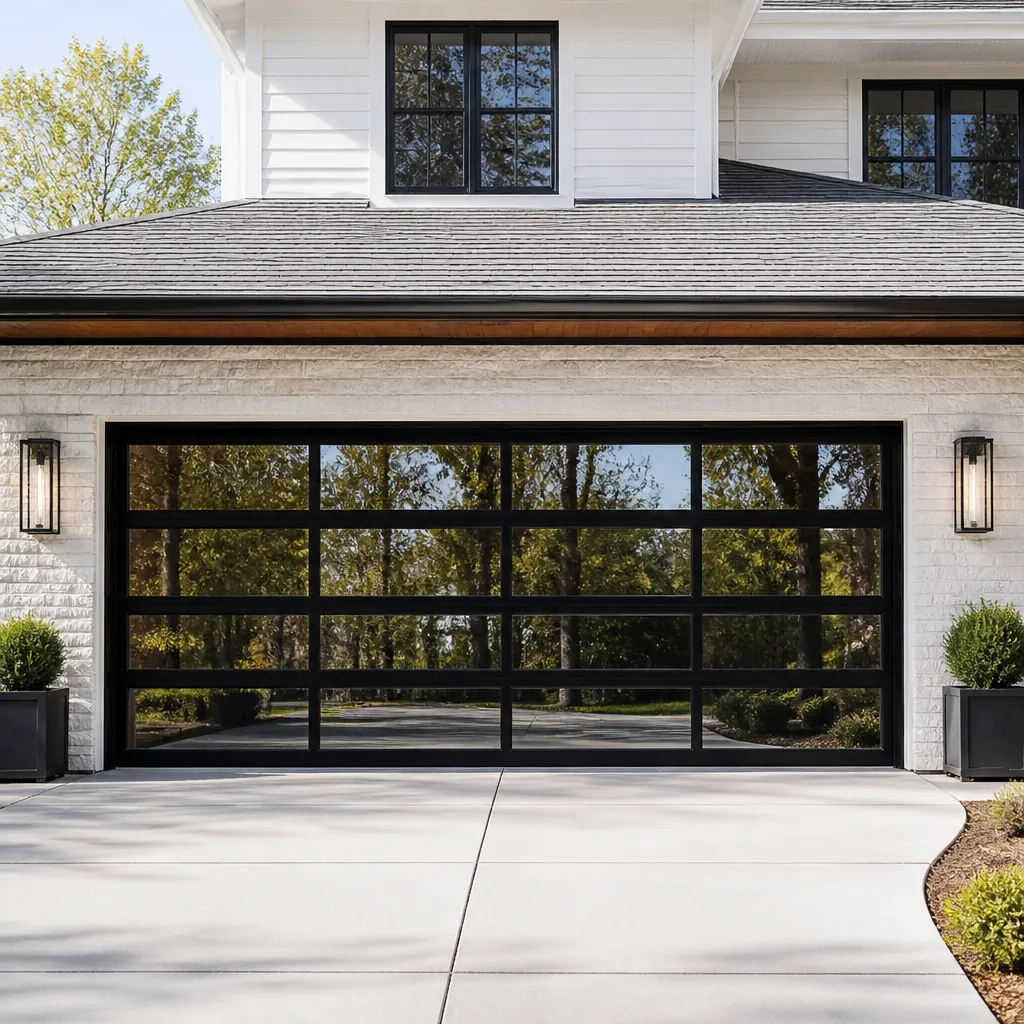 Full-view glass
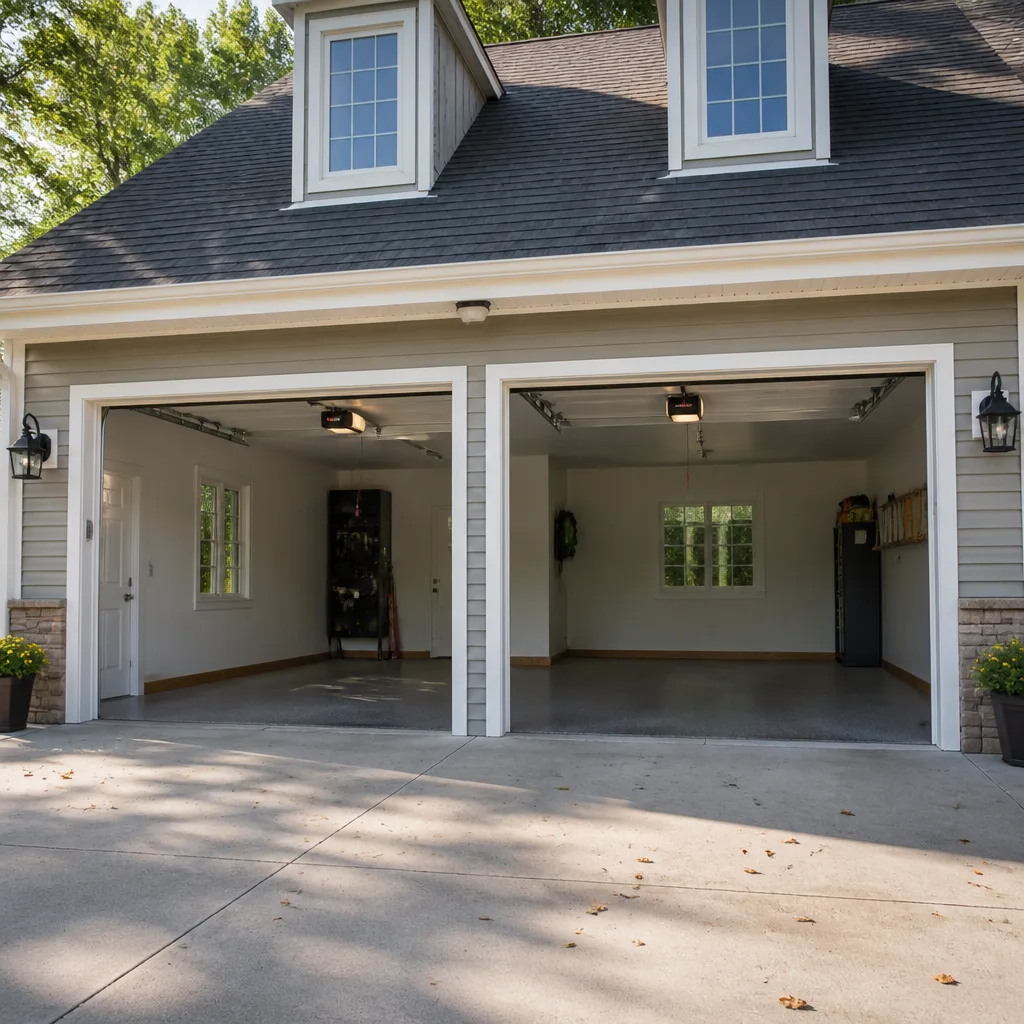 LiftMaster openers
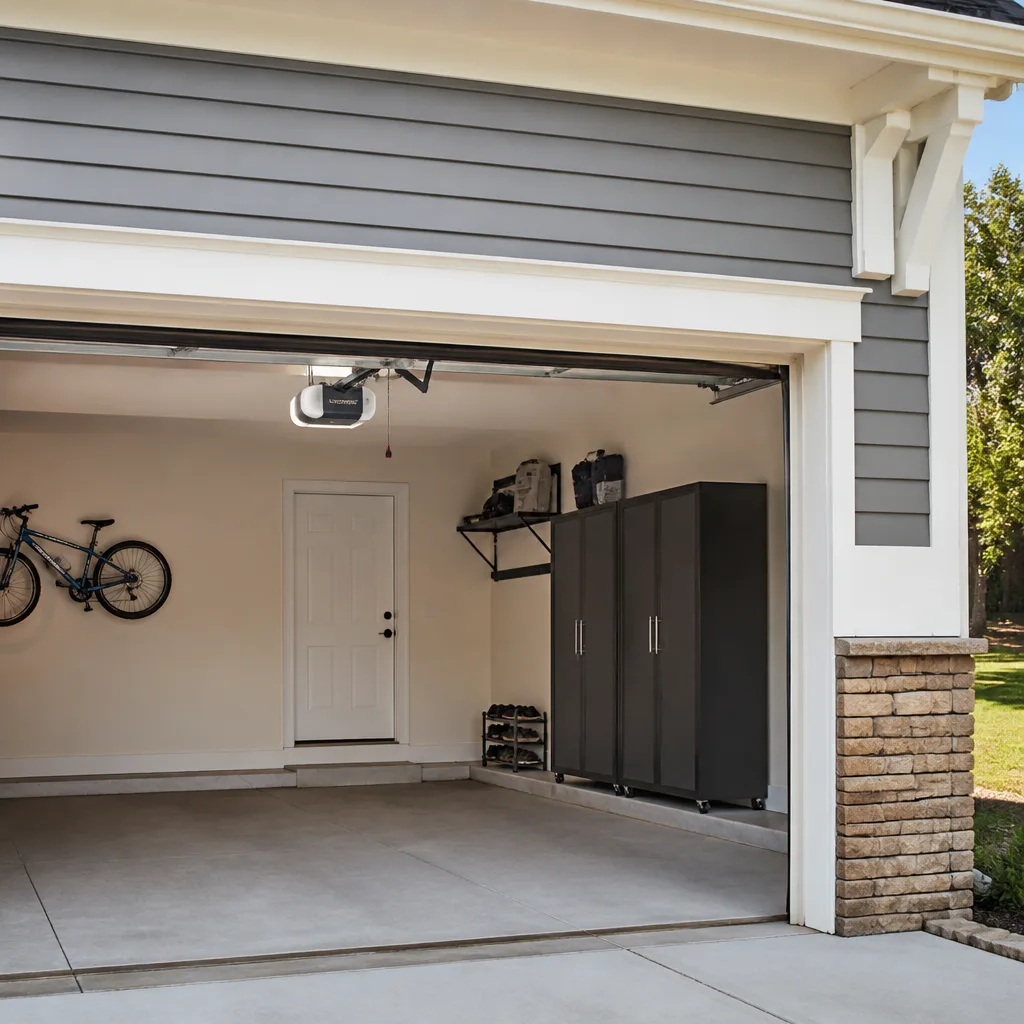 Chamberlain openers
Full 25-point door and opener safety check with every visit - springs, cables, rollers, tracks, and your LiftMaster or Chamberlain opener included
You get a price before we start. It does not change when the pro arrives.
Get your free estimateDIY vs Professional Garage Door Installation: What’s Safe to Do Yourself
We’ve been called out to “finish” a homeowner’s DIY garage door installation six times in the past two years here in Spring Valley. In five of those six cases, the panels were hung perfectly level, the track was plumb, and the homeowner had stalled out at the springs. That’s exactly the right place to stop. A garage door is roughly 200 pounds of steel riding on two torsion springs under serious tension, and the question isn’t whether you’re handy enough to install one. It’s whether you’ve wound a torsion spring before. This guide separates the carpentry from the physics so you know exactly where your skills end and where the danger starts – and where a hybrid approach can save you real money.
Quick Answer
A capable DIYer can safely handle framing prep, weather sealing, track mounting, panel stacking, and opener rail assembly. Torsion spring winding, cable drum tensioning, and final balance calibration are the three steps that require prior hands-on training or a professional – they cause the serious injuries. The hybrid route (you prep, a pro handles springs and calibration) costs $400-$700 in Spring Valley versus $1,100-$2,400 for full professional installation, and it’s the smartest option for most handy homeowners.
Styles & brands we work with
- Raised-panel steel
- Carriage house
- Modern flush
- Full-view glass
- LiftMaster openers
- Chamberlain openers
Table of Contents
- What a Capable DIYer Can Genuinely Handle
- What Requires Professional Training (And Why)
- The Hybrid Approach: Prep It Yourself, Hire Out the Springs
- Tools You’ll Need vs Tools You Can’t Fake
- How to Vet an Installer in Clark County
- What a Lowball Bid Usually Skips
- Spring Valley-Specific Considerations
- Common Mistakes to Avoid
What a Capable DIYer Can Genuinely Handle
If you’ve framed a shed, hung a pre-hung door, or replaced a fence gate, you have the skill set for about 60% of a garage door installation. The carpentry portion is honest work that rewards patience. The physics portion is where people get hurt.
Here’s what a careful homeowner can handle on a standard 16×7 door, the most common size in Spring Valley’s single-family neighborhoods:
- Framing prep: Checking that the rough opening is square, plumb, and the correct height. Spring Valley’s housing stock ranges from 1990s stucco builds to newer Toll Brothers construction, and both can have out-of-square openings that need shimming.
- Weather seal installation: Bottom seal, side jambs, and top header seal. Straightforward work with a hammer, nails, and a level.
- Track mounting: Setting vertical and horizontal tracks. This is measuring-and-leveling work. Get it within 1/8 inch and you’re fine.
- Panel stacking: Lifting and seating sections one at a time. A second person makes this safer and faster, especially on panels over 8 feet wide.
- Opener rail assembly: Bolting the rail together, mounting the motor to the ceiling, and installing the Chamberlain or Genie opener head unit per the manufacturer’s instructions.
What we consistently see in Spring Valley is that homeowners do this part well. The panels sit level, the track is true, and the work is solid. Then they hit the springs and either stop – which is correct – or push forward and get hurt.
If you’re not replacing the full door but repairing an existing one, our guide to Garage Door Repair in Spring Valley covers the diagnostic side.
What Requires Professional Training (And Why)
Three steps in a garage door installation carry genuine physical risk. We’re not being dramatic – the torsion spring on a standard 16×7 door stores enough energy to break bones, and when a spring or cable fails under load, it fails fast and without warning.
1. Torsion Spring Winding
Torsion springs are wound to a specific number of turns based on door weight, spring wire gauge, and drum size. Winding them requires two proper winding rods (not screwdrivers), correct technique, and the physical strength to hold tension while you work. A single slip can send a winding rod across the garage at speed. This is the step that lands homeowners in the emergency room.
2. Cable Drum Tensioning
Cables run from the bottom bracket up to the drum at the end of the torsion shaft. If a cable jumps its drum or the set screws aren’t torqued correctly, the whole door can drop. A dropped door crushes whatever is underneath – including feet and hands.
3. Final Balance Calibration
A properly balanced door should lift with two fingers and stay in place when stopped halfway up. Getting there requires adjusting spring tension by quarter-turns and re-testing. Without hands-on training, most homeowners either overshoot (door flies up) or undershoot (opener strains and burns out in six months).
We’ve seen all three of these go wrong in Spring Valley, and it’s never cheap to fix. If you’re hiring out the spring work, our Garage Door Installation in Spring Valley page covers what a full professional install involves.
The Hybrid Approach: Prep It Yourself, Hire Out the Springs
This is the option we wish more homeowners knew about. You do the safe 60% – framing, seal, track, panels, opener rail – and a professional handles the springs, cables, and final balance. You save real money and avoid the only part that can hurt you.
Here’s how the math works out in the Spring Valley market on a standard 16×7 Clopay or Amarr door:
- Full DIY (door kit + tools + your time): $700-$1,100 in materials, plus tools you may not own, plus a real risk of injury or a door that never balances correctly.
- Hybrid approach (you prep, pro handles springs and calibration): $400-$700 for the pro portion, plus your materials cost of $700-$1,100. Total $1,100-$1,800.
- Full professional installation (Spring Valley market): $1,100-$2,400 for a standard single door installed, $1,800-$3,200 for a double door.
The hybrid saves $200-$600 versus a full pro install and eliminates the injury risk. The catch: you need a professional willing to work on a homeowner-prepped installation, which some shops won’t do because they can’t guarantee the prep work. We will – we look at your framing and track work first, and if it’s sound, we’ll finish the job.
For homes with opener replacement on the table too, our Garage Door Opener Repair & Installation in Spring Valley page has the cost breakdown.
Tools You’ll Need vs Tools You Can’t Fake
Most of a garage door installation uses tools a weekend carpenter already owns. A few don’t. Knowing the difference before you order the door saves a lot of swearing.
Tools you likely own
- Hammer, tape measure, level (a 4-foot level is much better than a 2-foot)
- Cordless drill with driver bits
- Socket set (3/8 and 1/2 inch for most panel bolts)
- Step ladder and a sawhorse or two
- Adjustable wrench
Tools most homeowners don’t own – and can’t reasonably substitute
- Winding rods (a pair): Solid steel rods sized to fit the winding cone holes. Never substitute a screwdriver, a punch, or an Allen wrench – all three are how people get hurt.
- C-clamps or locking pliers (2 minimum): Used to hold the torsion shaft while tensioning. Without them, you cannot safely lock the shaft mid-winding.
- Torque wrench: Set screws on drums and brackets have torque specs from the manufacturer. Guessing here is how doors fall.
- Spring scale: For balance testing. A door that takes more than 10-15 pounds of force to lift is not balanced.
If you’re missing the second list and don’t plan to buy them, that’s your signal to hire out the spring work. That’s not a failure – it’s the right call.
How to Vet an Installer in Clark County
If you’re hiring out the whole installation, or just the spring and calibration portion, a little verification goes a long way. The garage door industry attracts its share of operators who quote low, arrive unprepared, and bill high.
Here’s what to ask before anyone walks onto your property:
- Nevada State Contractor’s License Number. Ask for it and verify it at the Nevada State Contractors Board website. A legitimate Nevada garage door installer holds a license in the appropriate classification. If they can’t produce a number, don’t let them start.
- Proof of liability insurance and workers’ comp. Ask for a current certificate of insurance. If a tech is injured on your property and the company has no workers’ comp, that’s your problem in the worst case.
- Clark County building permit. A residential garage door replacement generally does not require a permit if the door is a like-for-like replacement, but structural changes to the opening, header, or framing typically do. A reputable installer knows which is which and will tell you upfront.
- Written quote with model numbers. The quote should list the specific door model (Clopay or Amarr, for example), the opener brand (LiftMaster, Chamberlain, or Genie), and the hardware included. Vague quotes are the anchor for later upcharges.
- A published business address. Verify it. A real local shop has an address you can drive to.
At Otto’s Garage Door Spring Valley, we publish the license number and the address because we expect you to check. That’s the point.
What a Lowball Bid Usually Skips
When you get a bid that comes in $400-$600 under the others, the work doesn’t disappear – it moves. Here’s what’s usually missing from a lowball garage door installation quote:
- Old door haul-away and disposal. That’s a $75-$150 line item most lowballers quietly skip, then bill as an extra.
- Spring cycle life. Standard springs are typically rated for 10,000 cycles. Upgrade springs (15,000-25,000 cycles) cost more. A lowball bid uses the cheapest springs available and you’ll be replacing them in five to seven years.
- Opener safety reversal testing. Required by code, takes ten minutes, and lowball bids skip it because the check rarely fails on a new door. When it does fail, it fails with a child under the door.
- Weather stripping and bottom seal. Sometimes billed extra “if you want it.” It’s not optional – it’s part of the installation.
- Liability insurance and workers’ comp. The cheapest operator is often the one who doesn’t carry either.
Otto’s Garage Door Spring Valley gives one written price before the work and holds that number at the door. No line items showing up three weeks later. That’s the standard – if a bid you’re comparing doesn’t match it, ask why.
Spring Valley-Specific Considerations
Spring Valley’s climate matters for garage doors in ways that don’t show up on a manufacturer’s spec sheet. Two factors in particular:
The heat cycle. Spring Valley summer afternoon temperatures push 105-110°F, and the garage, especially an uninsulated one, sits 15-20°F hotter inside. That heat cycle stresses torsion springs faster than mild climates do. Standard springs often fail at 6-8 years here, not the 10-12 you’d expect somewhere cooler. If you’re choosing a door and springs, upgrade the spring for cycle life – it’s a $60-$100 upcharge that buys three to five more years.
Dust and grit. Spring Valley’s high-desert environment means dust on rollers and tracks is a constant. Track mounting needs to be dead plumb because the dust will find any misalignment and turn it into a squeak within a year. We see this on plenty of DIY installs where the track was “close enough.”
Stucco and framing. Most Spring Valley homes are stucco over wood frame. Mounting a track or opener bracket to a stucco wall means hitting framing behind it, not the stucco. A door mounted into stucco alone will pull out within a season. This is a detail that separates a real installation from a hardware-store Saturday.
If you’re replacing an older door anywhere in Spring Valley, from Rhodes Ranch to the 89147 ZIP, our team can look at the existing framing and tell you in ten minutes whether you’re looking at a straightforward install or a repair job.
Common Mistakes to Avoid
- Winding the springs with the wrong tool. Screwdrivers and Allen wrenches account for the majority of garage door injuries. Use proper winding rods or don’t touch the springs.
- Not shimming an out-of-square opening. Spring Valley’s 1990s stucco homes often have openings that are up to 3/4 inch out of plumb. A door installed against that framing will bind within months.
- Skipping the balance test. A door that lifts with two fingers is balanced. A door that “works fine” but strains the opener is not – and the opener motor is the first thing to die.
- Mounting hardware into stucco only. No lag bolt into stucco alone holds a loaded track over time. Anchor into framing behind it.
- Buying the cheapest springs. Ten-thousand-cycle springs will need replacing in Spring Valley’s heat long before a decent door does. Upgrade the spring on the original order.
- Ignoring the opener’s force setting. A new door weighs something. The opener’s force limits must be adjusted to the new weight, or the safety reversal will either be too sensitive or not sensitive enough.
- Hiring a quote that doesn’t name the door model. Vague quotes mean the installer picks the cheapest model available on install day. Insist on model names and numbers.
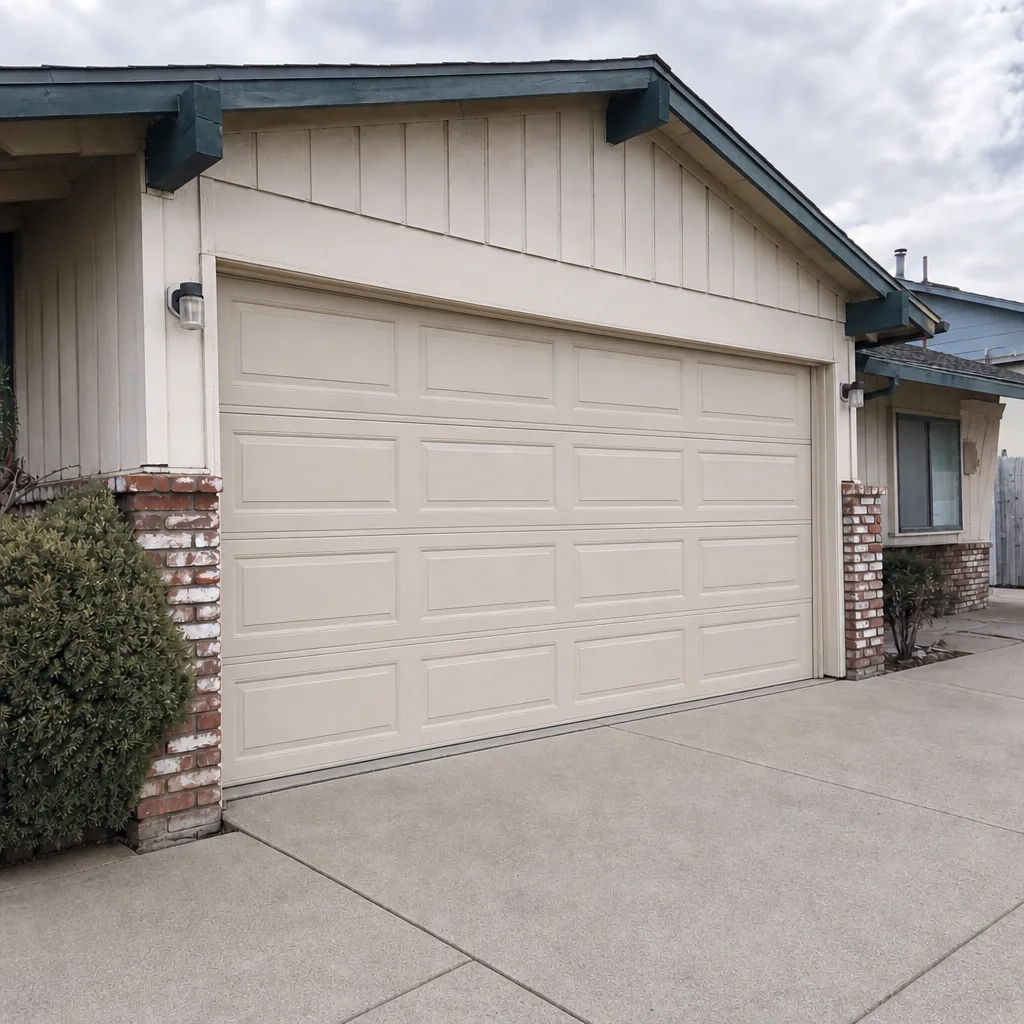
See the difference
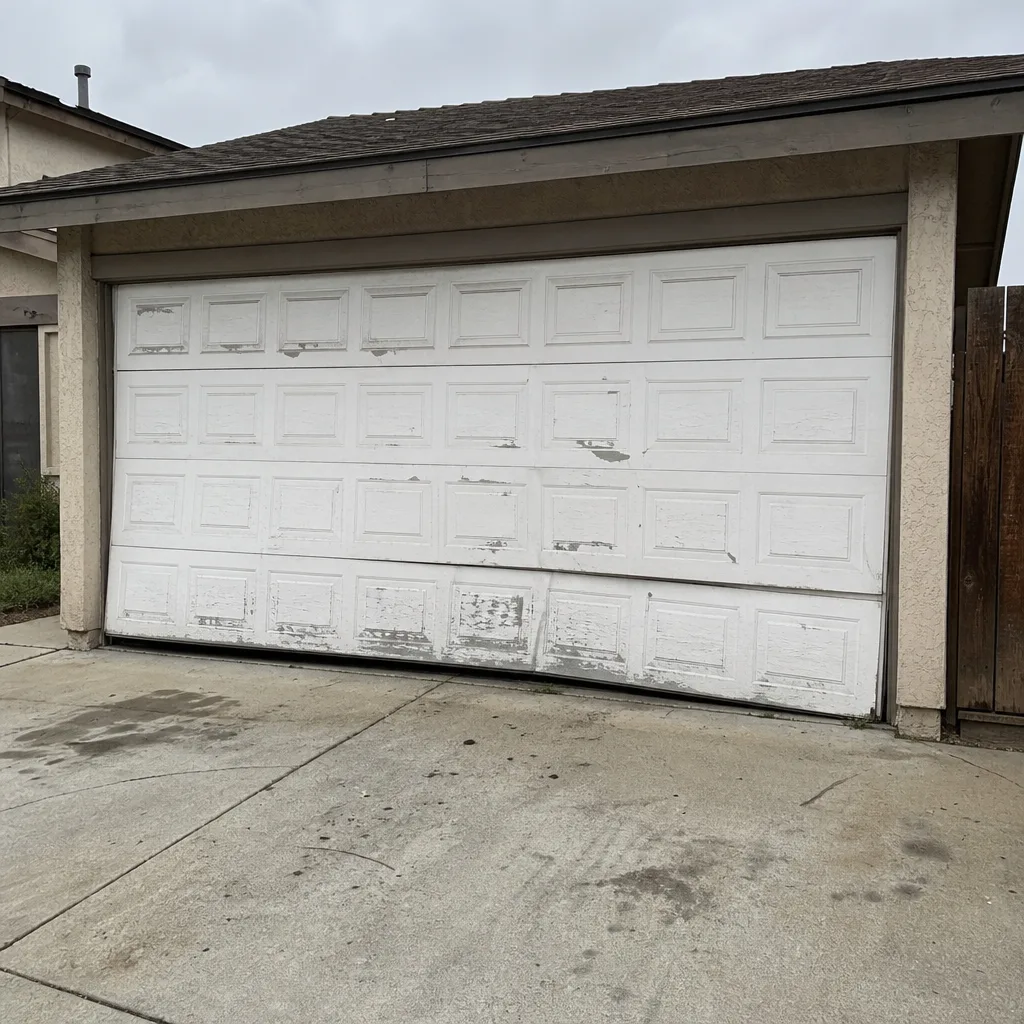 Before
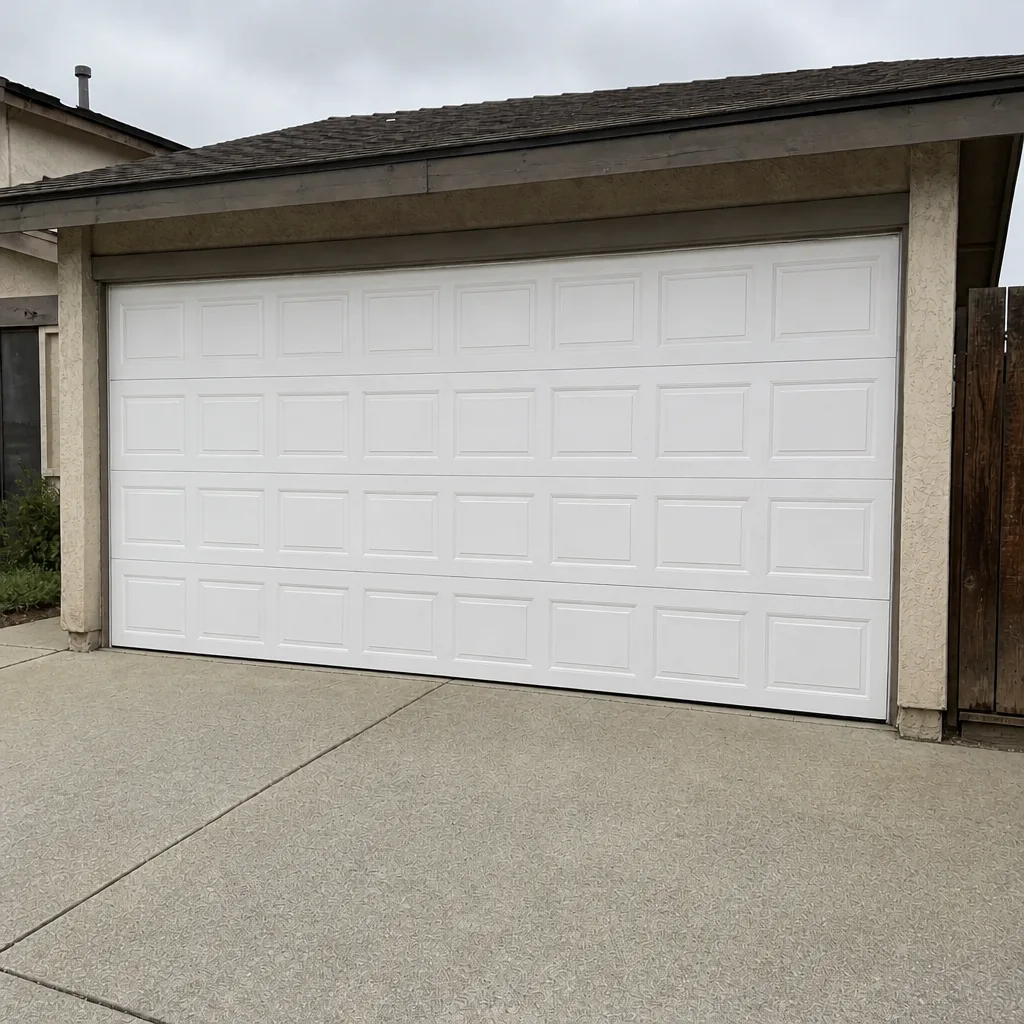 After
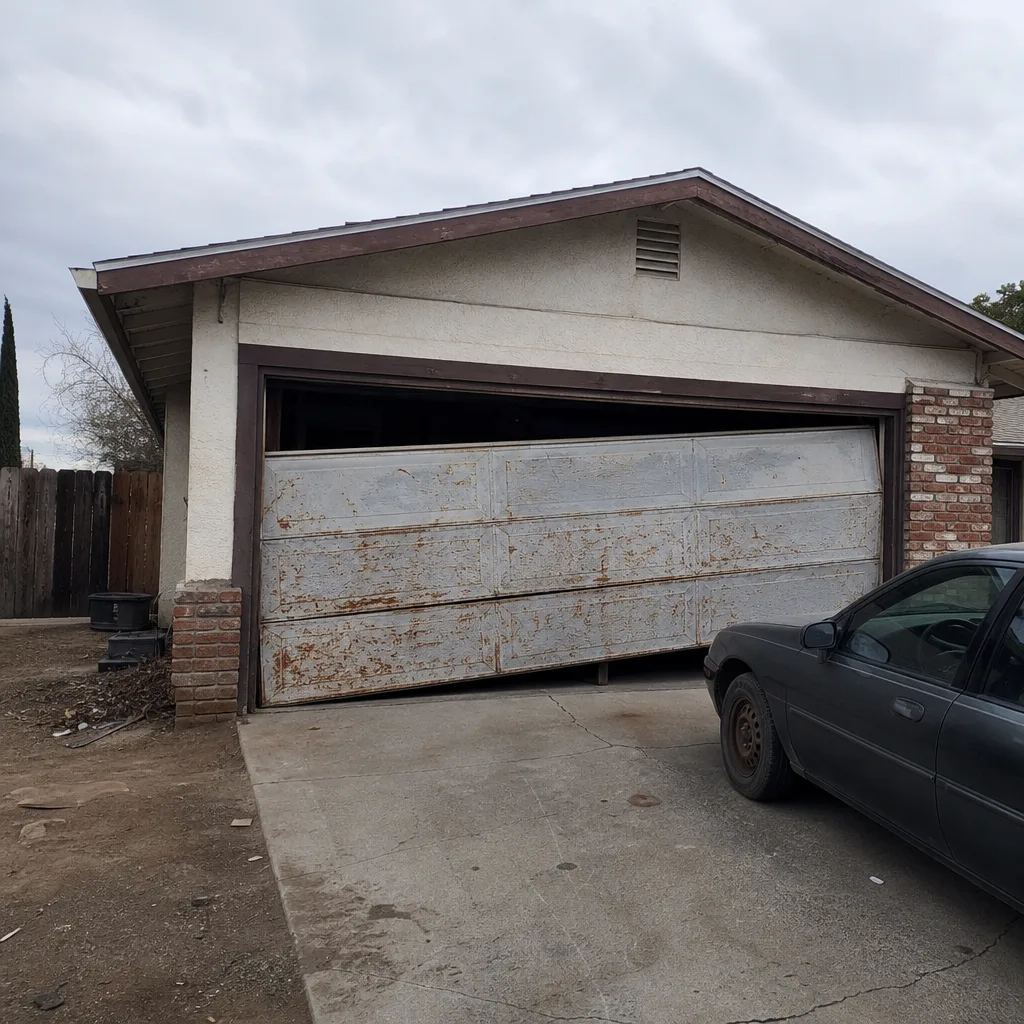 Before
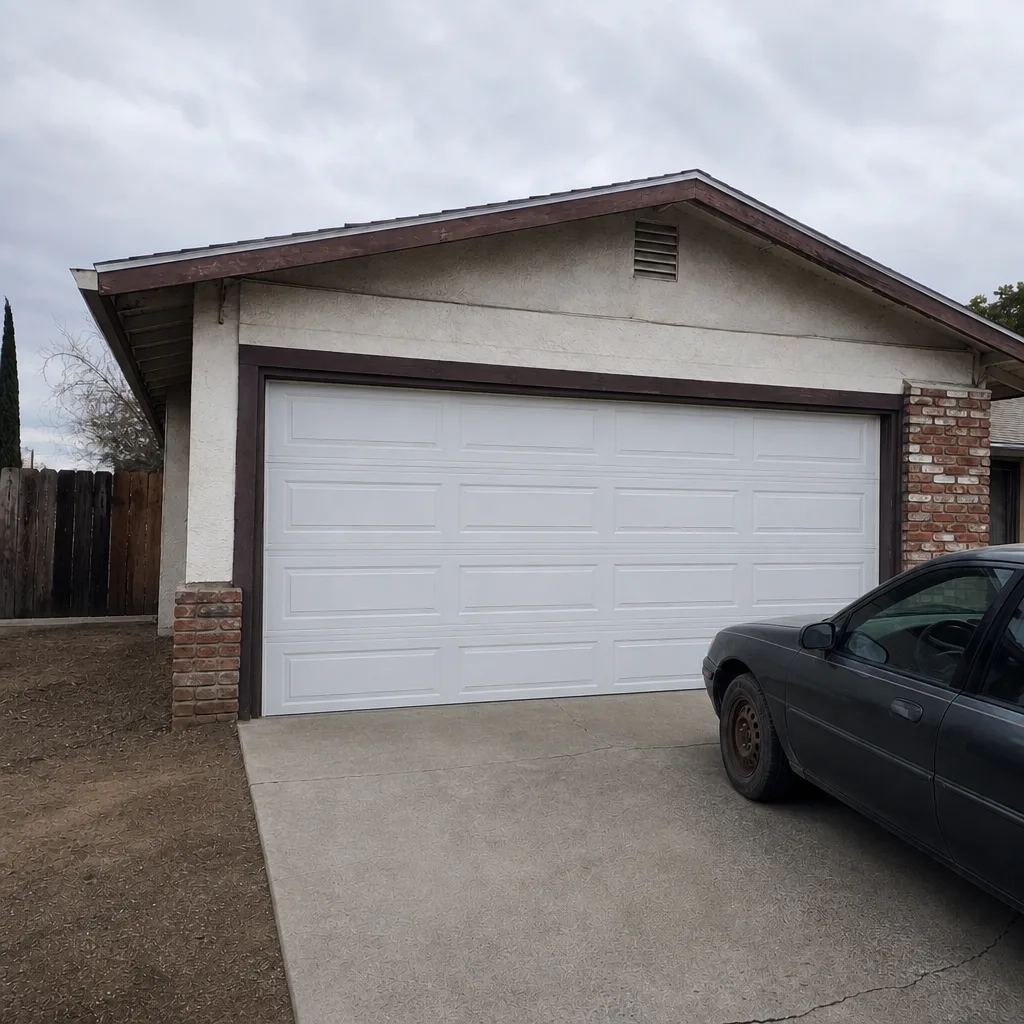 After
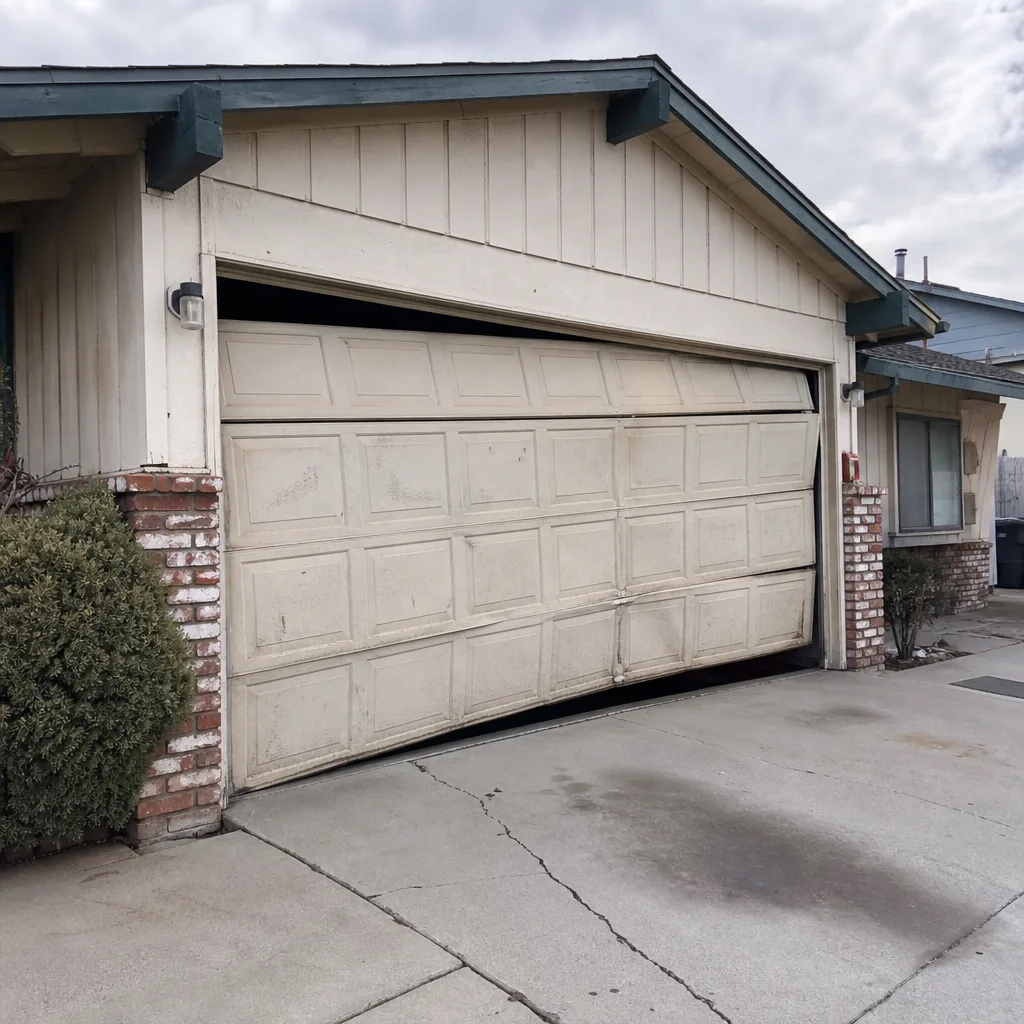 Before
 After
When to Call a Professional
Call a professional when you reach a step that requires prior hands-on training: winding torsion springs, tensioning cables, or final balance calibration. Also call when your opening is visibly out of square, when you’re replacing a door on a home older than you are comfortable with, when your opener needs replacing at the same time, or when the door weighs more than two people can manage – some insulated double doors do. None of these are things to learn by trial. Call Otto’s Garage Door Spring Valley at (888) 318-1978 for a free estimate in Spring Valley. We’ll look at your prep work, quote the spring and calibration portion honestly, and tell you straight whether your install is safe to finish. Live person, 24/7.
Frequently Asked Questions
Yes for the framing, sealing, track, panel, and opener rail work, which is where most of the labor cost lives. No for the torsion spring winding, cable tensioning, or final balance – those require training and carry real injury risk. A hybrid install where you prep and a professional finishes costs $400-$700 for the pro portion in Spring Valley. Call (888) 318-1978 to get an exact quote for the professional portion.
Full professional installation in Spring Valley runs $1,100-$2,400 for a standard single door and $1,800-$3,200 for a double door, depending on door model, insulation, and spring upgrade. Hybrid installs cost $400-$700 for the professional portion plus your materials. Full DIY materials run $700-$1,100 with the injury risk included. Call (888) 318-1978 for a written quote before any work begins.
Yes. Torsion springs store enough energy to cause serious injury or death, and the standard winding process requires specific tools and technique that you cannot learn from a YouTube video. A slipped winding rod can break a wrist or worse. This is the one step in a garage door installation we strongly recommend against DIY. Call (888) 318-1978 to book the spring work – we do it safely every day in Spring Valley.
No. We quote the job before the visit, hold the number, and don’t move it upward when we see the door. If we find a problem we didn’t know about – a rotted header, an out-of-square opening – we tell you what the additional work costs before we touch a tool. Free second opinions on any written estimate you already have. Call (888) 318-1978.
Yes. Our technicians are background-checked, uniformed, and covered by our liability insurance and workers’ comp. We publish our license number and business address so you can verify both before we show up. Call (888) 318-1978 to schedule – and if you’re comparing bids, ask every other installer the same question.
Generally no for a like-for-like door replacement – swapping a same-size door for another same-size door typically doesn’t require a permit in Clark County. Structural changes to the opening, header, or framing do require one. A reputable installer will tell you which category your job falls into before work starts. Otto’s Garage Door Spring Valley can clarify this for your Spring Valley home – call (888) 318-1978.
The Bottom Line
The DIY vs professional garage door installation question has a real answer: it depends on which step. The carpentry – framing, seal, track, panels, opener rail – is genuinely within reach for a capable homeowner. The physics – spring winding, cable tensioning, balance calibration – is not, and pretending otherwise is how people get hurt. The hybrid approach, where you handle the safe 60% and a professional handles the 40% that can send you to the ER, is the smartest path for most Spring Valley homeowners. That’s roughly $1,100-$1,800 total, versus $1,100-$2,400 for a full pro install and $700-$1,100 for full DIY with real risk attached. Pick the version that lets you sleep at night – and if you’re going hybrid, call us for the spring portion.
When you want a straight answer on the professional portion of your work, or a full installation quote you can hold us to, call Otto’s Garage Door Spring Valley at (888) 318-1978 for a free estimate. We’re on the phone 24/7, we quote before we drive out, we hold the number at the door, and we back every job with our 90-Day Done Right Promise in writing.
Written by the team at Otto’s Garage Door Spring Valley.