
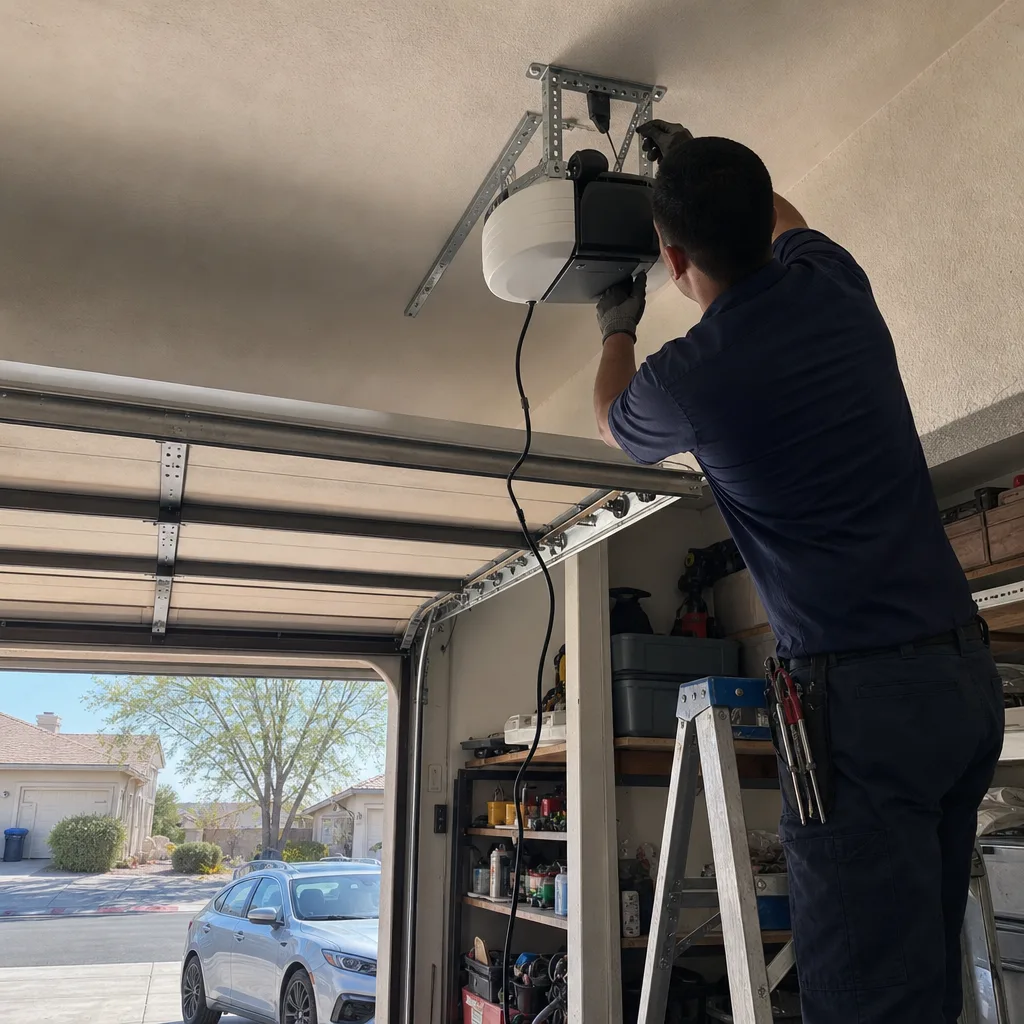
Last updated November 18, 2026
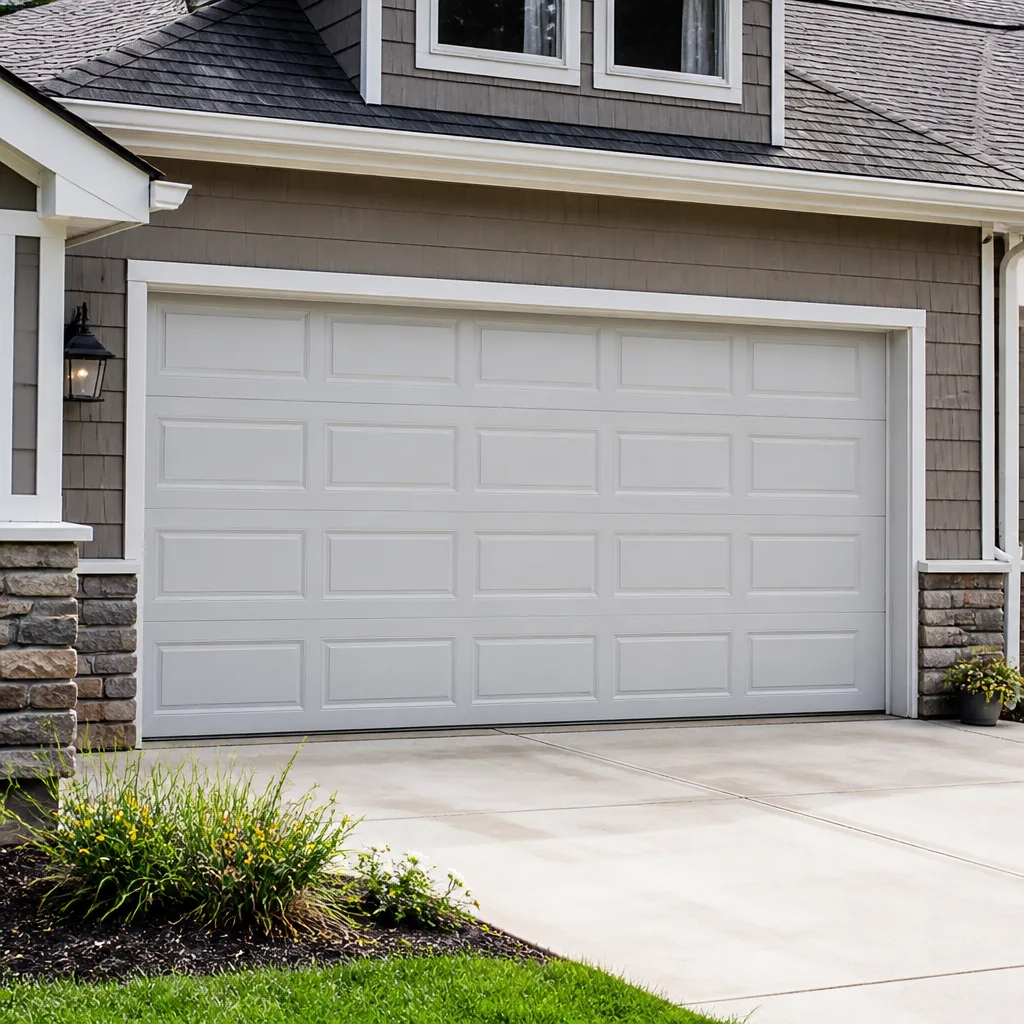 Raised-panel steel
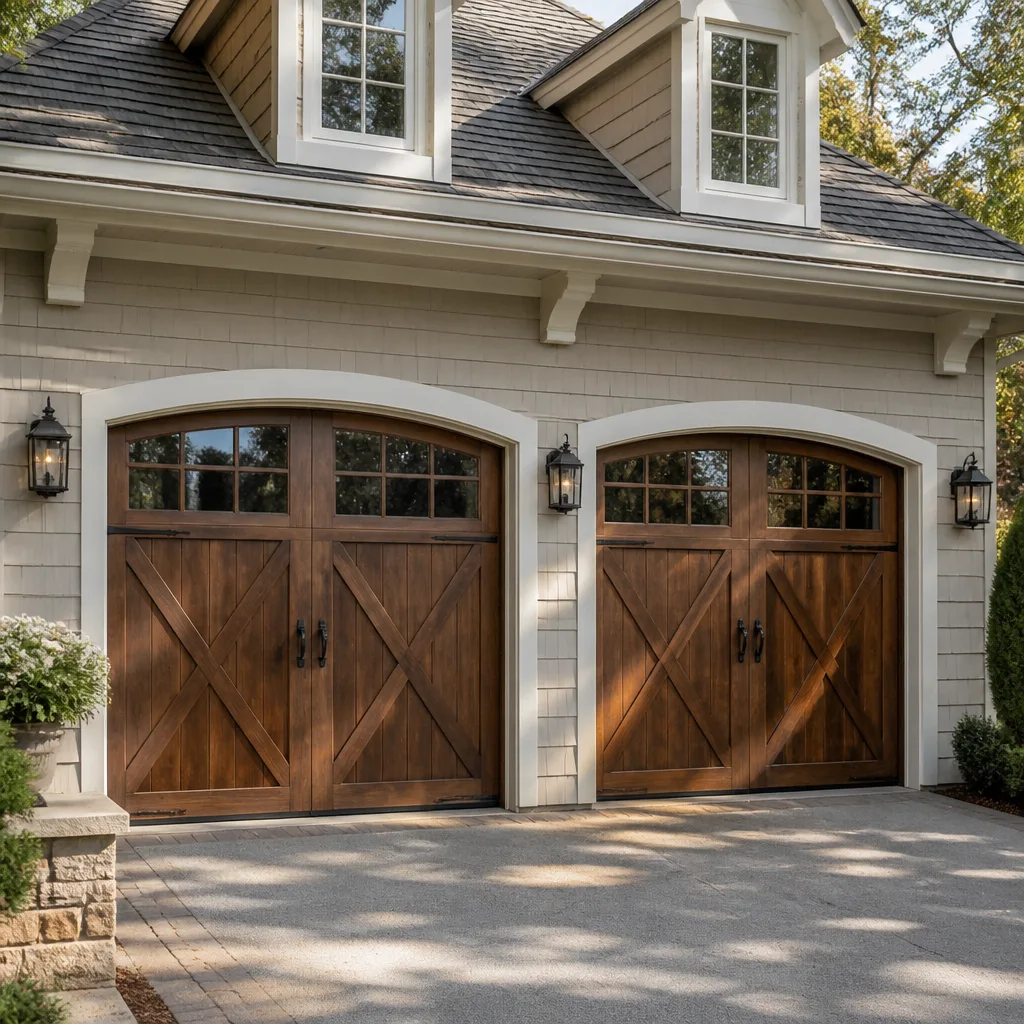 Carriage house
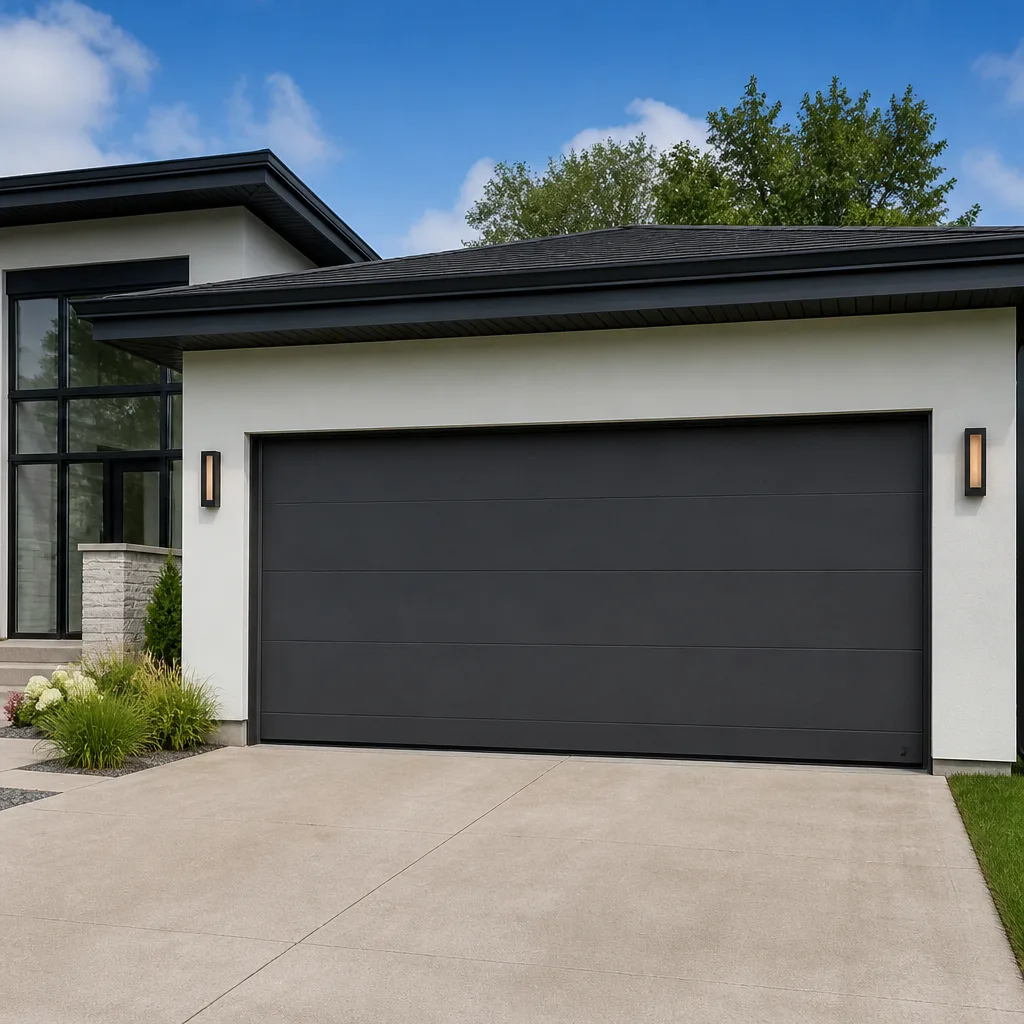 Modern flush
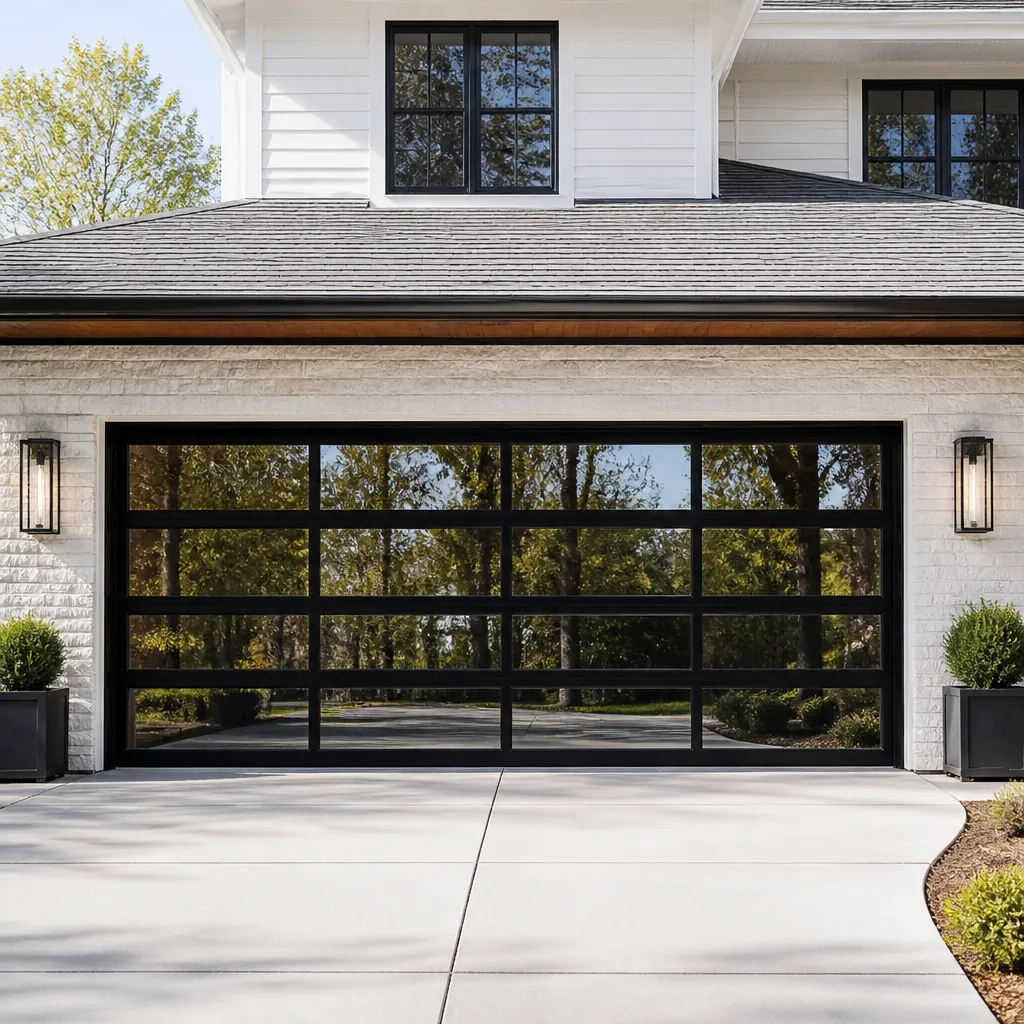 Full-view glass
 LiftMaster openers
 Chamberlain openers
Full 25-point door and opener safety check with every visit - springs, cables, rollers, tracks, and your LiftMaster or Chamberlain opener included
You get a price before we start. It does not change when the pro arrives.
Get your free estimateDIY vs Professional Garage Door: The Spring Valley Homeowner’s Decision Guide
We’re not going to tell you that you need a professional to swap out your weatherstripping or reprogram a remote. You don’t. But we will tell you this: a fully wound torsion spring holds enough stored energy to break a wrist, and that’s not a scare tactic. It’s the reason a torsion spring is the one job we won’t walk a homeowner through over the phone, no matter how handy they are. This guide walks through the garage door task by task – what’s genuinely safe to do yourself, what needs tools most people don’t own, and what’s professional-only. If you live in Spring Valley or anywhere around it, this is written with your climate, your doors, and your wind in mind.
Quick Answer
Most garage door maintenance is DIY-safe: lubing tracks, tightening bolts, testing the safety reverse, replacing weatherstripping. Torsion spring replacement, cable replacement, and any work under tension is professional-only – not because of liability paperwork, but because those parts store lethal energy. Opener installation sits in the middle: technically doable, but two common wiring mistakes usually trigger a service call anyway, which wipes out the savings.
Styles & brands we work with
- Raised-panel steel
- Carriage house
- Modern flush
- Full-view glass
- LiftMaster openers
- Chamberlain openers
Table of Contents
- The Task-by-Task Breakdown: What’s Safe, What’s Not
- Why Torsion Springs Are a Hard Professional Line
- The Honest Math on DIY Opener Installation
- What You Can Do Right Now to Extend Door Life
- The Middle Path: Buy Your Own Parts, Have Us Install Them
- Spring Valley Context: Heat, Wind, and Your Door
- What the Two Paths Actually Cost
The Task-by-Task Breakdown: What’s Safe, What’s Not
Here’s the honest version, task by task, whether you’ve got a screwdriver or a full woodshop in the garage.
Genuinely DIY-Safe
- Lubricating tracks and rollers – a couple of times a year with white lithium grease. Ten minutes.
- Tightening bolts and hinges – a socket set and a look at the manual.
- Testing the safety reverse – a 2×4 on the ground and a push of the button. Every month, ideally.
- Replacing weatherstripping – the rubber strip along the bottom edge. Real savings if you do it yourself.
- Cleaning photo-eye lenses – the two small lenses near the floor. Caked dust is the number one cause of “my door won’t close.”
- Replacing a remote battery or reprogramming a remote – five minutes with your manual.
Tools Required That Most Garages Don’t Have
- Proper torsion winding bars – not screwdrivers. Not vice grips.
- Cable puller and crimper – for cable replacement.
- A second set of hands – a door panel is somewhere in the 130-200 pound range depending on width and insulation.
Professional-Only, Regardless of Skill
- Torsion spring replacement
- Cable replacement or re-spooling
- Broken bottom bracket or drum work
- Replacing a complete door assembly – unless you’ve hung a few doors and have a lift, the cost was probably always going to a pro.
Why Torsion Springs Are a Hard Professional Line
Torsion springs are the horizontal coil above the door. When the door closes, those springs wind up. When it opens, the springs unwind and do the lifting. When the door is closed and the springs are fully wound, they are holding the equivalent of a couple hundred pounds of tension, all of it pointed at the hardware holding it in place.
Watch a professional wind a spring, and you’ll see why. The winding bar is a solid steel rod, several feet long, slotted into the cone on the spring. The pro turns it slowly, holds pressure, checks position, and re-seats the bar before each turn. If your hand slips during the turn, or if the bar isn’t fully seated in the hole, the bar releases with all that stored energy and can sweep the person holding it across the garage. That’s the mechanical reality. It has nothing to do with paperwork, nothing to do with licensing, and everything to do with the fact that there is no safe way to improvise.
Springs fail because of cycles, not age. A door that opens three times a day is doing about 1,100 cycles a year. The standard 10,000-cycle spring gives you roughly nine years. The heavier 20,000-cycle spring gives you about eighteen. Here in Spring Valley, where summer heat regularly pushes past 110 and the garage can swing fifty degrees between morning and afternoon, springs are cycling through expansion and contraction every single day. That thermal swing doesn’t just shorten the life of the spring – it shortens the life of every seal, bushing, and roller on the door.
The Honest Math on DIY Opener Installation
Replacing a garage door opener is the task most homeowners consider doing themselves. Here’s the straight version.
A basic chain-drive opener from a big box store is a few hundred dollars. A decent belt-drive is a bit more. Add the rail, the bracket kit, and the wall button, and you’re looking at a Saturday that runs long. Two mistakes kill the savings:
- The header bracket lands in the wrong spot – off by a couple of inches and the door won’t close flush, won’t open fully, or the safety reverse won’t test correctly. You’re calling someone anyway.
- The opener was never matched to the door’s actual weight and balance – the biggest cause of “the opener is straining” calls. The opener isn’t the problem. The door is out of balance, and an opener that was bolted up out of spec is going to fail early and pull the door out of alignment when it does.
If the door is out of balance, or a Chamberlain, Genie, LiftMaster, or Craftsman replacement needs a new bracket and a fresh photo-eye setup, and you have to call anyone to fix the install, the labor alone eats the savings and then some. In our experience, the calculation almost always tips toward having the opener installed correctly the first time – especially on a Clopay or Amarr door where the opener has to integrate with the existing hardware. A quick read on our Garage Door Opener Repair & Installation in Spring Valley page covers the diagnostic side if the opener you have is acting up.
What You Can Do Right Now to Extend Door Life
This is the part of the guide that saves you money without touching anything under tension. None of these require winding bars or a call. All of them extend the life of the door and the opener.
- Lube the tracks, rollers, and hinges twice a year, spring and fall. Use a proper garage-door lube, not WD-40 – WD-40 attracts dust and gums up over time.
- Wipe down the photo-eye lenses every month. One clean lens prevents most “won’t close” calls.
- Test the safety reverse once a month with a 2×4 laid flat on the ground. If the door doesn’t reverse on contact, call before someone gets hurt.
- Tighten the bolts you can reach once a year – hinges, brackets, the track anchor points. Vibration loosens everything eventually.
- Look at the springs with your eyes, not your hands. Rust, a visible gap in the coil, or a door that suddenly feels heavier than it used to – those are the warning signs. Don’t touch. Call.
- Check the weatherstripping each fall. Cracks let in wind, dust, and – in Spring Valley – the summer heat that works against the seal from the inside.
- Listen. A door that used to close quietly and now doesn’t is telling you something’s out of alignment. The earlier you catch it, the cheaper the fix.
That weekly walkaround is the same one we do on a maintenance call. If you’d rather hand it off, our Garage Door Repair in Spring Valley page covers what a full tune-up includes.
The Middle Path: Buy Your Own Parts, Have Us Install Them
A lot of homeowners want to buy springs or parts online and have a pro install just the labor. Here’s how that works in practice, honestly.
Most shops in Spring Valley won’t install customer-supplied torsion springs, and for good reason: the shop can’t guarantee the part, can’t guarantee the install, and can’t stand behind it with a 90-day promise if the spring itself came from a marketplace seller and fails at month two. That’s not a snub – it’s just how the guarantee math works.
What we will do: install customer-supplied openers, remotes, weatherstripping, and decorative hardware. On springs, we supply the part and stand behind it, because that’s the only way the guarantee holds. If you’ve got a written estimate from another outfit and you want a second look before you commit, our standing Free Second Opinion on any written estimate is there for exactly this situation – no charge, and we’ll tell you honestly whether the number is fair even if you don’t hire us.
Spring Valley Context: Heat, Wind, and Your Door
Three things make the Spring Valley area’s garage door math different from a page written for a milder climate.
The heat. Summer garage temperatures regularly sit well above 110 degrees. Rubber seals dry out and crack faster. Grease thins and stops protecting. Plastic parts on openers get brittle. A door in Spring Valley needs seasonal attention – spring and fall lube, fall seal check – more than a door in a temperate climate does.
The wind. Valley wind picks up grit and drives it into the tracks. Grit wears rollers. Worn rollers pull the door out of alignment. Out-of-alignment doors strain the opener and the springs. That’s the chain reaction, and it starts with dust you can’t see. Blowing the tracks out with compressed air once or twice a year breaks the chain before it starts.
The housing mix. Spring Valley and the surrounding neighborhoods range from single-family homes with traditional panel doors to newer construction using insulated steel doors. The door type matters for one reason: a heavy insulated door on standard 10,000-cycle springs burns through cycles faster because the springs are working harder per cycle. If your door is heavy and your springs are the standard-grade units, plan for a spring replacement on the shorter end of the range, not the longer one.
Because we’re a Spring Valley business, we know the neighborhoods and the door types. When you call, we can usually tell you what kind of spring your door likely has and what it usually costs to replace it in this market – before anyone’s looked at it.
What the Two Paths Actually Cost
Line-item comparison, DIY versus professional, for the most common tasks:
- Lubricating tracks and hinges – DIY: cost of one can of garage-door lube. Pro: included in a tune-up visit.
- Weatherstripping – DIY: cost of the strip plus a Saturday. Pro: affordable, and worth it if the door is tall or unusual.
- Photo-eye cleaning – DIY: free. Pro: don’t call anyone for this.
- Remote battery – DIY: a few dollars. Pro: don’t call for this either.
- Opener installation – DIY: cost of the opener plus a long Saturday. Pro: quoted upfront, and the opener works correctly the first time.
- Torsion spring replacement – DIY: not an option. Pro: quoted upfront before we touch the door.
- Cable replacement – DIY: not an option. Same reason as springs.
- Door replacement – DIY: not realistic for most homeowners. Pro: quoted with the door and installation as a package. See Garage Door Installation in Spring Valley.
One thing we’re firm on: the number we quote on the phone is the number on the invoice. We’re not showing up and discovering a “surprise” and revising upward. Otto quotes it on the call, and the price holds when he gets to the driveway. That’s what “upfront pricing” is supposed to mean.
Common Mistakes to Avoid
- Using a screwdriver as a winding bar. We’ve seen it. The screwdriver doesn’t fit the cone properly, slips, and the energy releases. Don’t.
- Fighting a stuck door by repeatedly hitting the opener button. If the door won’t open, the problem gets worse every time you cycle the opener against it. Stop. Call.
- Ignoring a broken spring and hoping the opener will “cover it.” The opener is not designed to lift the door. Without help from the springs, the opener burns out fast – usually within weeks in Spring Valley heat.
- Buying a cheap spring online without knowing the cycle rating. A “bargain” spring with a 5,000-cycle rating is going to fail in about half the time of a standard spring. Pay for the cycle rating, not the sticker price.
- Skipping the monthly safety reverse test. This is the one DIY test that catches dangerous conditions before someone gets pinned. Twenty seconds, once a month.
- Assuming the strain is the opener’s fault. If the opener is straining, the problem is almost never the opener. It’s the door’s balance, and the opener’s just the messenger.
- Taking a phone quote from an outfit three states away. If the number changes when they arrive, you found out the hard way. A local shop with a published address and license number you can verify before they arrive is a different buying experience.
See the difference
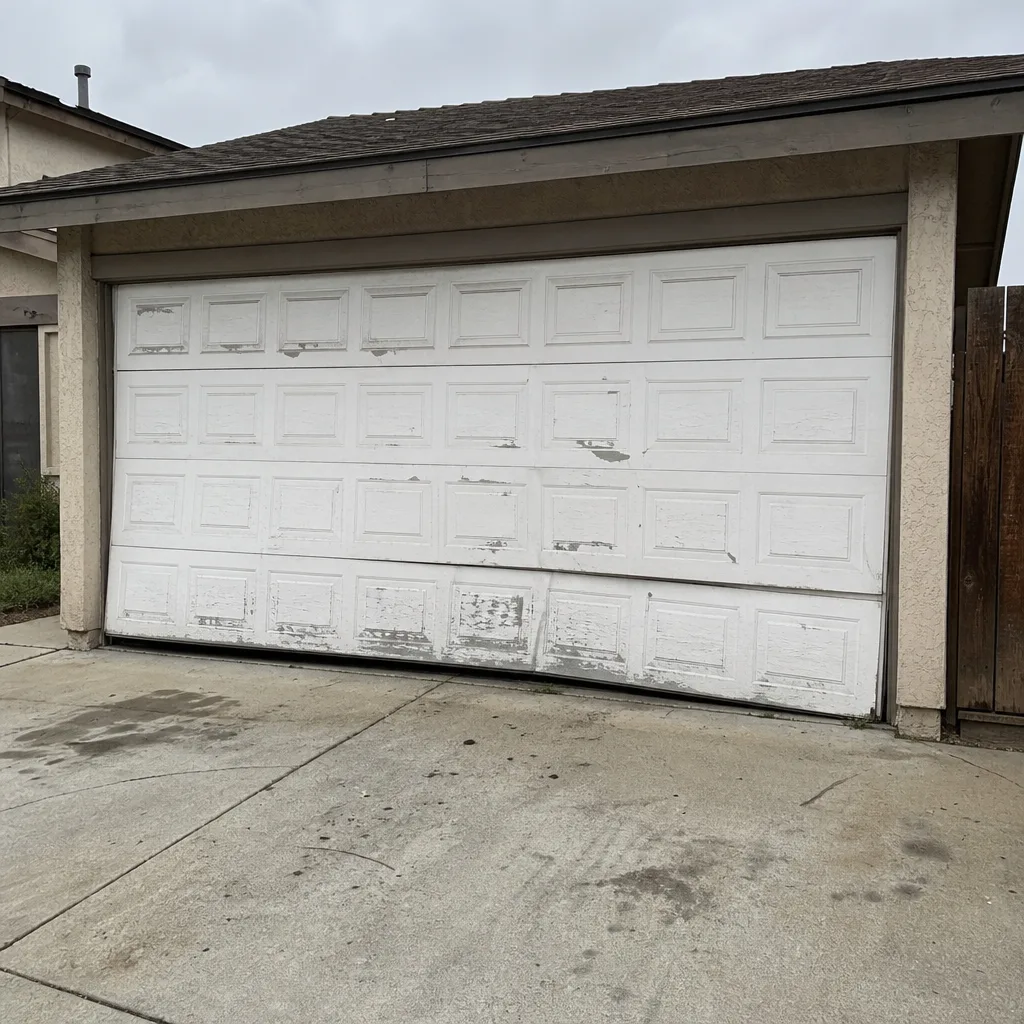 Before
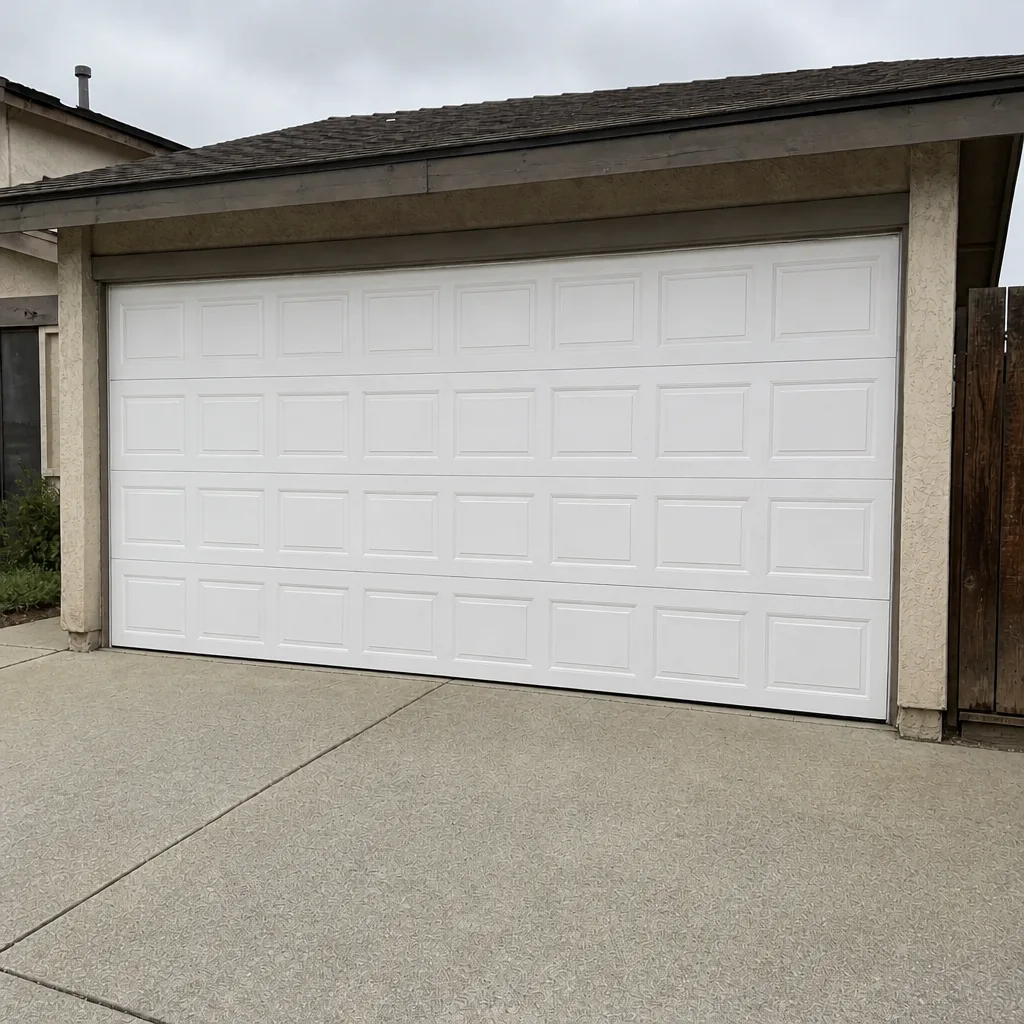 After
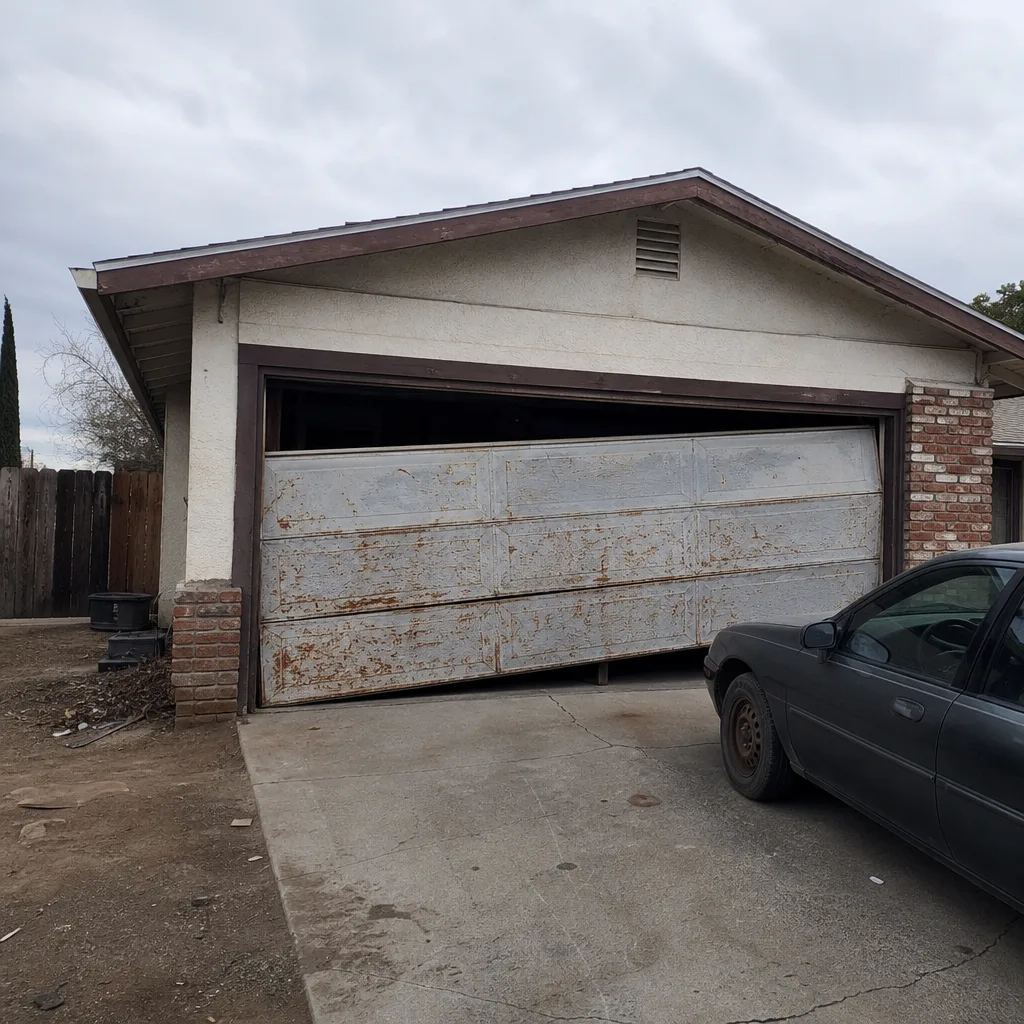 Before
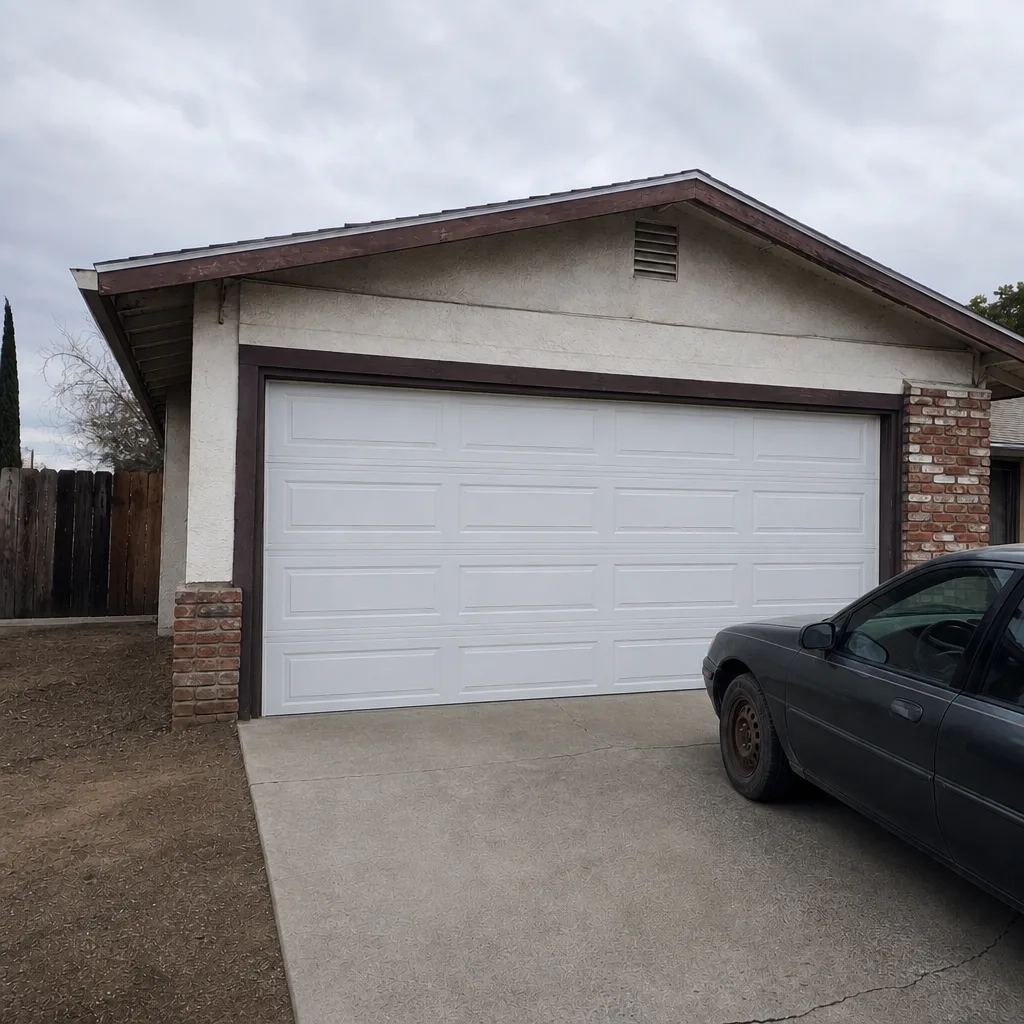 After
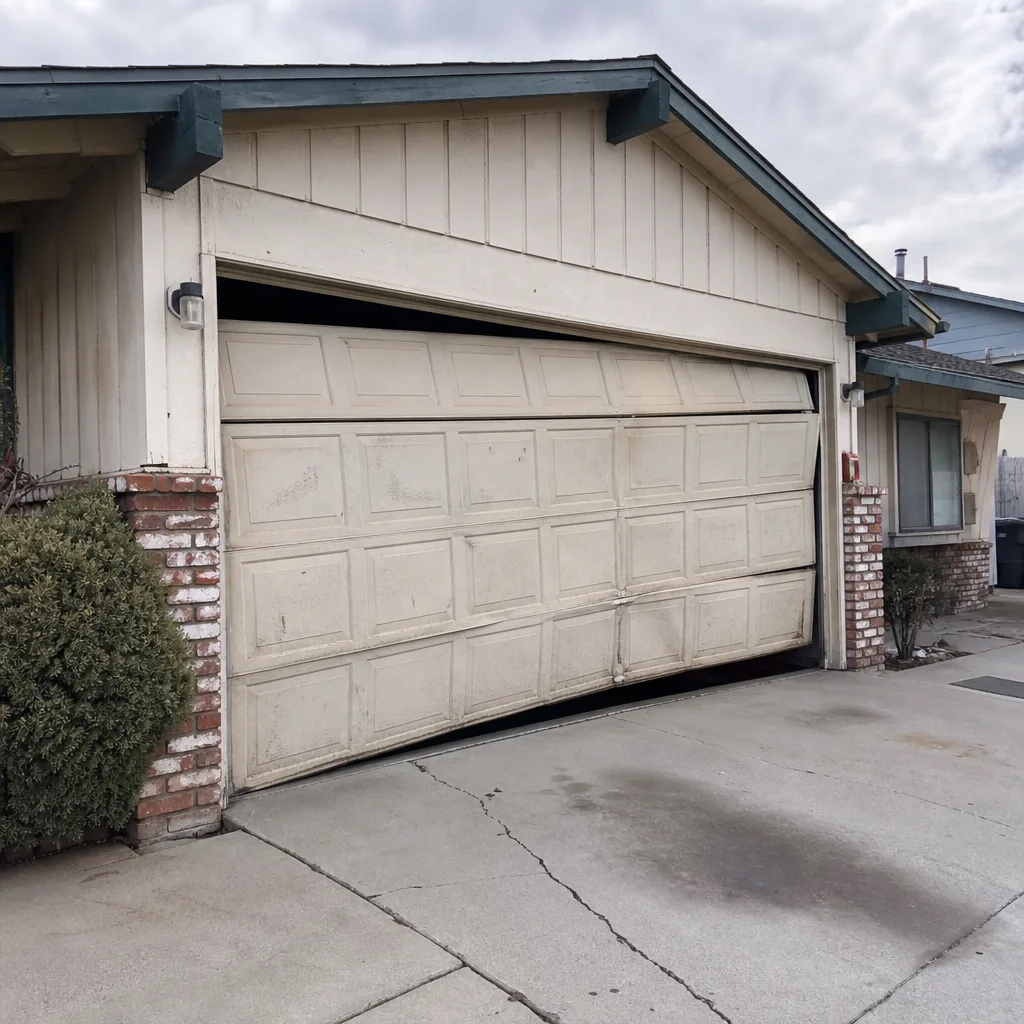 Before
 After
When to Call a Professional
Call us when a torsion spring is broken or looks rusted or gapped, when a cable has come off its drum, when the door is visibly crooked, when the door slams down instead of closing gently, when the opener is straining, or when the safety reverse fails its monthly test. Call before someone gets hurt. If you’re not sure, call and describe what you’re seeing – we can tell over the phone whether it’s a fix-it-yourself situation or a bring-the-truck situation. Our Otto’s Garage Door Spring Valley home page has the full rundown of what we handle. Otto’s Garage Door Spring Valley offers free estimates in Spring Valley – call (888) 318-1978.
Frequently Asked Questions
No. Torsion springs store enough energy to break bones and cause serious injury regardless of how handy you are, and there is no safe improvised method. Spring replacement is professional-only. Call (888) 318-1978 for a free estimate – we quote the job on the call and hold the number.
It’s usually cheaper to hire a pro once you factor in the two most common DIY mistakes – a mislocated header bracket or an opener bolted to an out-of-balance door – either of which triggers a service call anyway and eats the savings. The opener itself might cost less at the store, but the finished job almost always costs less when it’s done right the first time.
Three quick checks: is the door balanced (open it halfway by hand – it should hold in place, not fall or rise), does the safety reverse work on a 2×4 test, and does the door look straight when closed? If any of those fail, that’s your answer. Call (888) 318-1978 – we can usually talk you through whether it’s a “fix it yourself” or “bring the truck” situation in about two minutes.
No. We quote the job on the phone and we hold that number when we arrive. If we find something genuinely different after inspection – say, an additional broken hinge – we tell you and get your agreement before doing anything. The number you committed to is the number you’re billed.
Don’t. Call for help. A door with a broken spring is a door that is not being safely controlled while it lifts – the opener is not designed to lift the door alone, and manual lifting on a broken spring can drop the door on a person or damage the panel. This is a call-a-professional moment, not a walk-through moment.
Yes. Our technicians are background-checked and insured, and the owner-operated setup means the name on the van is the name on the license and the name on the invoice. If a job isn’t done right, the 90-Day Done Right Promise is written on every invoice, and one call brings the owner back to make it right – no queue, no runaround. Our technicians have up to 22 years of experience, and they’re fluent in Chamberlain, Genie, LiftMaster, Clopay, Amarr, and other major brands.
The Bottom Line
Most of the DIY-vs-pro question comes down to which tasks carry a physical consequence if they go wrong. Lubricating tracks, testing the safety reverse, and cleaning photo-eyes are yours to own. Opener installation is a judgment call, but the math usually favors a pro. Torsion springs and cables are off the table entirely – not because you can’t figure out the steps, but because the steps require handling something that can hurt you regardless of skill. If you want a straight read on what you’re looking at, or if you’d rather have it done right the first time, our Garage Door Installation in Spring Valley page covers new doors and our Garage Door Repair in Spring Valley page covers the fix-it side. Call (888) 318-1978 for a free estimate in Spring Valley – the number we quote is the number you pay, and if it’s not done right, we make it right.
Written by the team at Otto’s Garage Door Spring Valley.